Sometimes, when a dance performance takes hold of me, I have such a visceral reaction that I feel like I’m on high alert the whole time. I savor these moments. Recently, a number of performances had this effect on me.
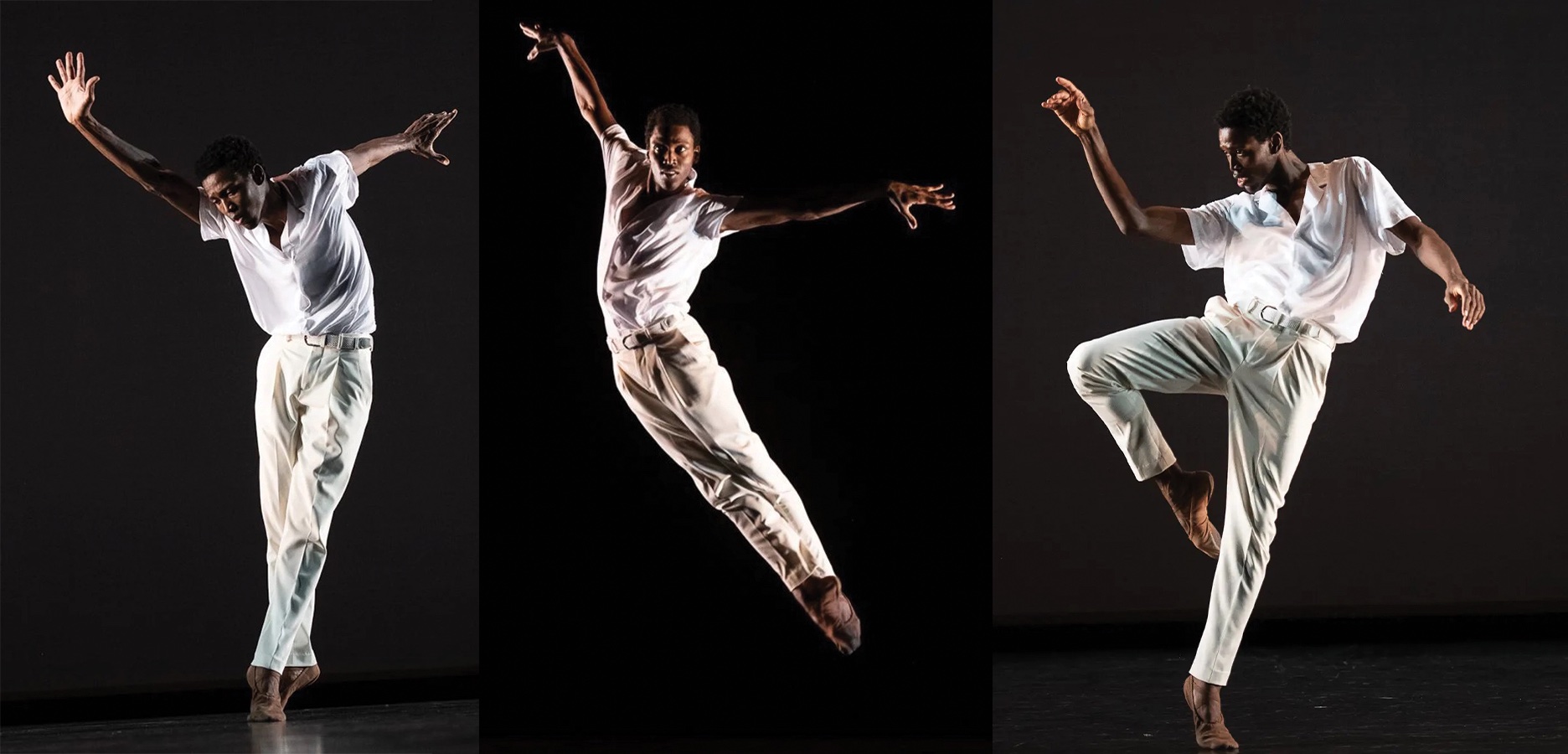
Calvin Royal III in “to be seen” by Kyle Abraham when it premiered in 2020, ph Christopher Duggan (tnx to Khara Hanlon for the graphic)
One Sunday morning in May, Kyle Abraham presented a program in Van Cleef & Arpels’ “Spring is Blooming” day at Rockefeller Center. His solo to be seen (2020), danced by American Ballet Theatre’s divine principal Calvin Royal III, to Ravel’s Bolero, was breathtaking in its silky integration of classic lines and vernacular swagger. Royal’s classicism is totally unforced, relaxed, and he has a sweet way of connecting with the audience. He can easily slip between modes, giving us a new, sly way to hear Bolero.
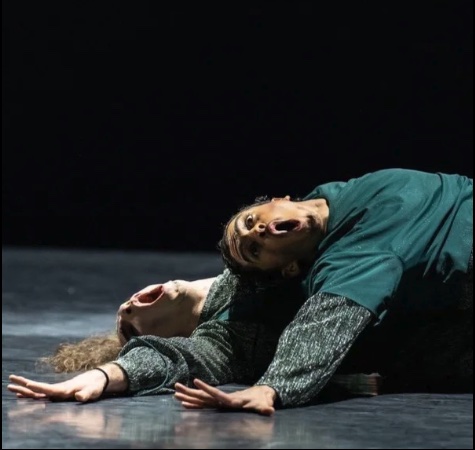
“A Duo” by Aszure Barton with Aaron Choate and Abdiel Figueroa Reyes, Courtesy Hubbard Street Dance Chicago
The year of women dancemakers at 92NY, called “Women Move the World,” culminated in a wildly successful evening of old and new works by Aszure Barton. This program revealed her fertile and fearless mind. The Y gathered dancers from her own company, Aszure Barton & Artists; from Gauthier Dance, where she is house choreographer; and from Hubbard Street Dance Chicago, where she is resident artist. Her choreography gives gravitas to goofiness, and the dancers bring joyousness to eccentricity. The evening had everyone cheering for the brash/elegant/dreamlike/unpredictable images bursting from Barton’s imagination. A Duo, an especially gloriously impulsive package of surprises, gets me every time.
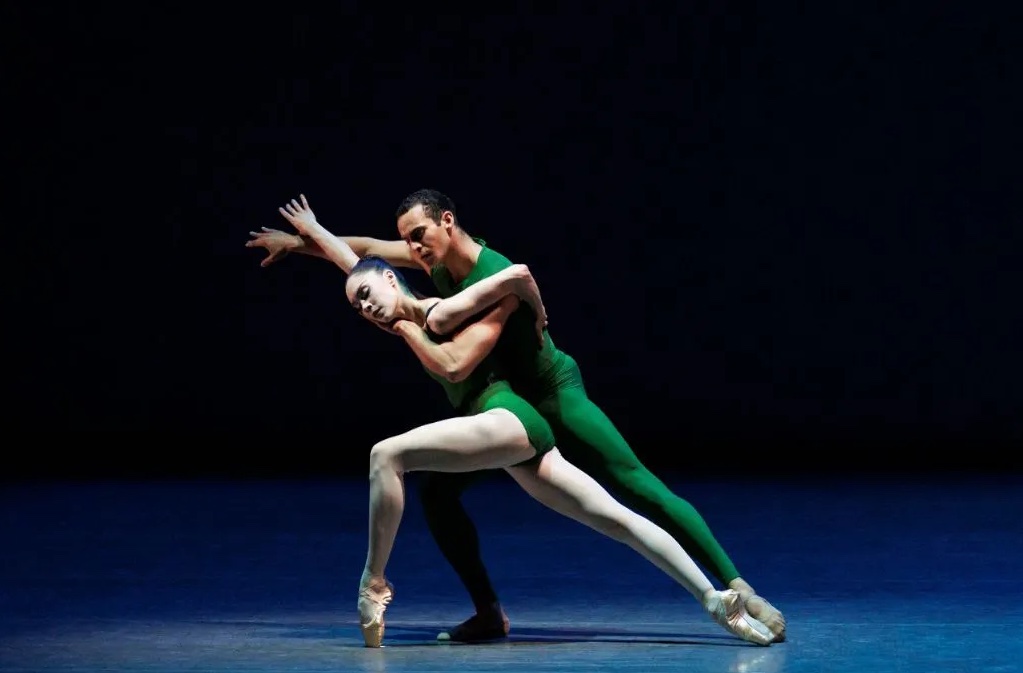
Mira Nadon and Ryan Tomash in Wheeldon’s “Continuum,” ph Erin Baiano
New York City Ballet excels in works by Christopher Wheeldon, who was the resident choreographer from 2001 to 2008. The company premiere of Continuum, Wheeldon’s second of three “difficult” Ligeti ballets, was given in April. (The other two — Polyphonia [2001] and Morphoses [2002], were already in the rep, but Continuum had premiered with San Francisco Ballet in 2002.) Each section is sharply focused on a particular concept of form. With its bracing partnering, extreme lines, and astonishing inventiveness, Continuum is like cut crystal.
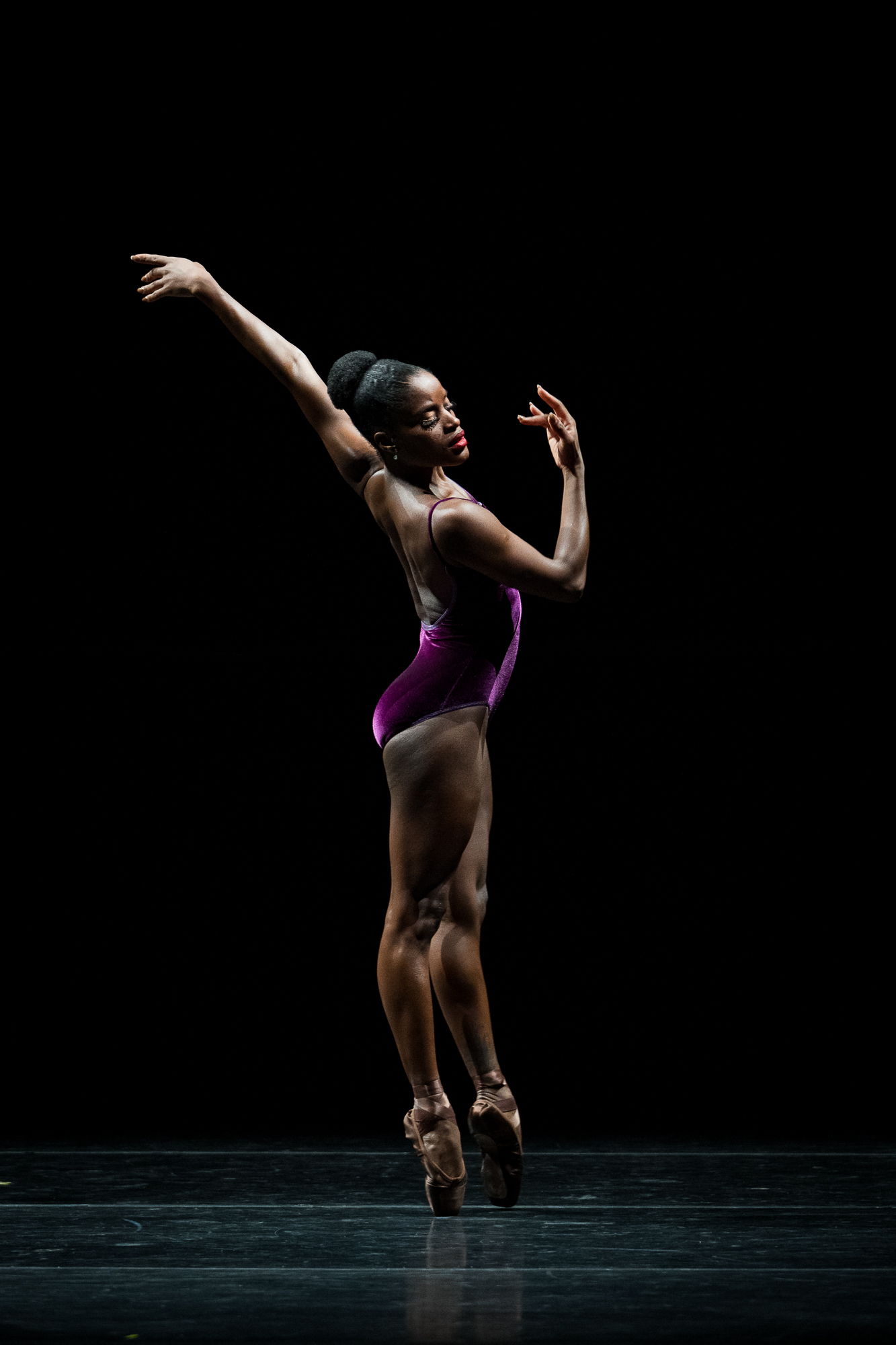
Ingrid Silva of DTH in “Blake Works IV (The Barre Project)” by William Forsythe, ph Cherylynn Tsushima
Brazilian ballerina Ingrid Silva was absolutely thrilling in William Forsythe’s Blake Works IV (The Barre Project) at Dance Theatre of Harlem at NY City Center in April. In Silva’s body/mind, momentum and precision mix with joy. She has stepped down after eighteen years with DTH, and this was her last NYC performance. Damn, I feel like I just discovered her! (You can find out what she has cooking post-DTH here.)
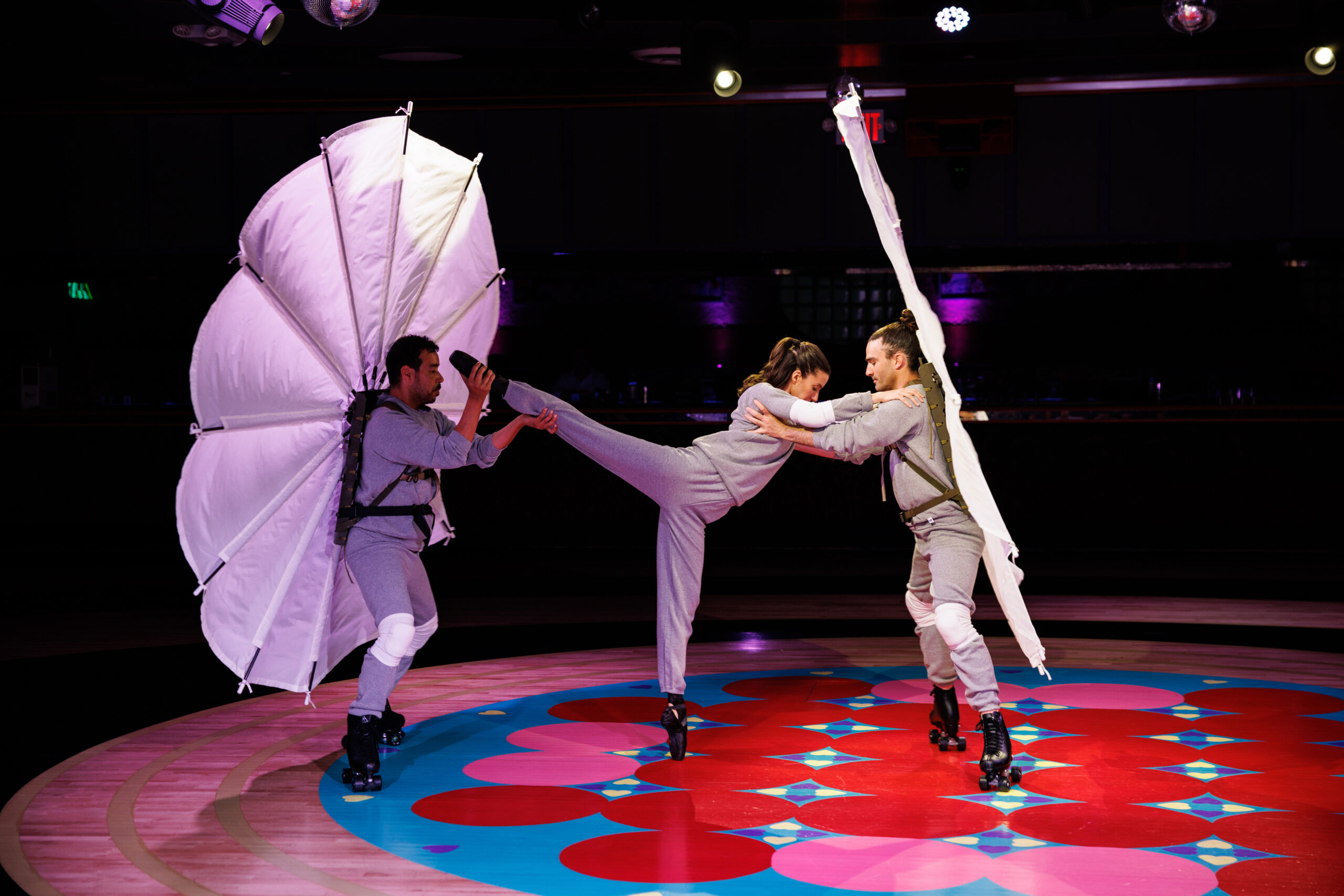
Pelican (1963) by Robert Rauschenberg, reimagined by Tara Lorenzen, performed by Rashaun Mitchell, Ashley Hod, and Silas Riener, ph Maria Baranova
It was exciting to see the remake of Pelican, originally created by Robert Rauschenberg in 1963—his first performance piece— as part of Judson Dance Theater. The photos of him skating with a parachute on his back are iconic. Remounted at Xanadu Roller Rink in Brooklyn as the centerpiece of the Trisha Brown Company gala in May, it was reimagined by Trisha Brown alum Tara Lorenzen. Two ex-Cunningham dancers, the formidable duo Rashaun Mitchell and Silas Riener, donned roller skates just as Rauschenberg did in 1963, wearing parachute blooms on their backs. The role originally played by Carolyn Brown on pointe was nicely handled by Ashley Hod of NYCB. There was something mythic about witnessing this reconstruction. Plus it highlighted the long artistic relationship between Rauschenberg and Trisha Brown.
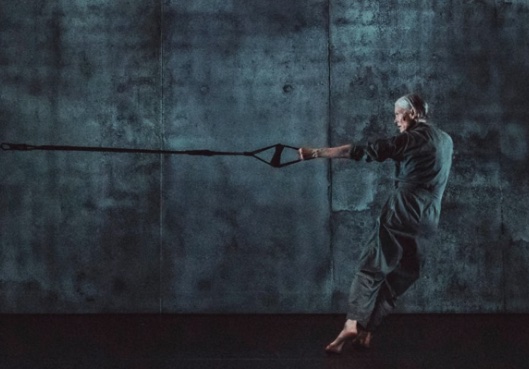
Lucinda Childs in her new “Geranium ’64,” ph Maria Baranova
Also related to Judson Dance Theater was a remake by Lucinda Childs of her wacky, absurdist solo Geranium from 1965. In the new Geranium ’64, Childs slowly trudges across the Fisher the space at Bard, pulled/supported by a rope held offstage right. In back of her is a shifting textured wall by Albanian media artist Anri Sala, where a memory of a 1964 football game (thus the date in the new title) comes alive in a cloudy video. Childs’ arch-professional voice oozed with an officiousness that matches the sports announcer’s voice. It’s funny, it’s weighty, it’s memory poking through a haze. For more on her company’s season for Bard’s SummerScape 2026, see my program essay on her entire program, “Momentary Reprise.”
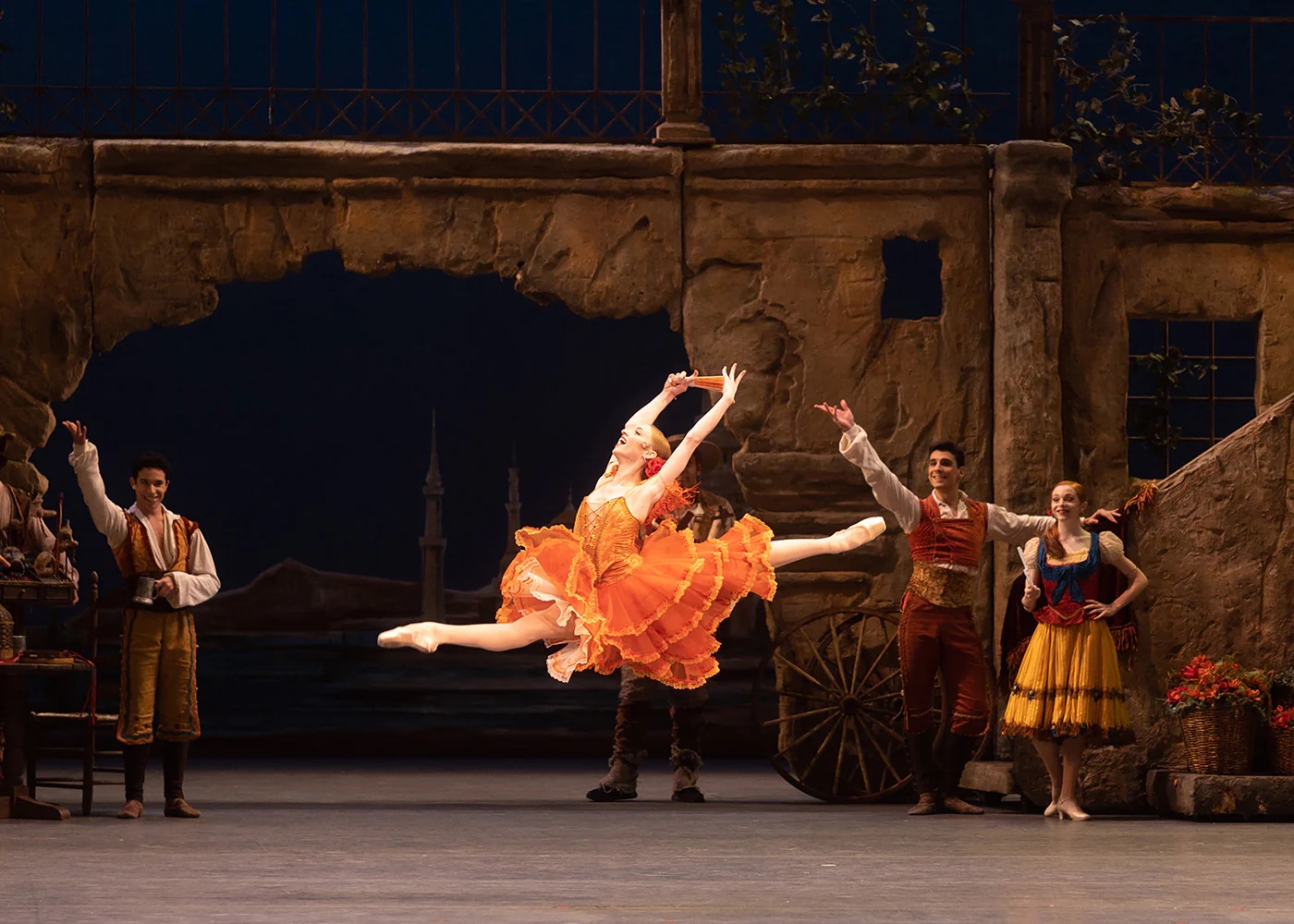
Catherine Hurlin of ABT in “Don Quixote,” Ph Rosalie O’Connor
In late June, Catherine Hurlin burst onto the stage as a high-spirited Kitri in Don Quixote at ABT. Her brash energy and the comedic savvy she shared with her partner, Isaac Hernandez, kept me involved. Technically and dramatically, she was at the top of her game. In her single/double fouettés, when she held the fan overheard during the doubles, my jaw dropped.
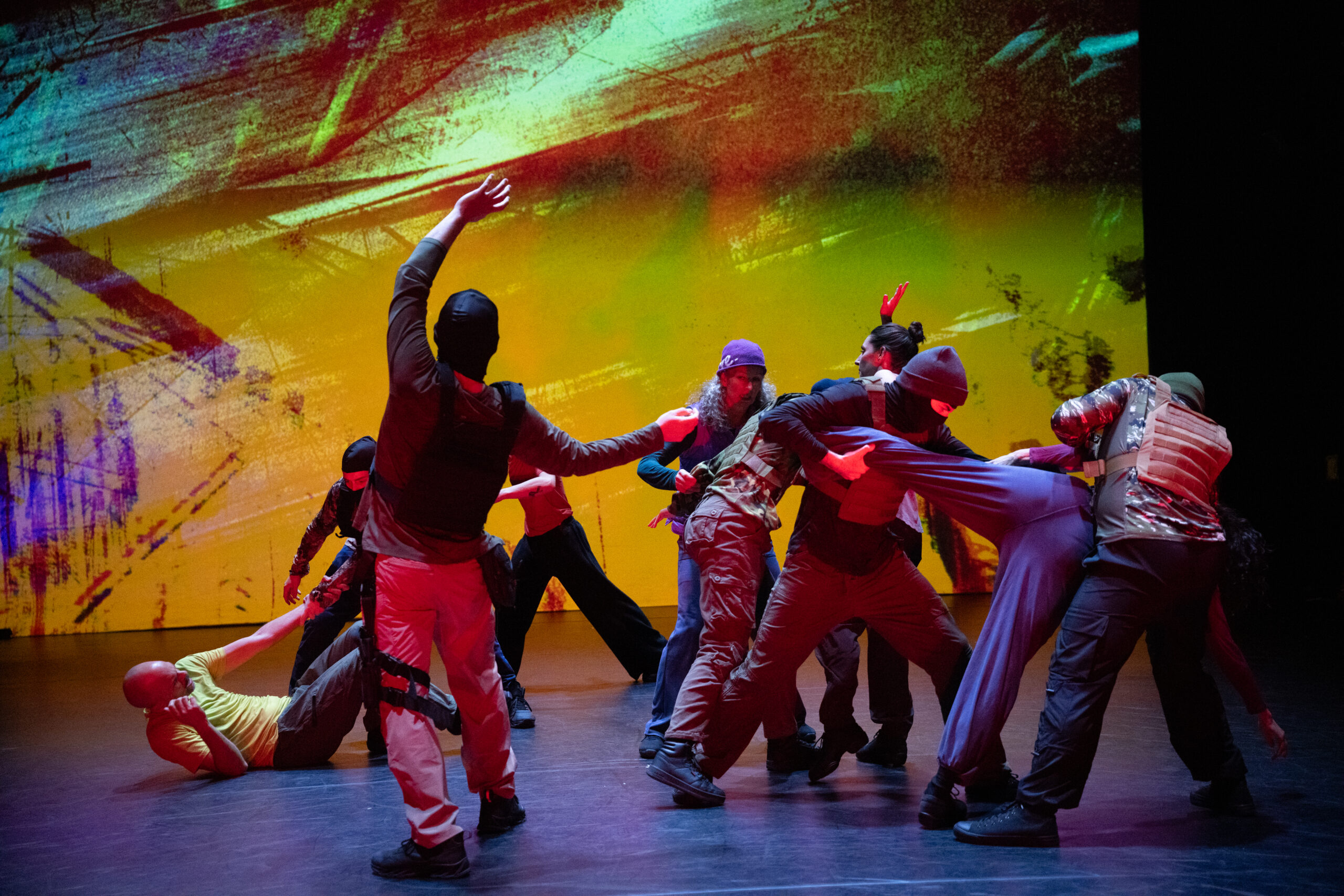
Jane Comfort’s “Gulf of America,” ph Steven Pisano
The attacks of ICE (Immigration and Customs Enforcement) in our streets have infuriated many of us in the U.S., including choreographer Jane Comfort. Always a political dance maker, she premiered The Gulf of America at La MaMa in March. It included a posse of menacing, masked, characters who violently assaulted innocent citizens. The melee unexpectedly came to a standstill when members of both sides quietly looked into each other’s eyes. Wishful thinking for connection across the gulf of misunderstanding.
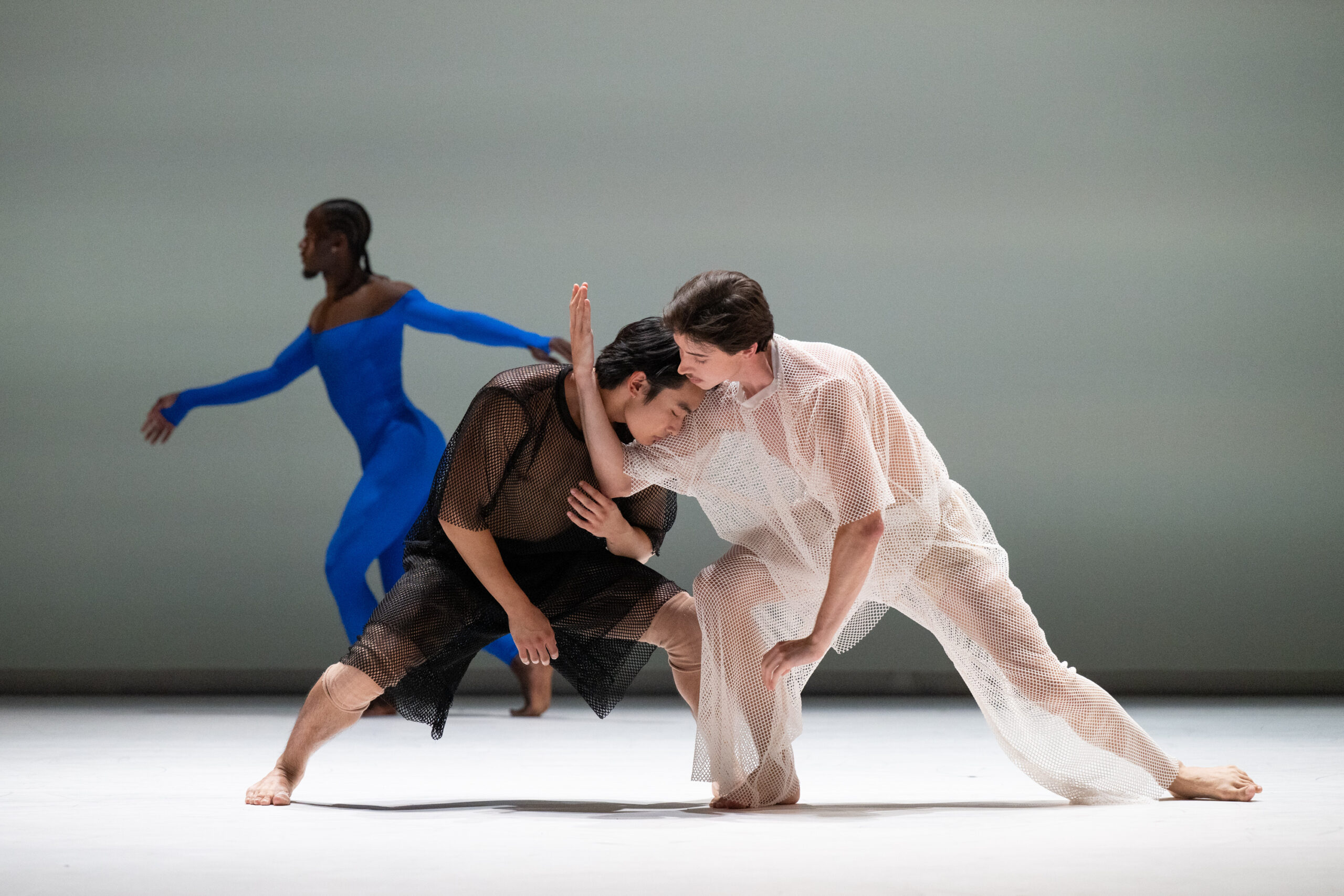
Kyle Abraham’s “White Space,” Jacob’s Pillow, L to R: Mykiah Goree, William Okajima, Luc Simpson, ph Christopher Duggan
Kyle Abraham’s new White Space at Jacob’s Pillow starts with Kyle himself dancing, melting and melding soft release with hip hop moves. Then he releases a white balloon into the air—just one way of letting go. The piece leads us into an incredibly rich movement vocabulary, of both the individuals and the group. There are subtle cause-and-effect unfoldings (dramaturgy by Charlotte Brathwaite), crafted with a growing sense of humor. The balloon comes back in surprising ways, with contributions by vivid, crafty individuals. With painterly lighting by Dan Scully, we get to share in Kyle Abraham’s beautiful way of looking at the world.
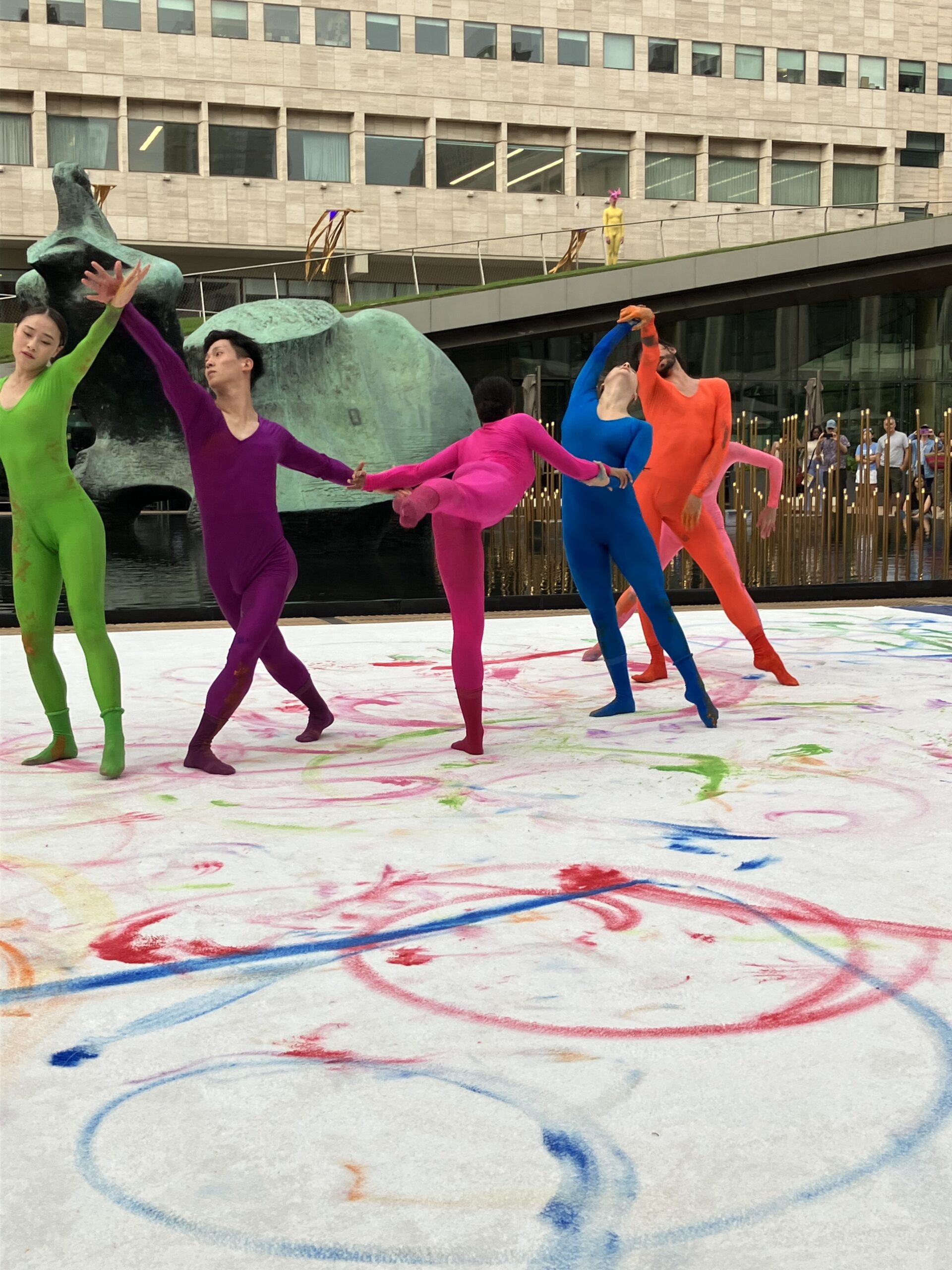
Mindscape in front of the Henry Moore sculpture in Hearst Plaza
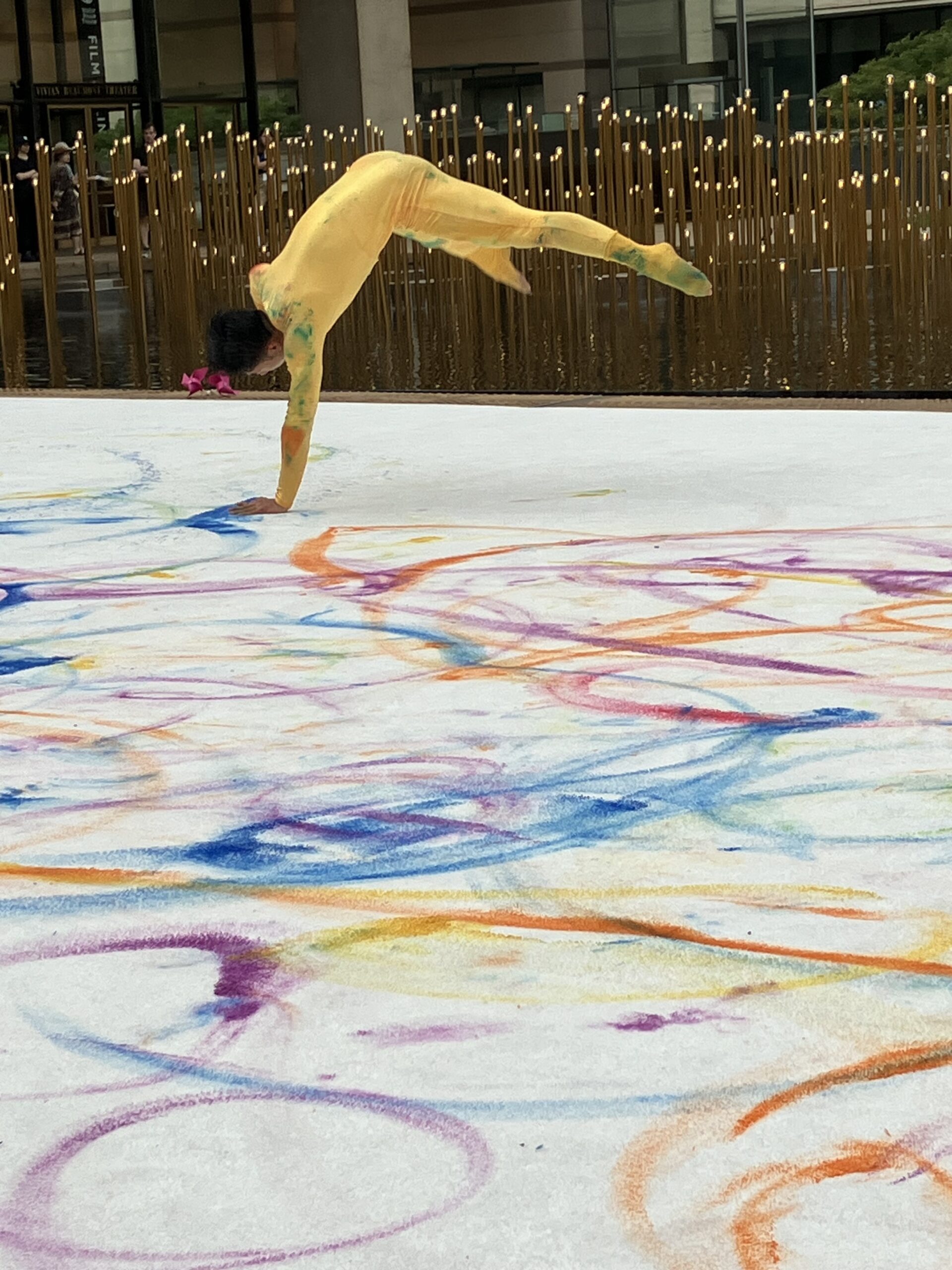
Mindscape by Shen Wei
Shen Wei’s Mindscape celebrated light, motion, bright colors, and community. It came to Lincoln Center’s Hearst Plaza, where we could take in the twelve main dancers and the extras sprinkled throughout the plaza environment as one constantly changing picture. While it had the air of fun and lightness, Mindscape is a major work. Watching the progression from ceremonial procession to full-body motion, to sculptural interactions, to dipping in the pool, to making marks on the big white canvas, to drenched body mess was a wonderful ride that kept renewing itself. When the dancers started leaving trails of paint on the white canvas flooring, I thought, What marks are we making? What pictures are we leaving behind?
Featured Uncategorized Leave a comment
Leave a Reply