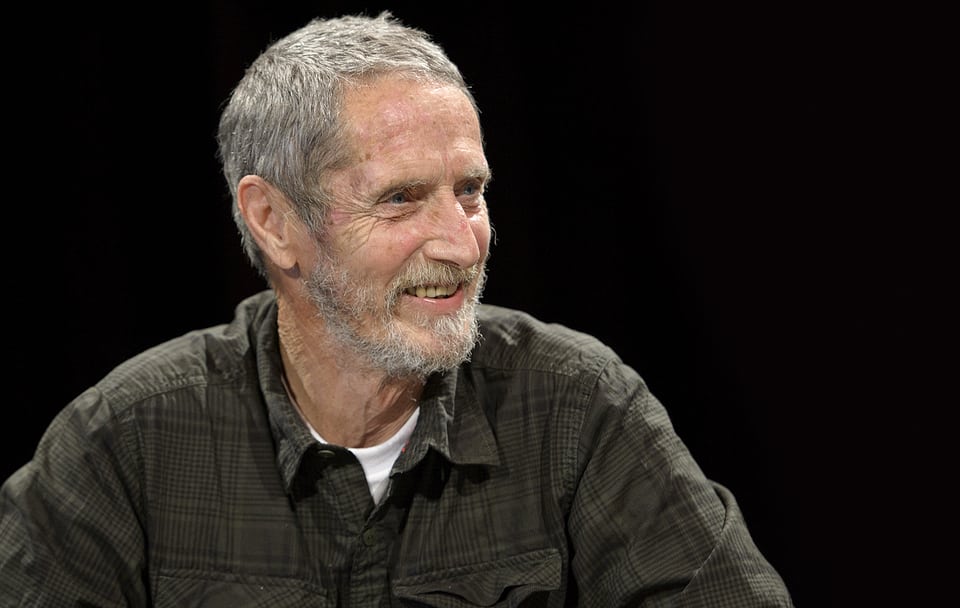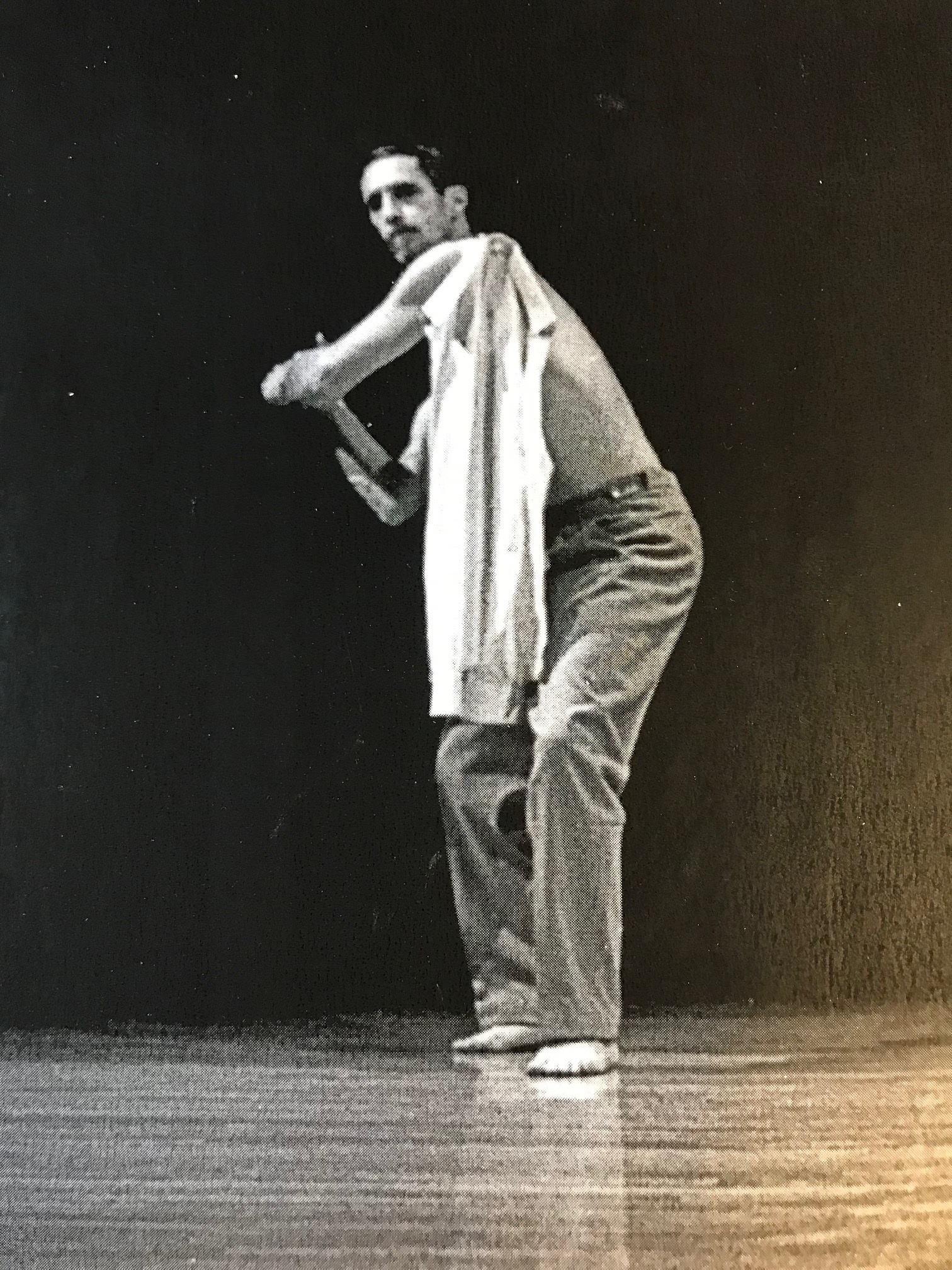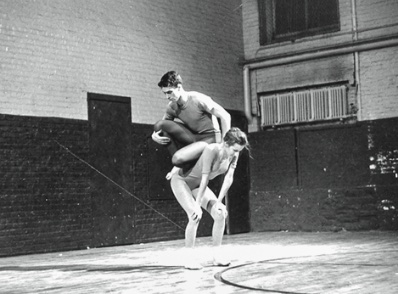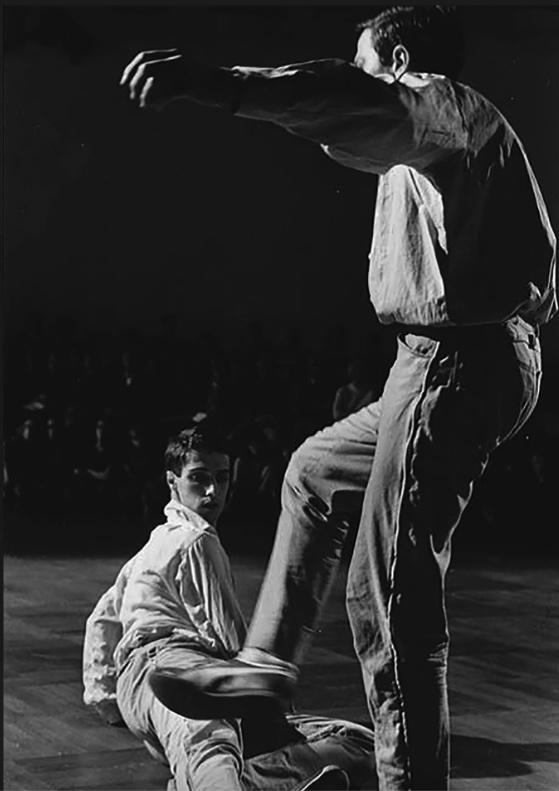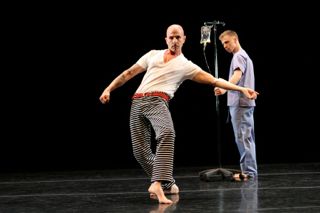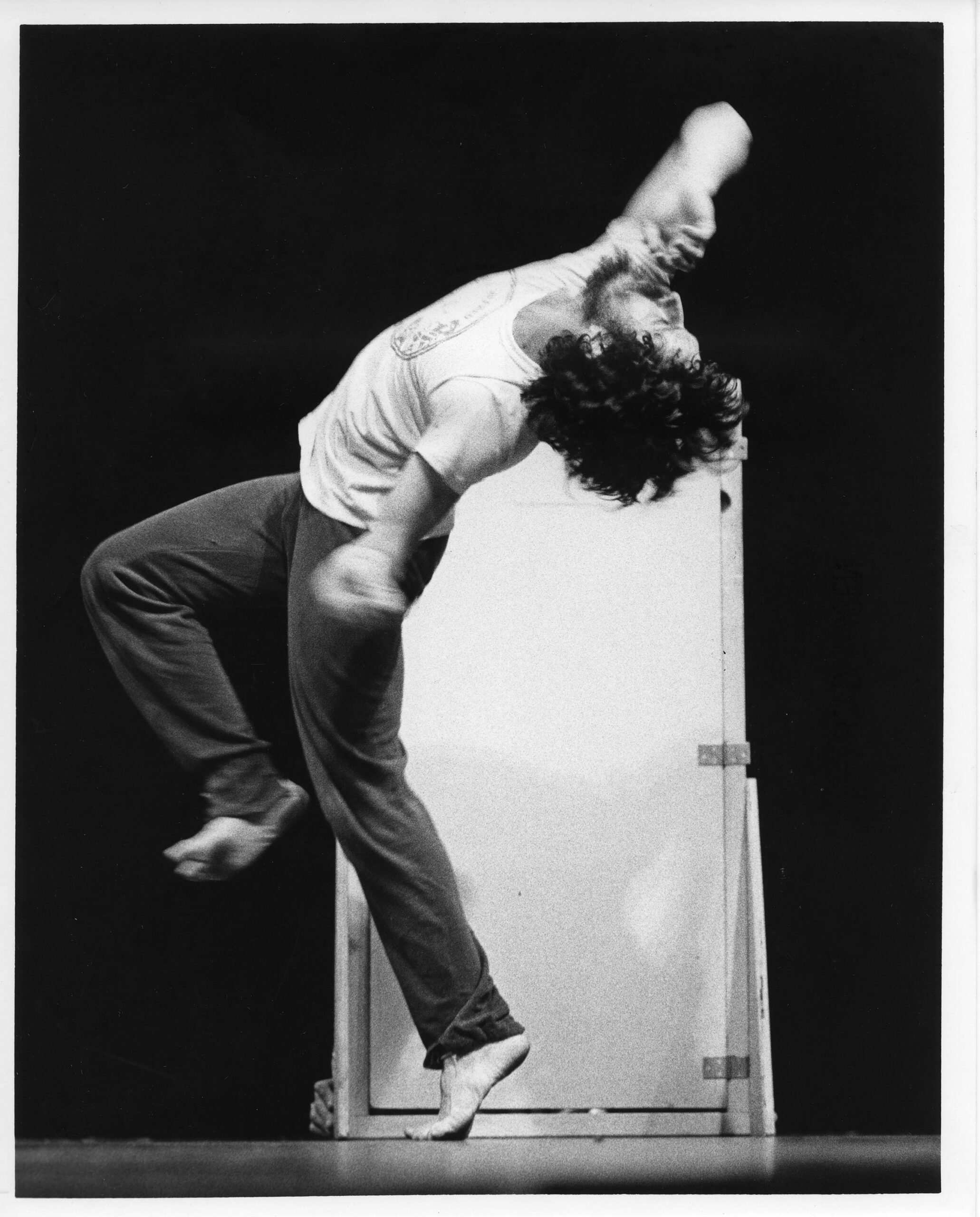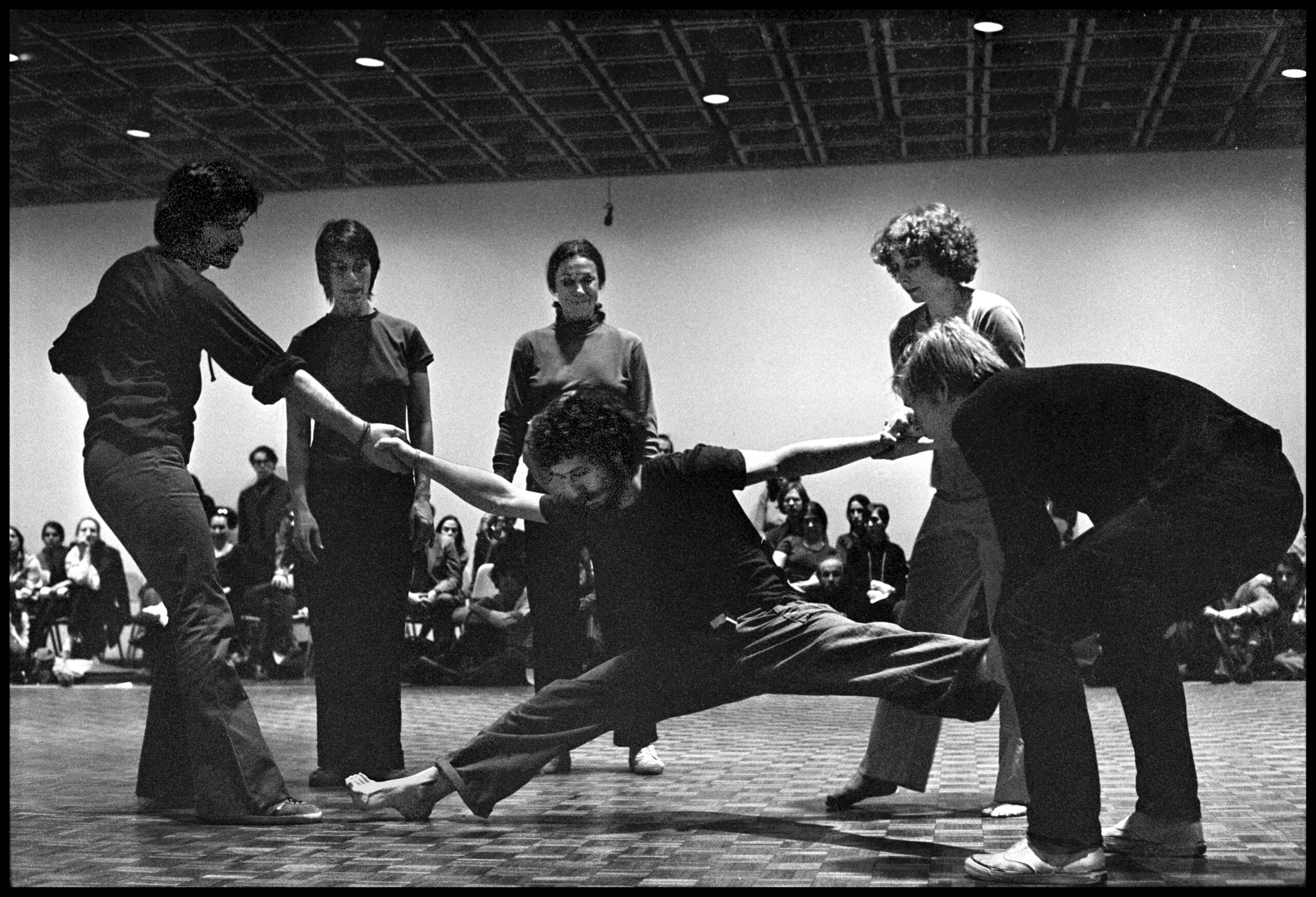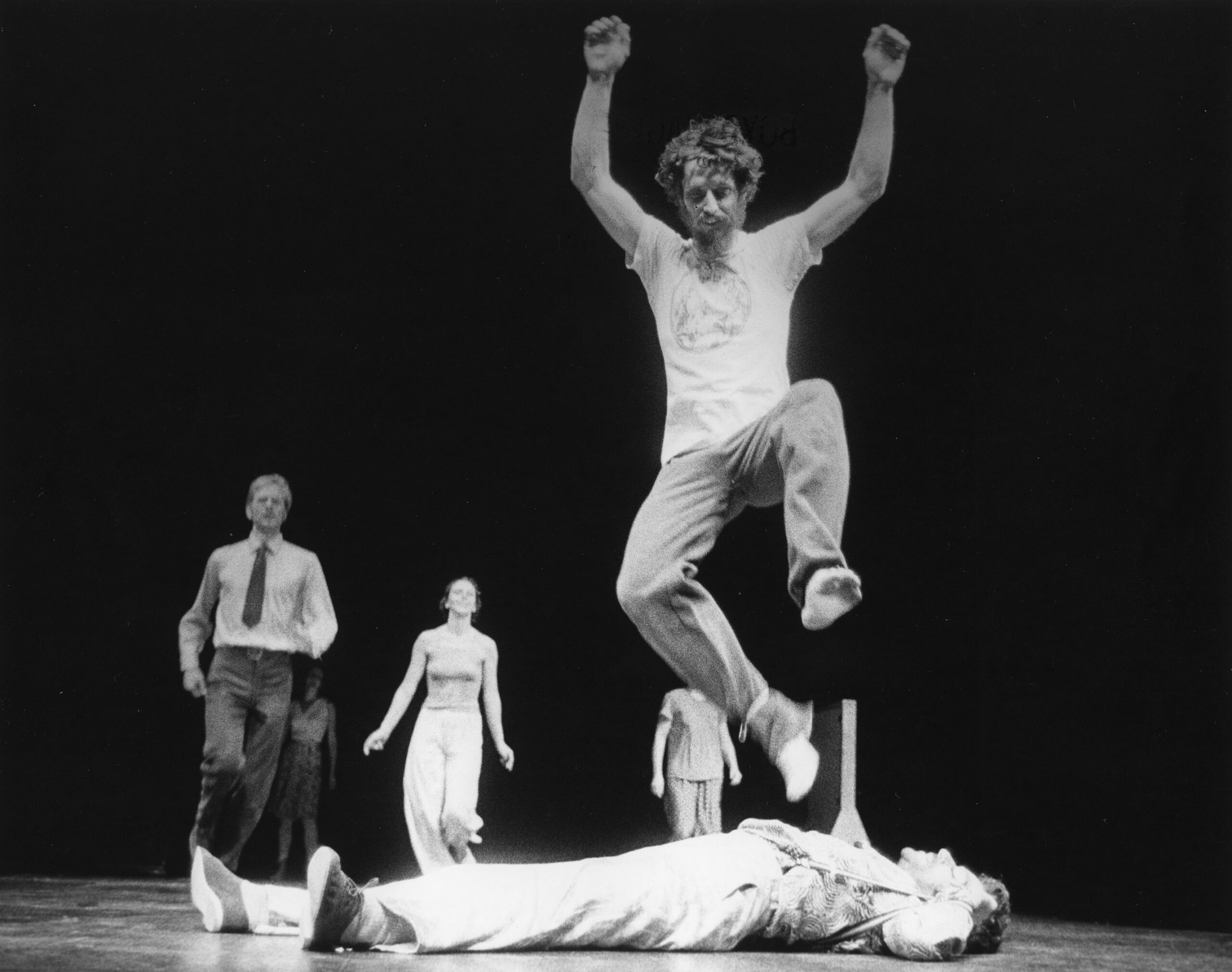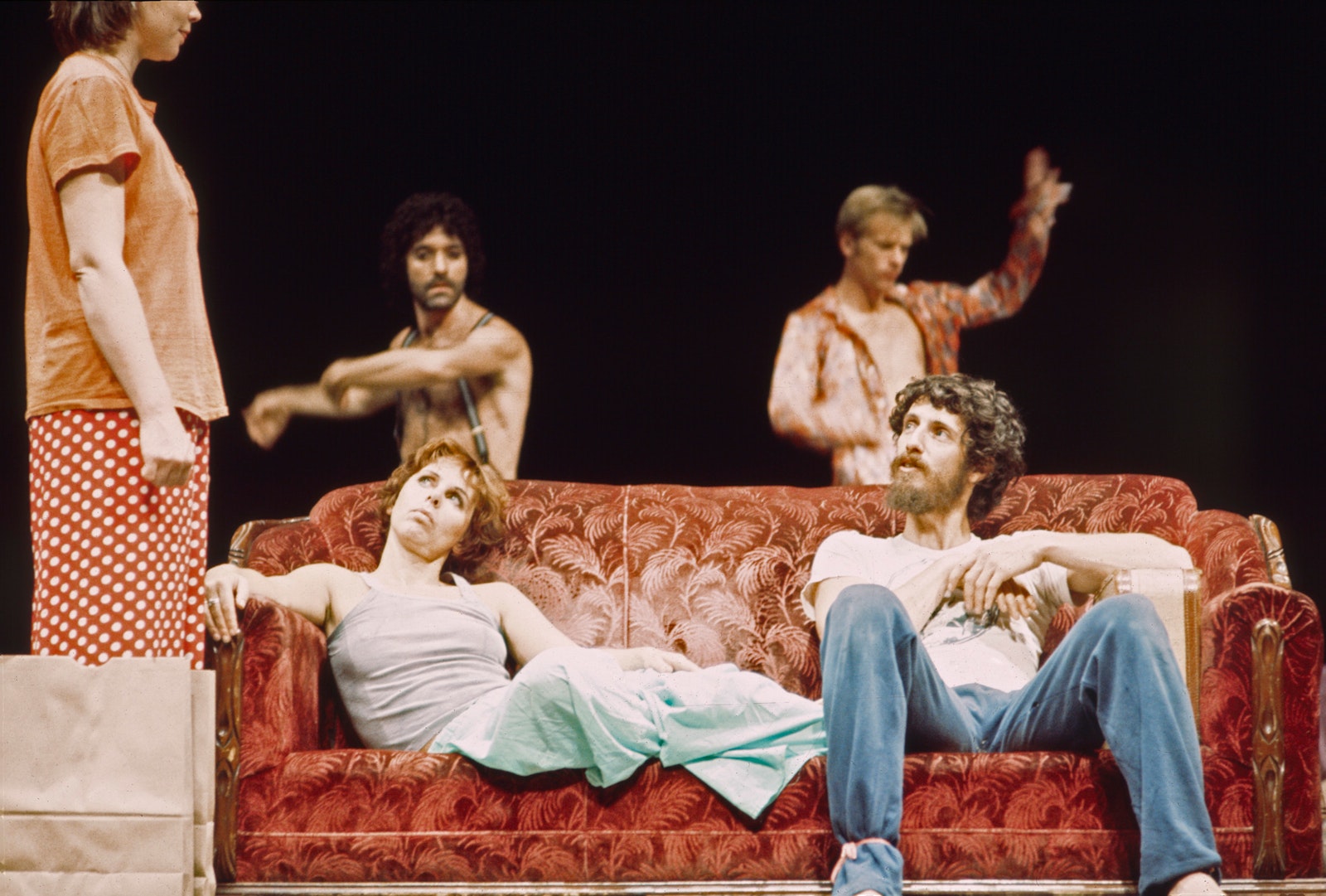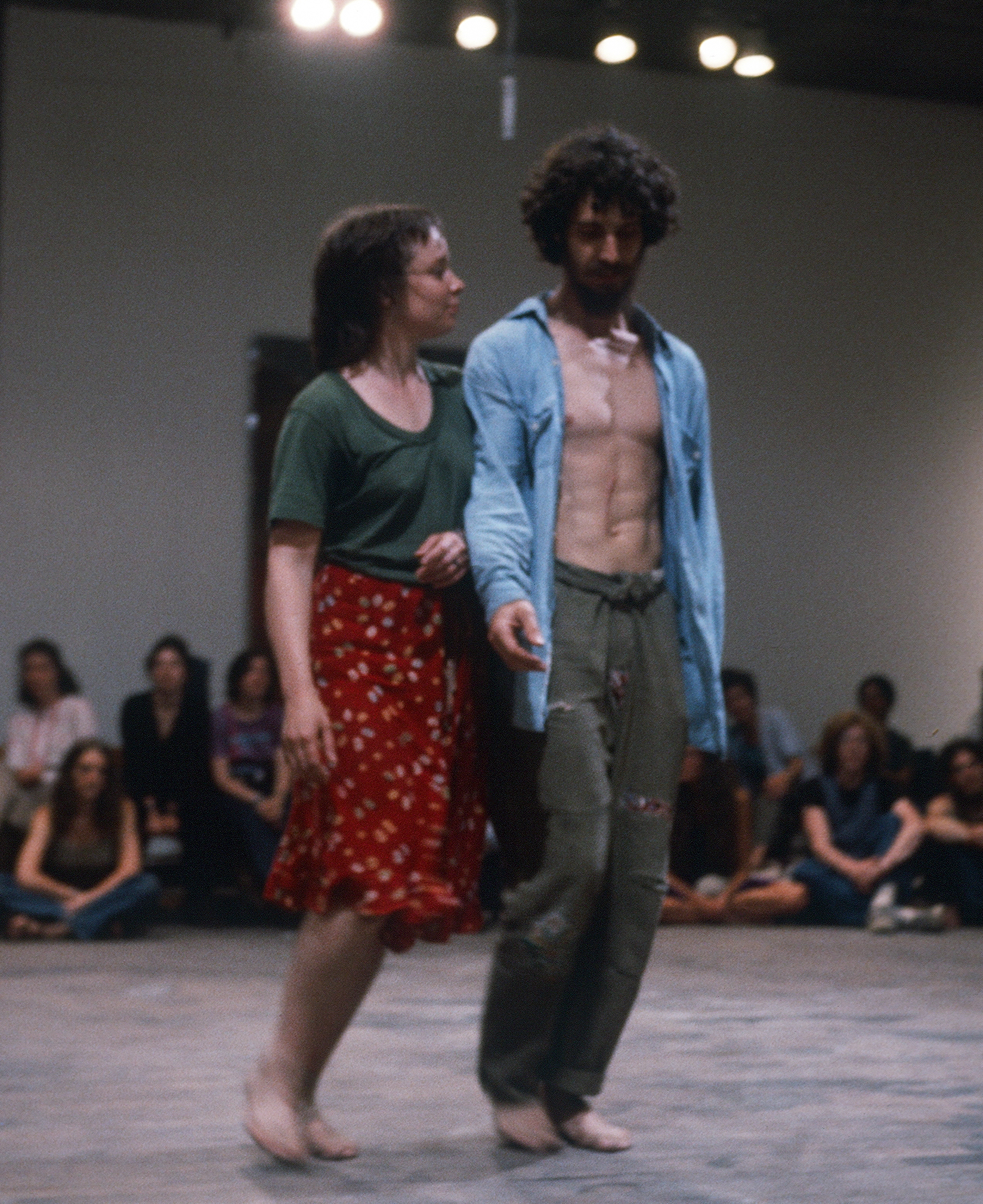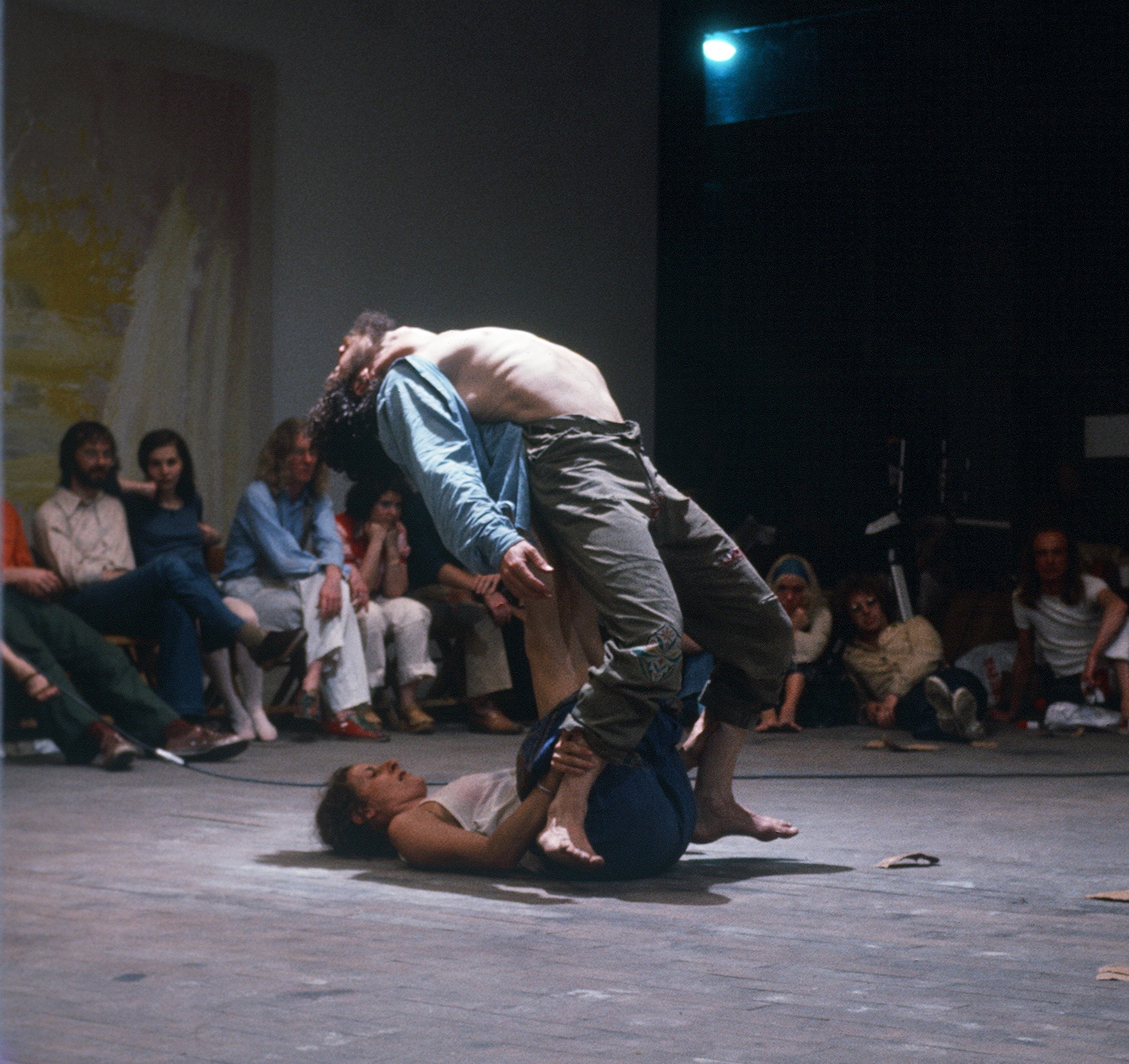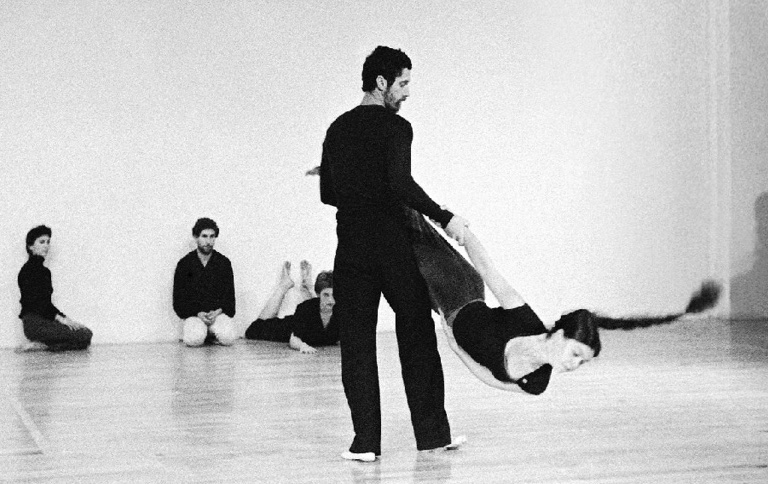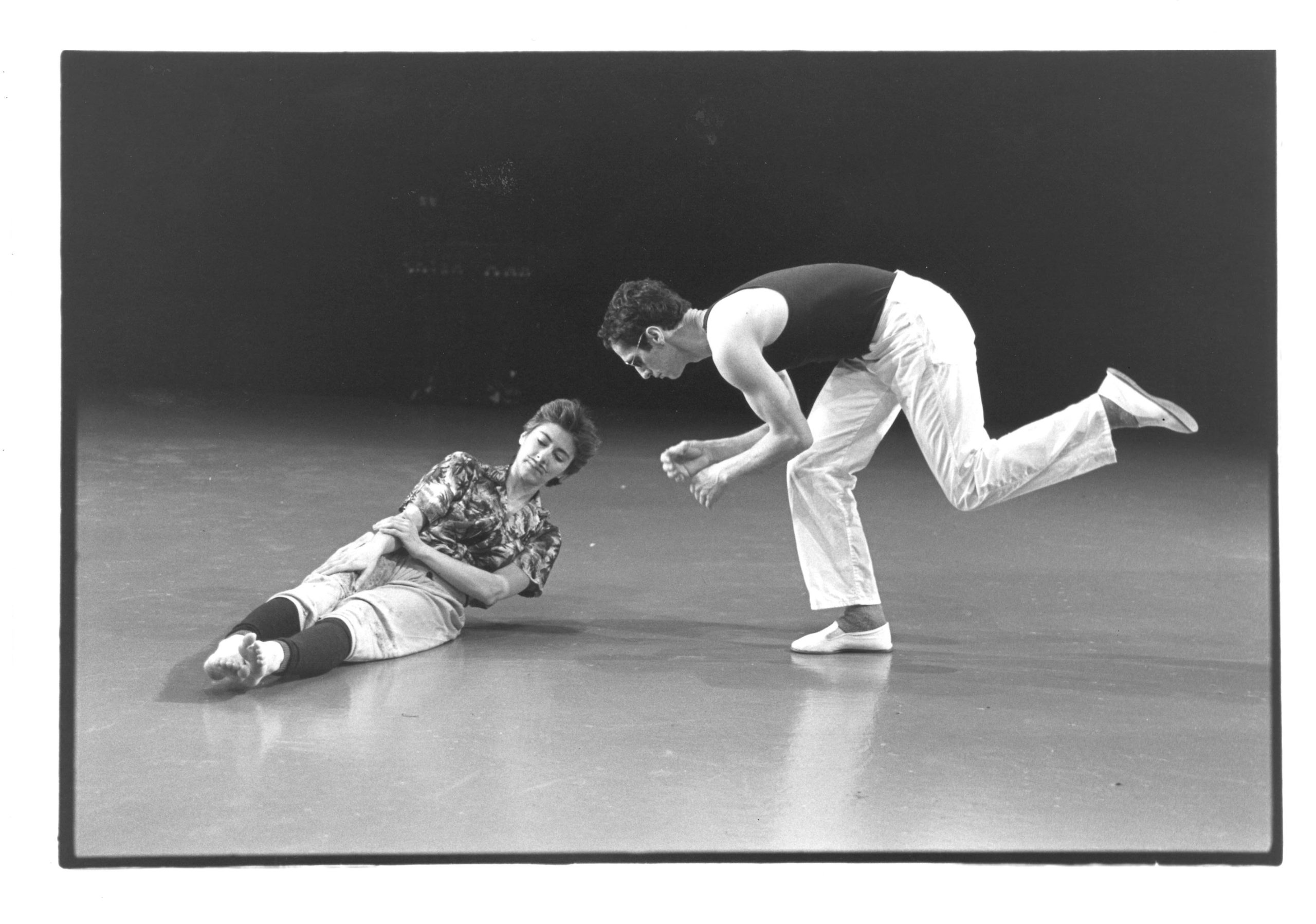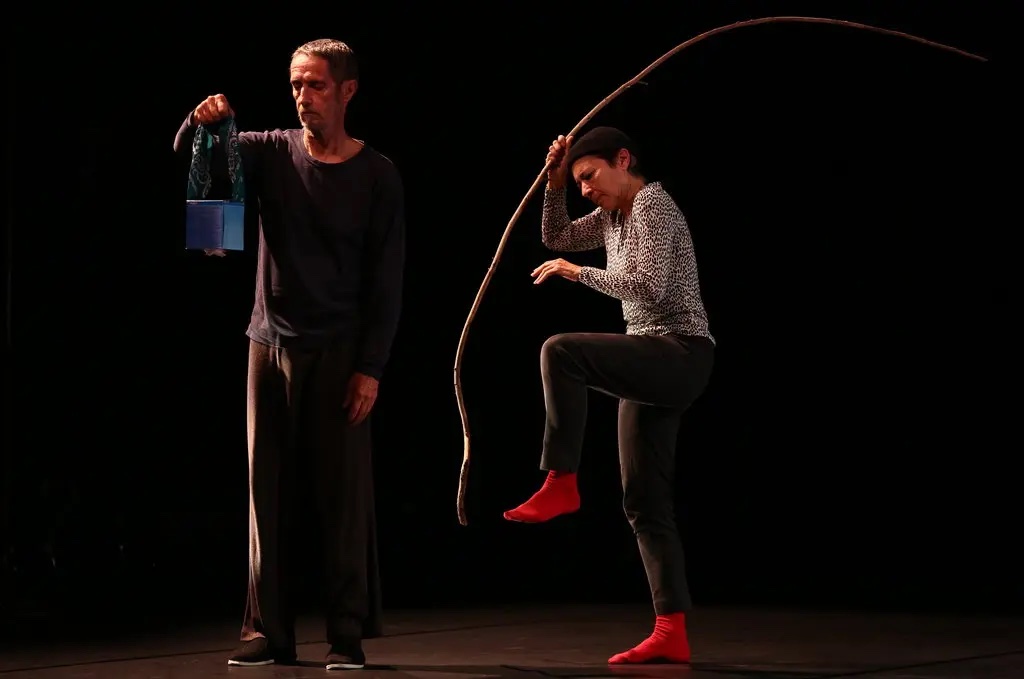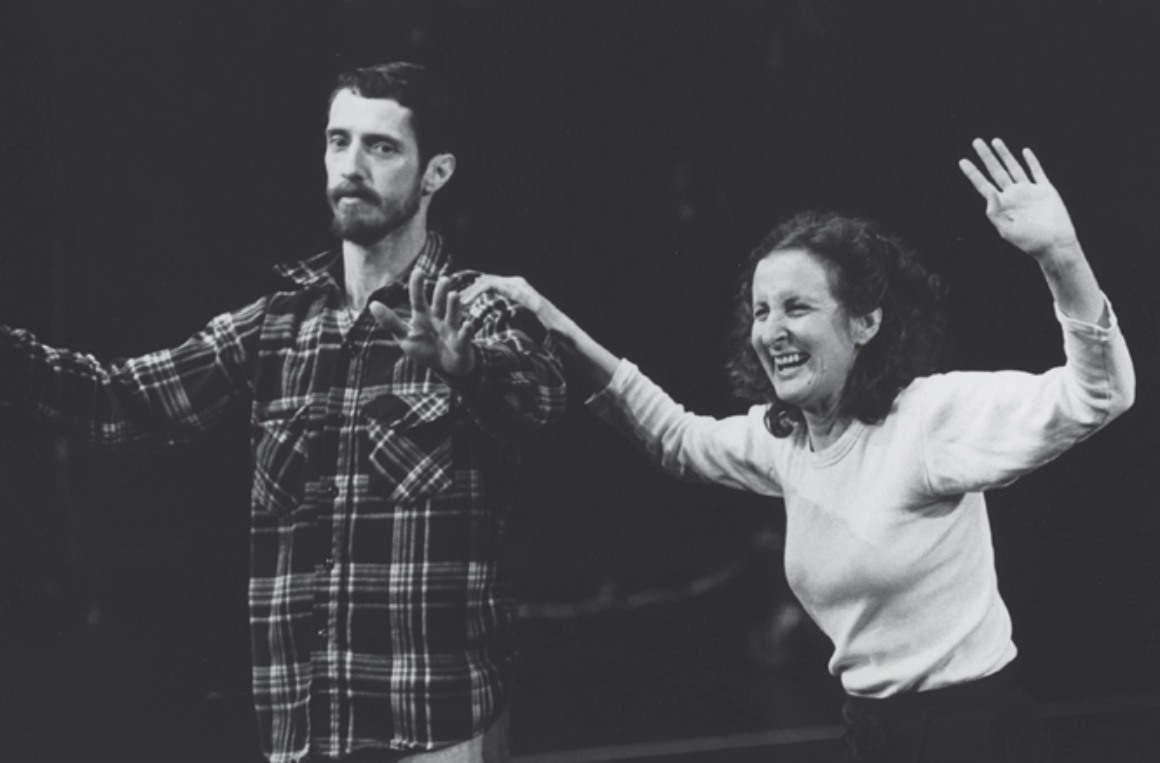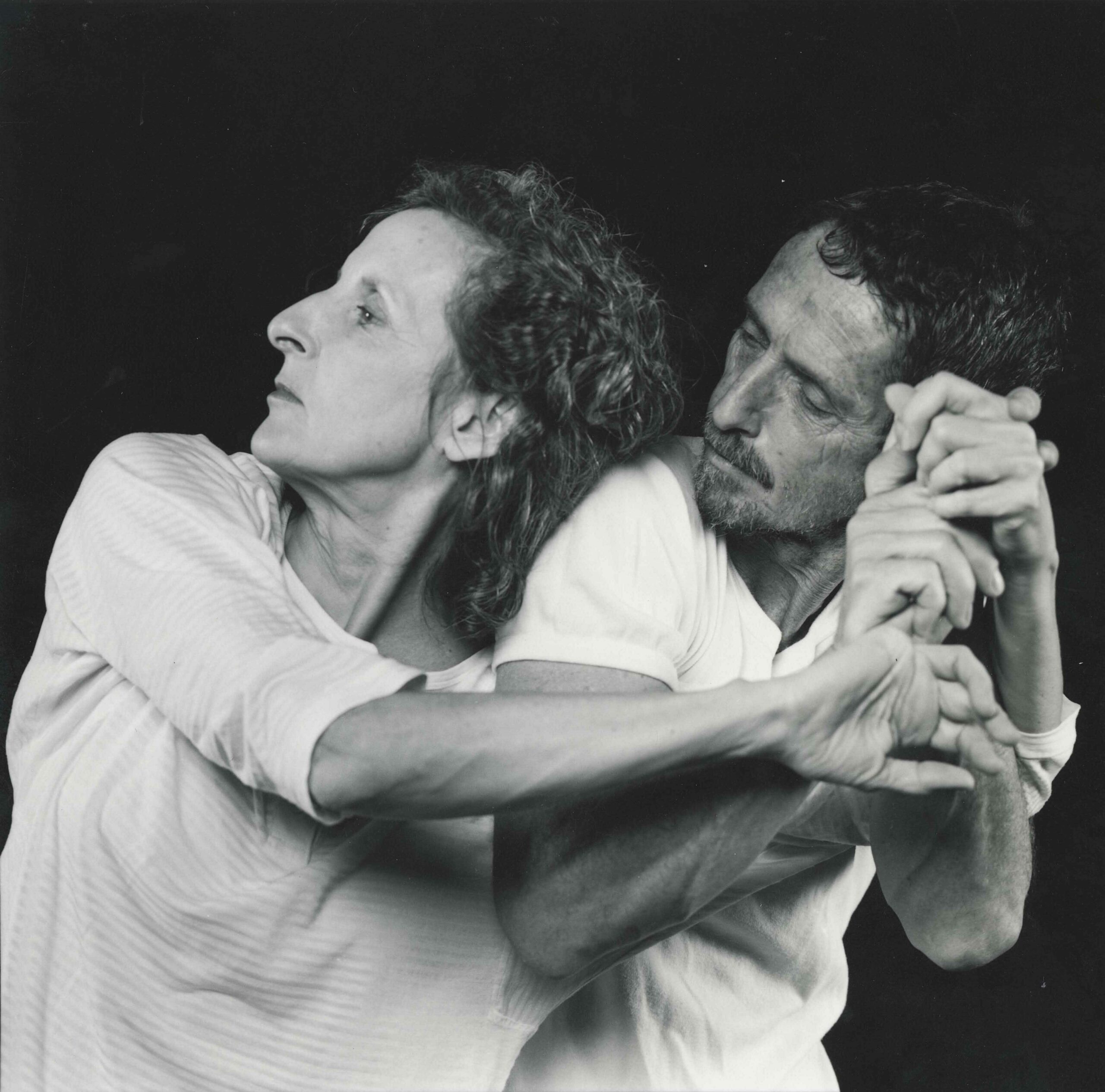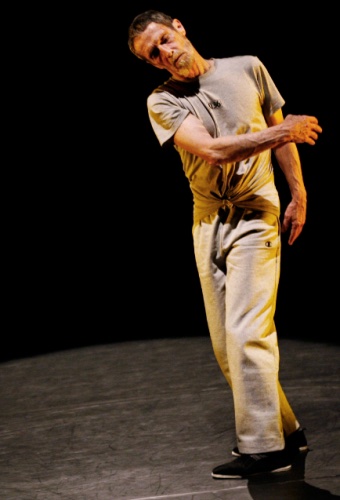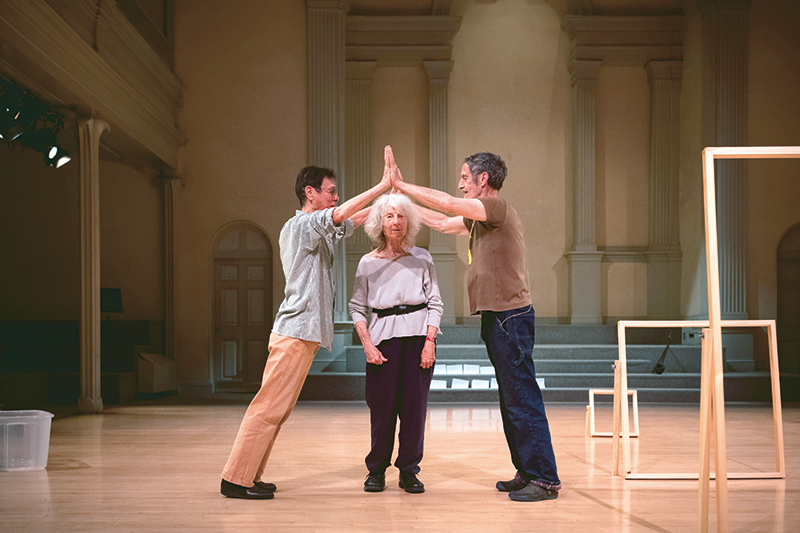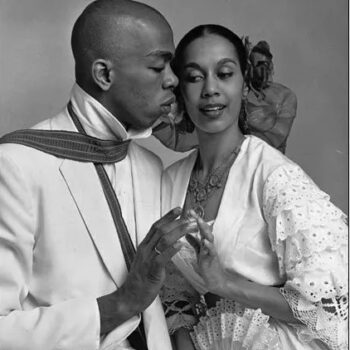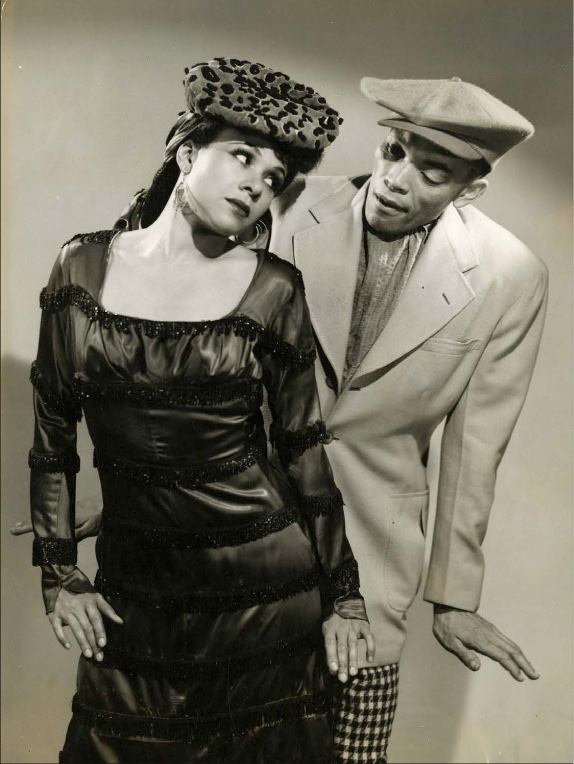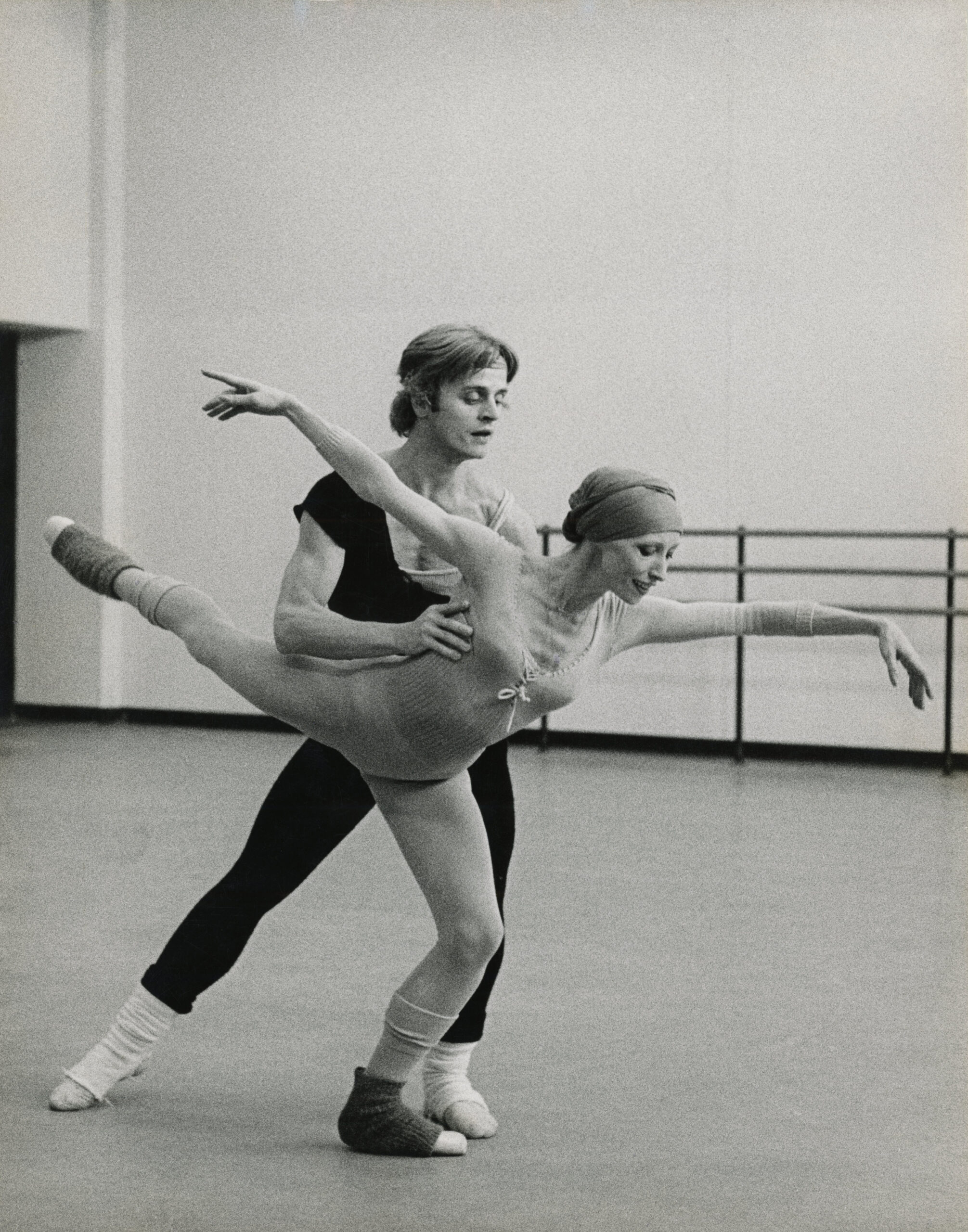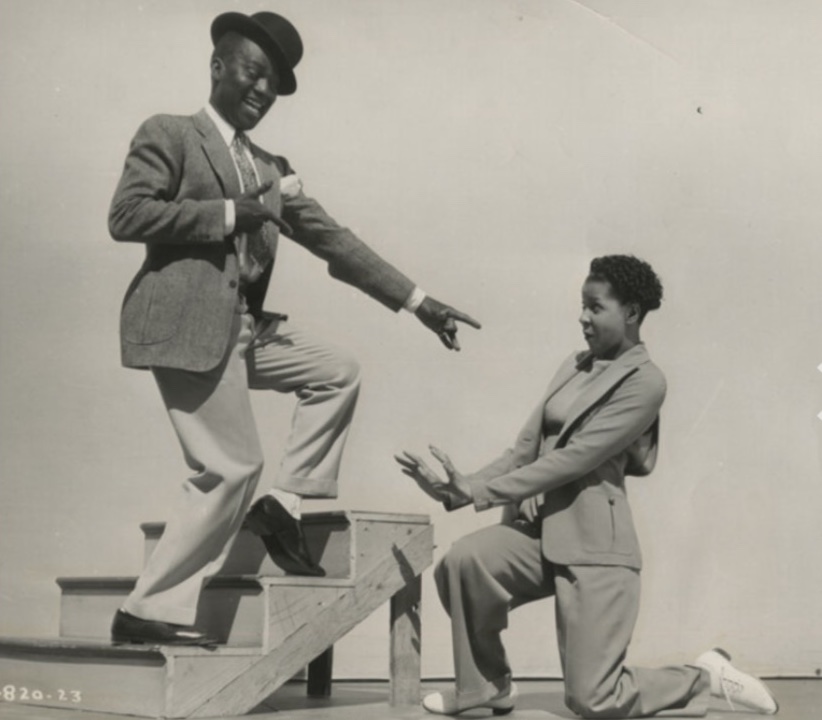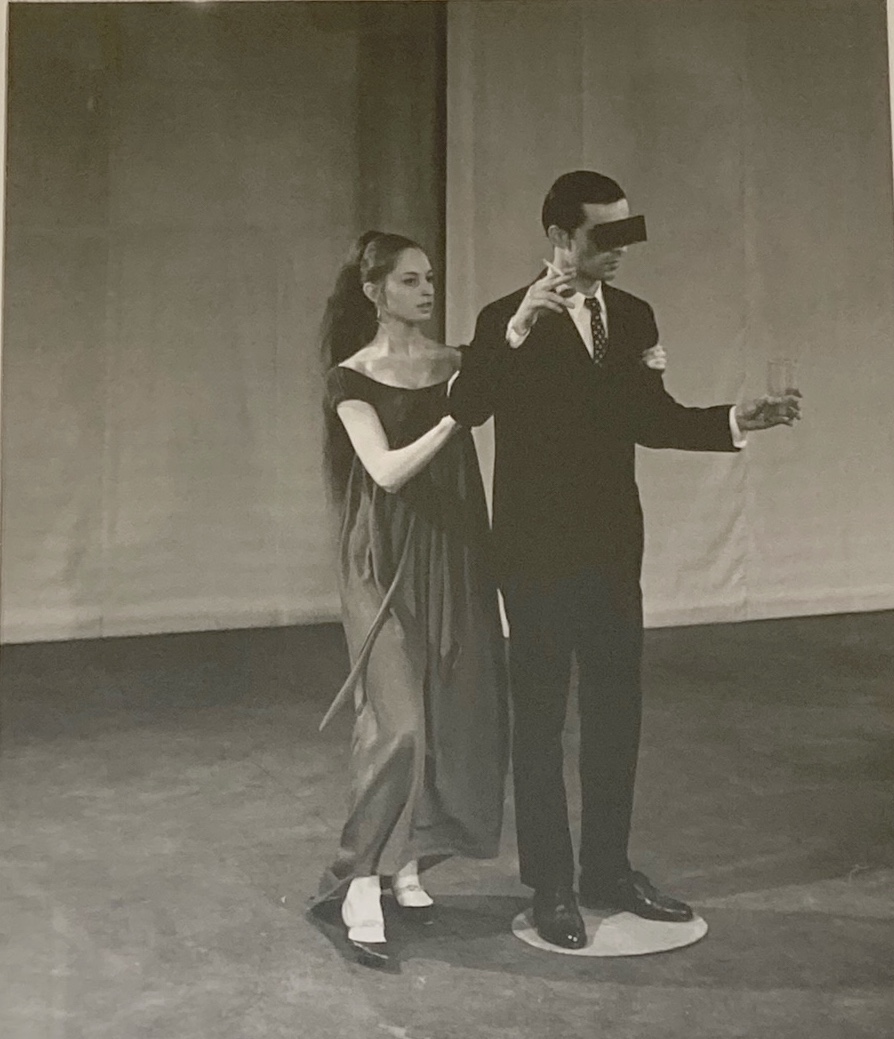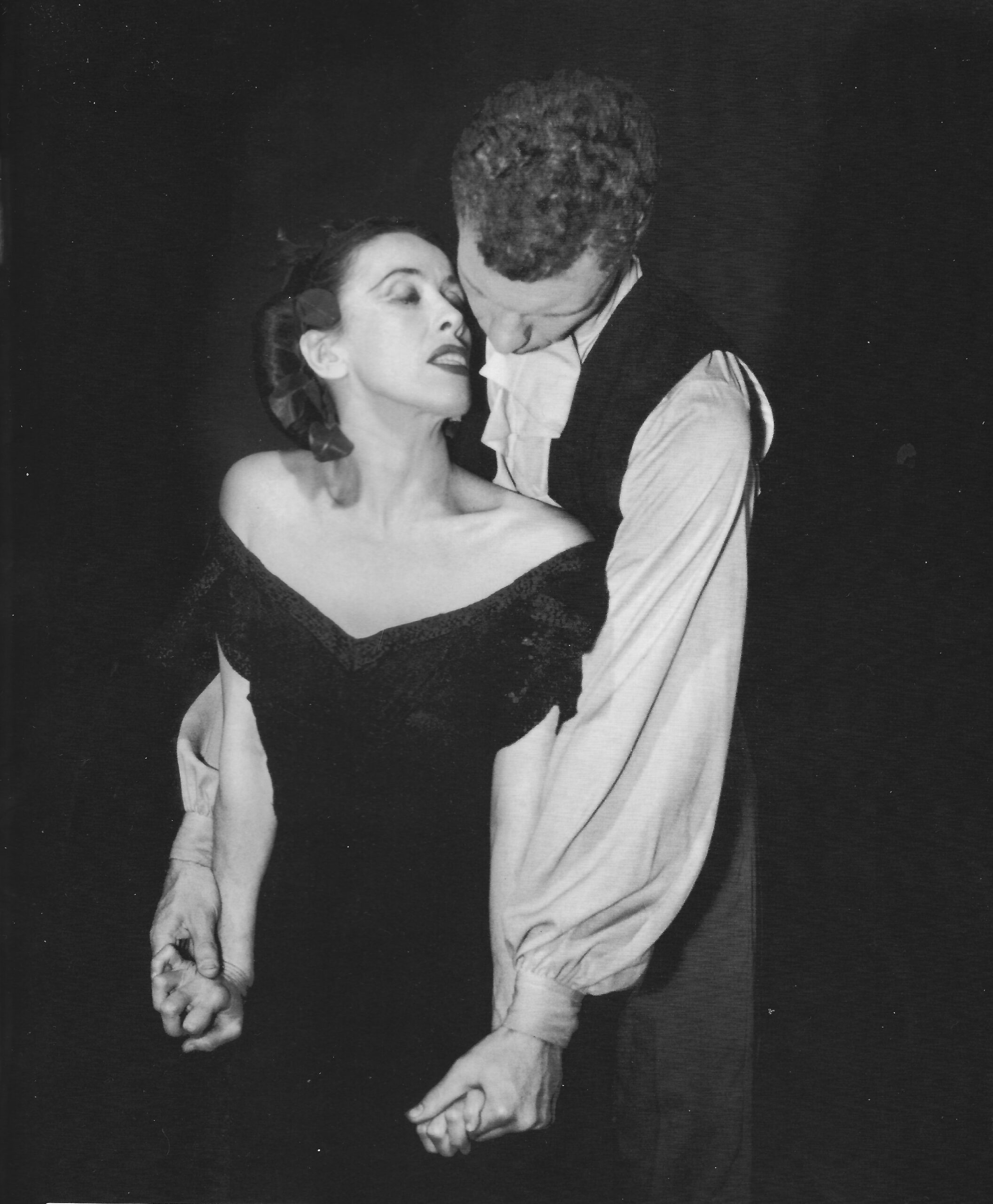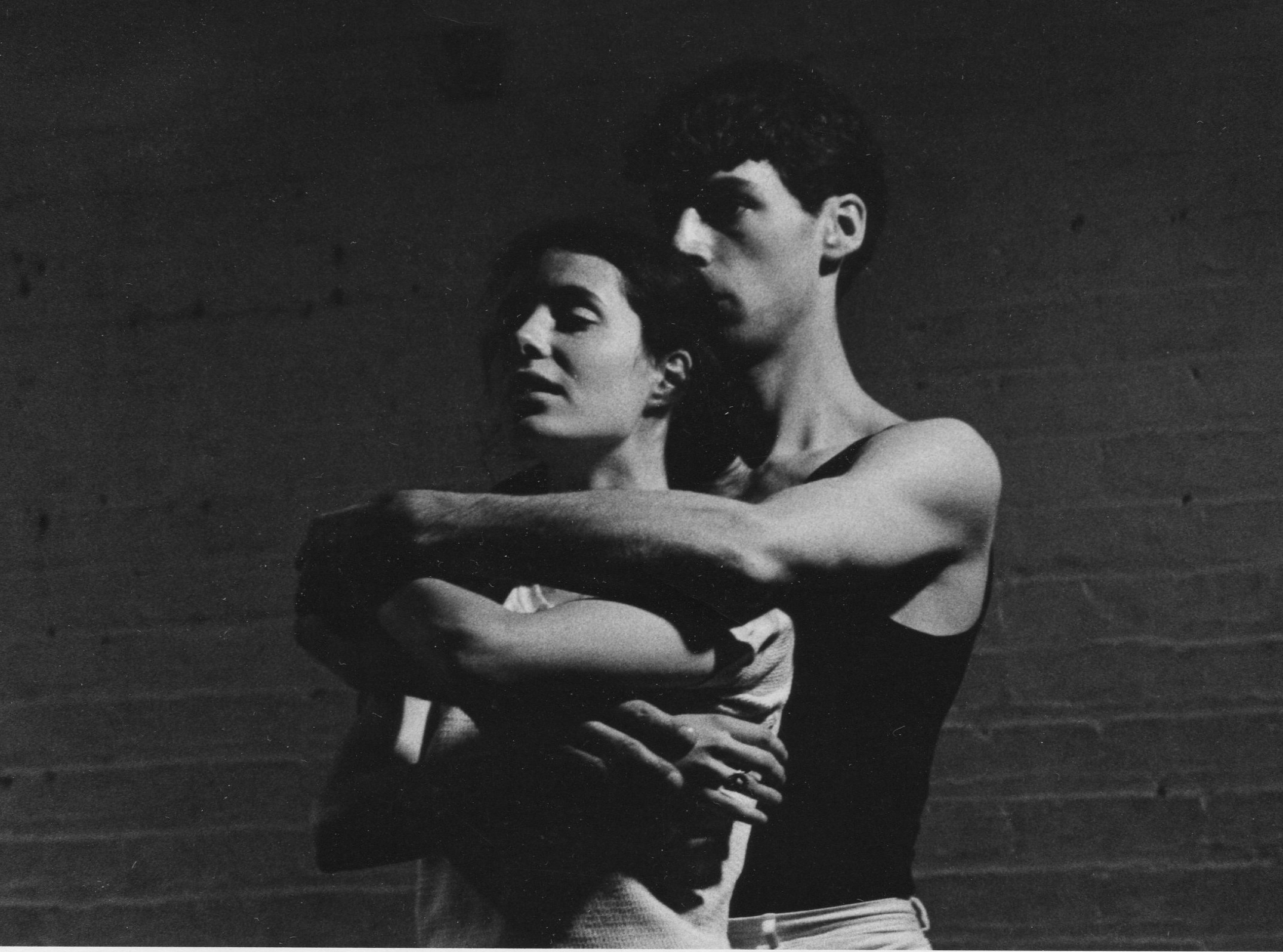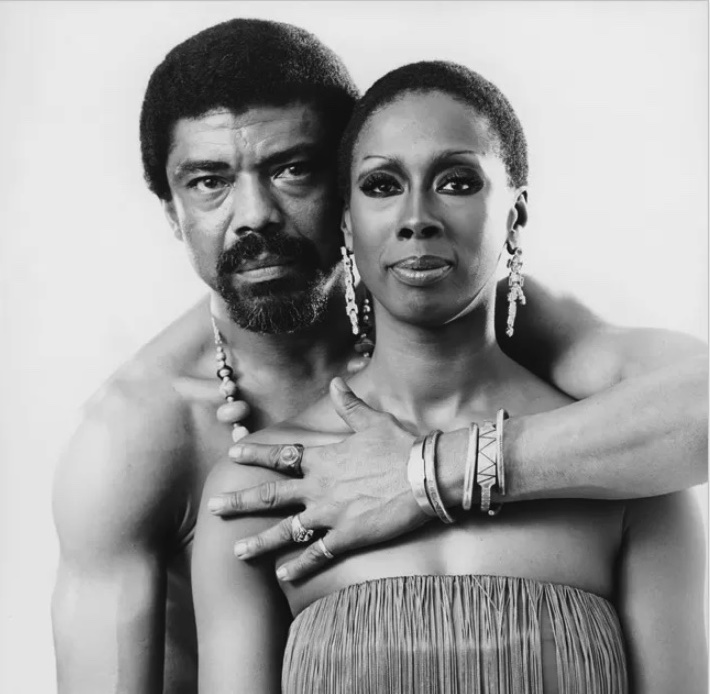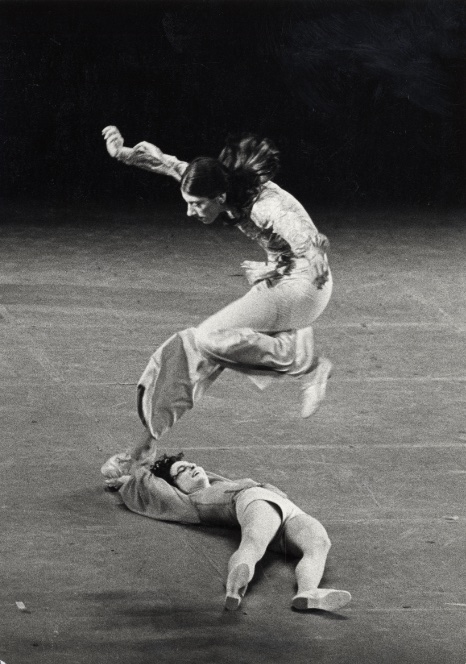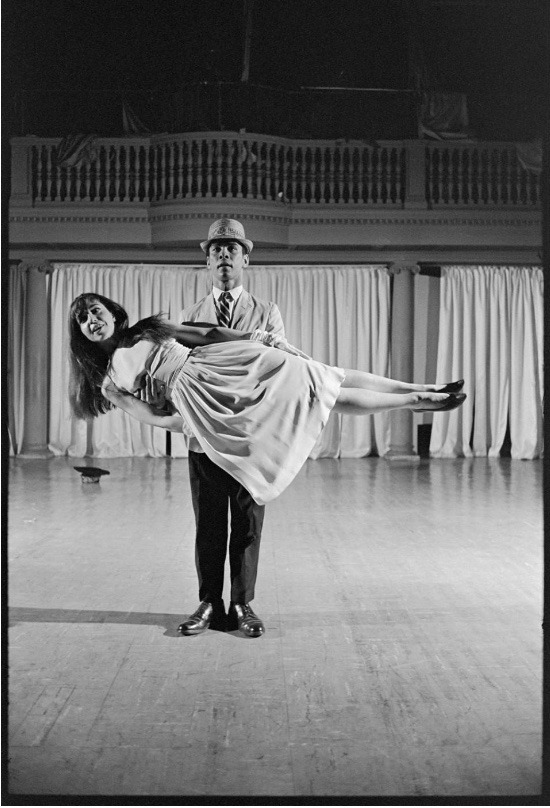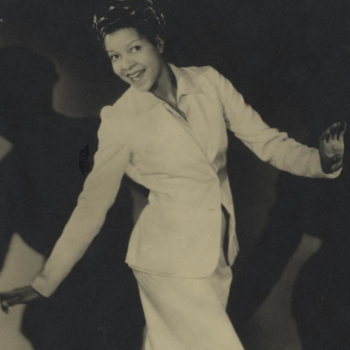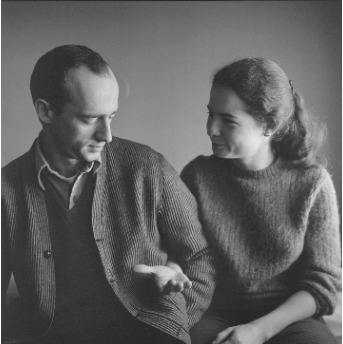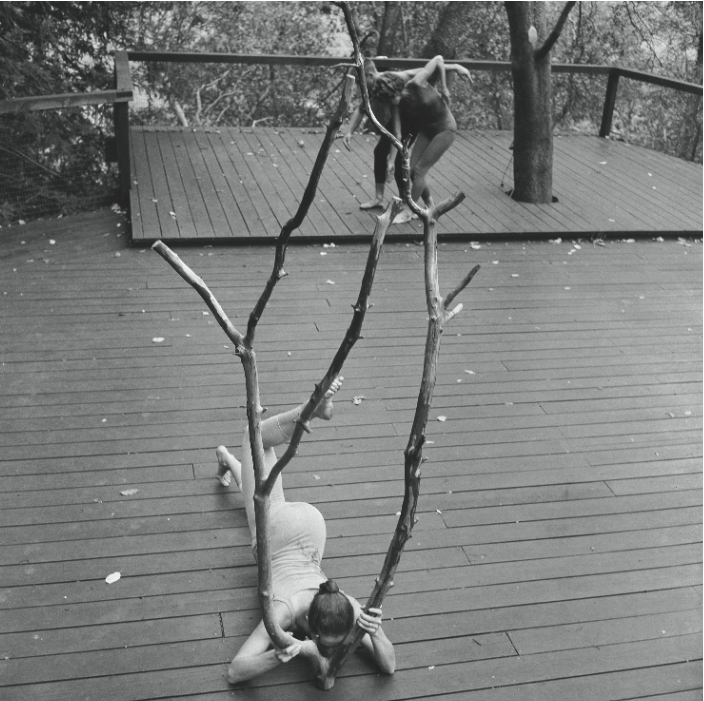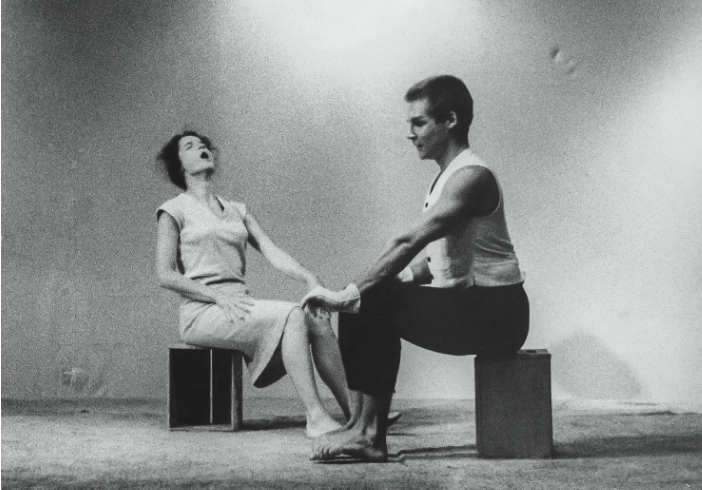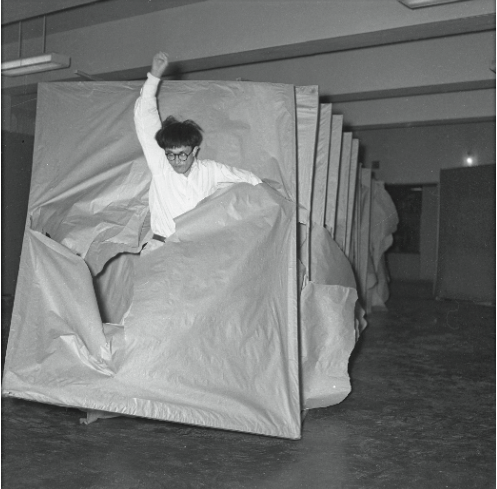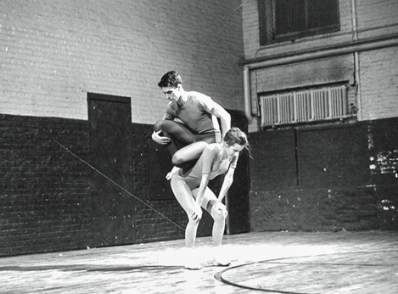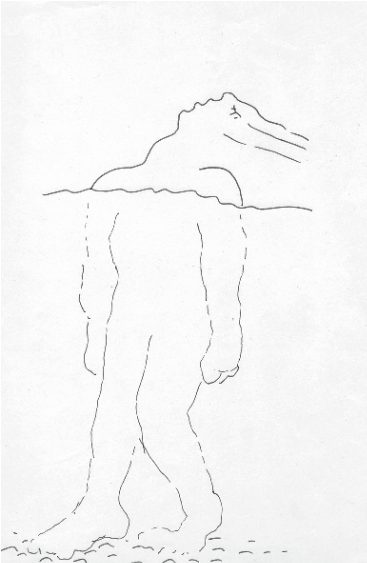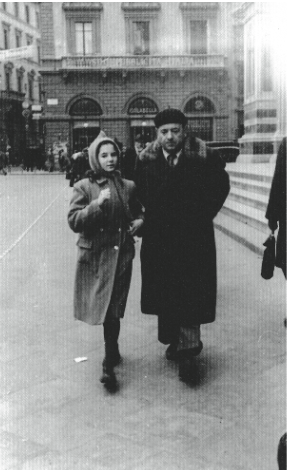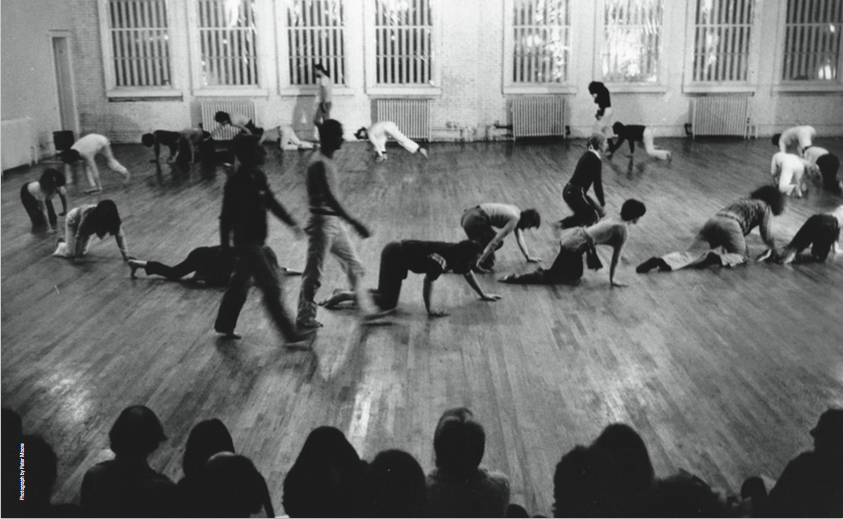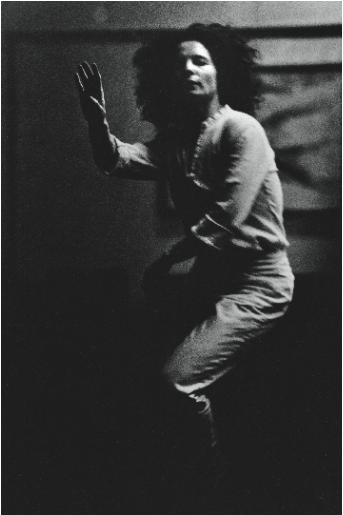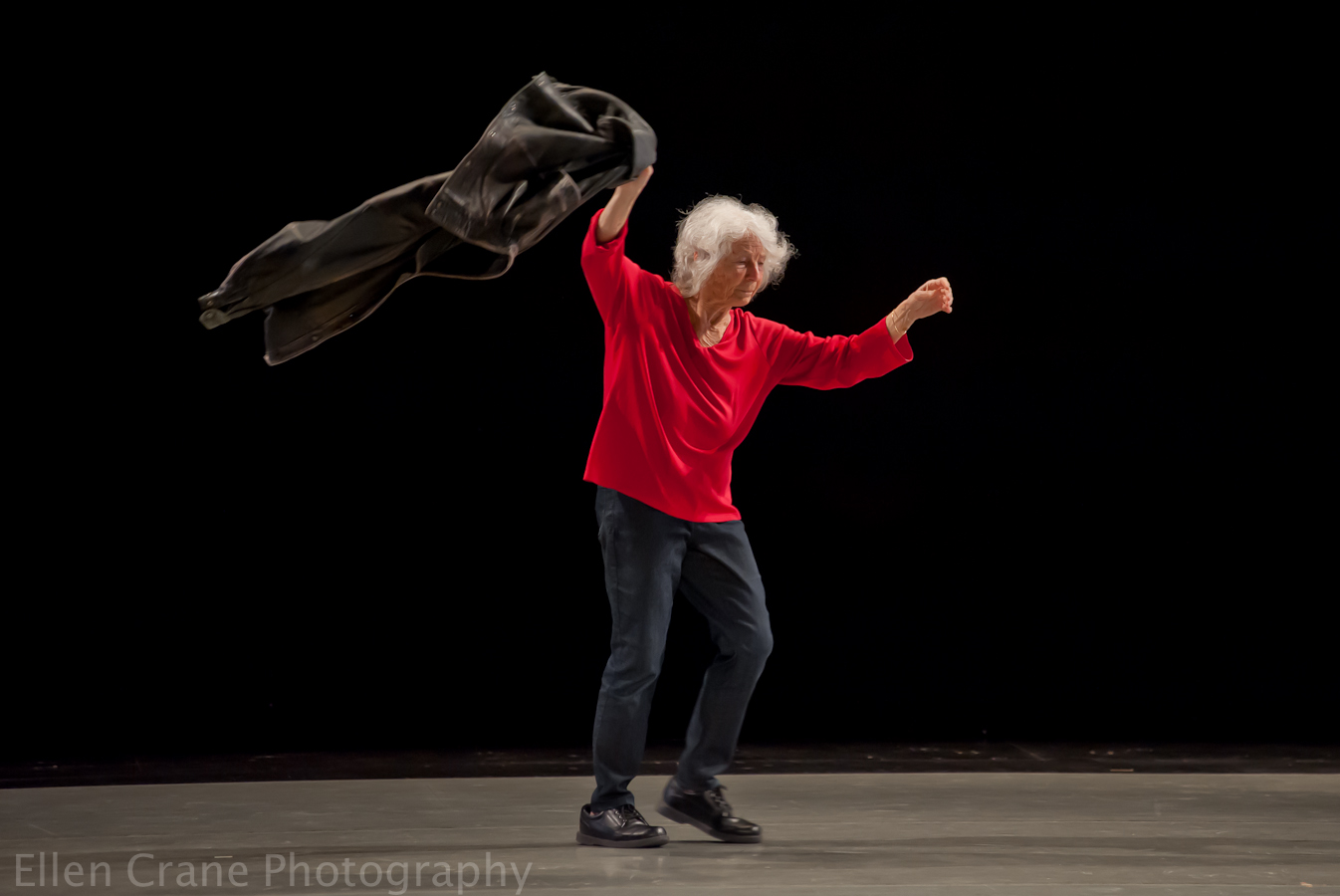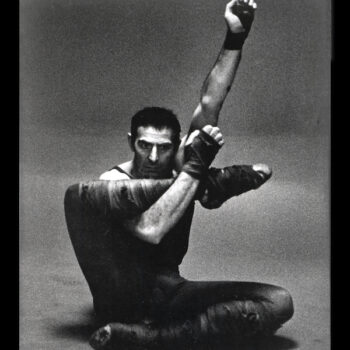
One of the fascinating dancer/choreographers of mid-20th-century American modern dance, Paul Sanasardo died on July 23 at the age of 97. He made works in the intense expressionist mode of Anna Sokolow, co-created an experimental space called the Studio for Dance, and taught rigorous technique classes for decades. He made more than eighty ballets, many of them full-evening works.
Born in Chicago, Sanasardo studied painting at the Art Institute of Chicago. He took ballet lessons with Bentley Stone and occasionally with modern dance improvisor Sybil Shearer. He served in the army from 1952 to 1954, but his longtime friend Douglas Nielsen, says, “Paul conscientiously objected to using a gun, so he was assigned to be a cook.” On his time off, he studied in Washington, DC, with Erika Thimey, a proponent of the Mary Wigman/Hanya Holm style, and danced with the Washington Dance Theatre. In 1954 he moved to New York, where he studied on scholarship at the Martha Graham School and also with Antony Tudor, Margaret Craske, Mia Slavenska, and Karel Shook. He danced with Anna Sokolow, who cast him in the original “Panic” solo in her masterwork Rooms (1955). For years, he was a guest artist with Pearl Lang, partnering her often, and also appeared on live television and Broadway.
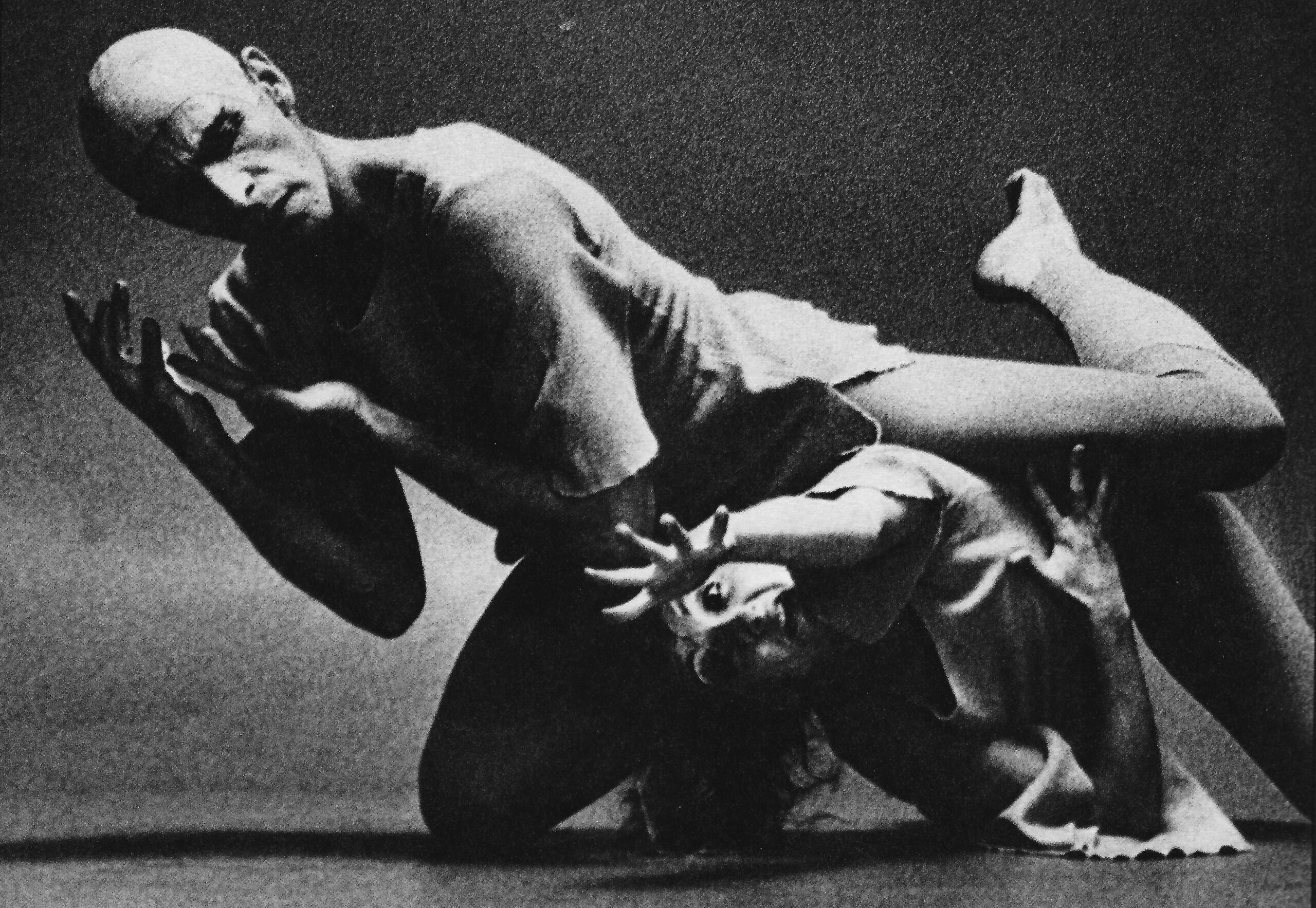
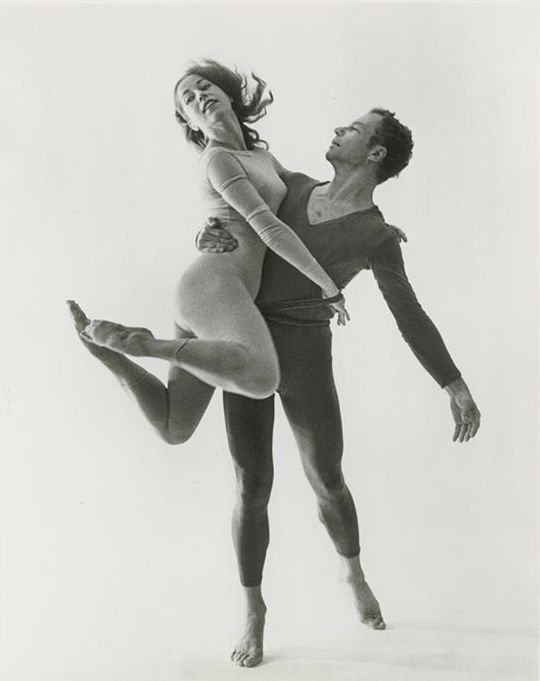
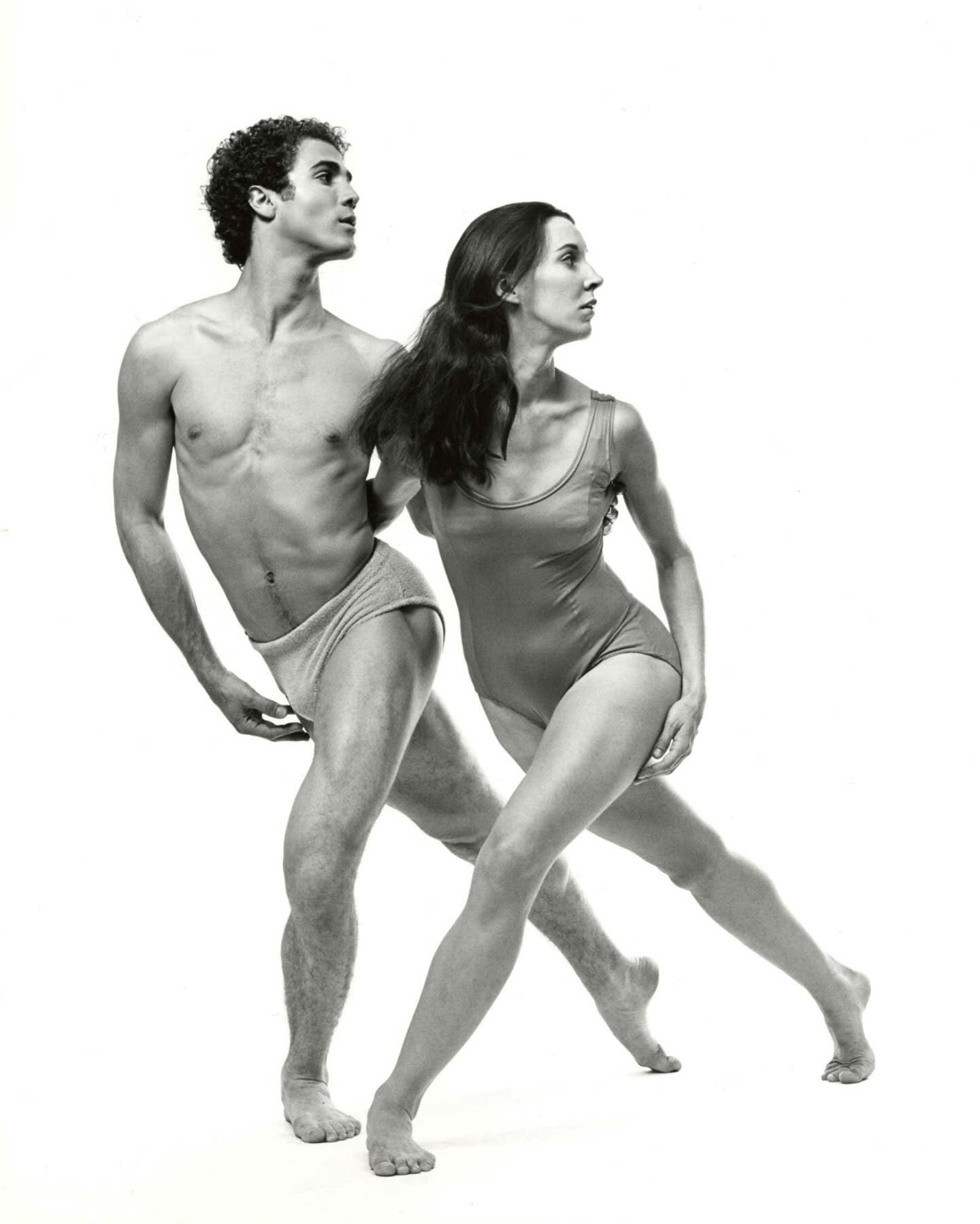
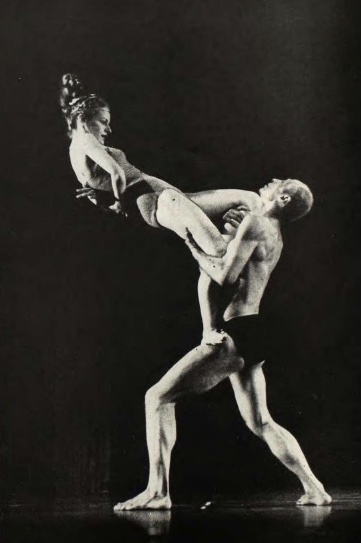
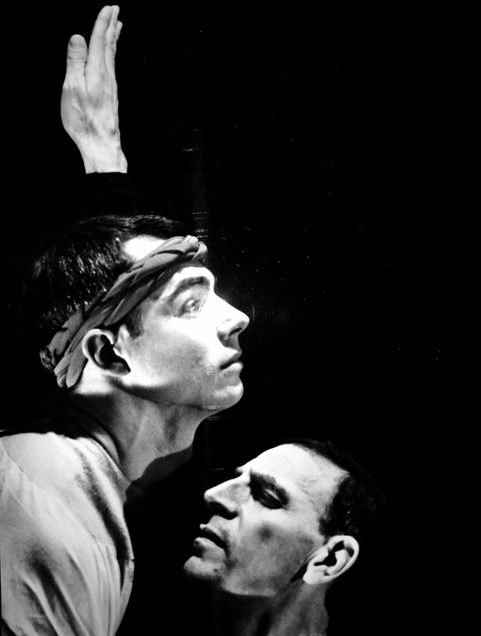
The Path (1972), Sanasardo with Michele Rebeaud, ph © Max Waldman
In 1958 he teamed up with Donya Feuer, a Juilliard grad who had danced with Graham, to establish the Studio for Dance (later Modern Dance Artists), a hub of experimental work that tended toward dance theater. (See Mark Franko’s excellent book Excursion for Miracles: Paul Sanasardo, Donya Feuer, and Studio for Dance, 1955–1964.) At Tudor’s urging, Sanasardo invited Pina Bausch, who was in New York on a grant to attend Juilliard, to work with them. She collaborated with them in Phases of Madness (1960), about which Paul joked, “We just beat each other up onstage.”[1] She performed with them at the 92nd Street Y while still a student. (For my essay about Bausch’s time in NYC, I interviewed Sanasardo about his influence on her.)
One of the extraordinary aspects about the Studio for Dance is that it nurtured a children’s company. It wasn’t just annual recitals, but these kids were serious players in the works. Eleven of them performed in In View of God (1959). Pina’s observation: “There was nothing childish. They were like adults, only very young ones: Young human beings. There was nothing cute. It was very simple.”[2]
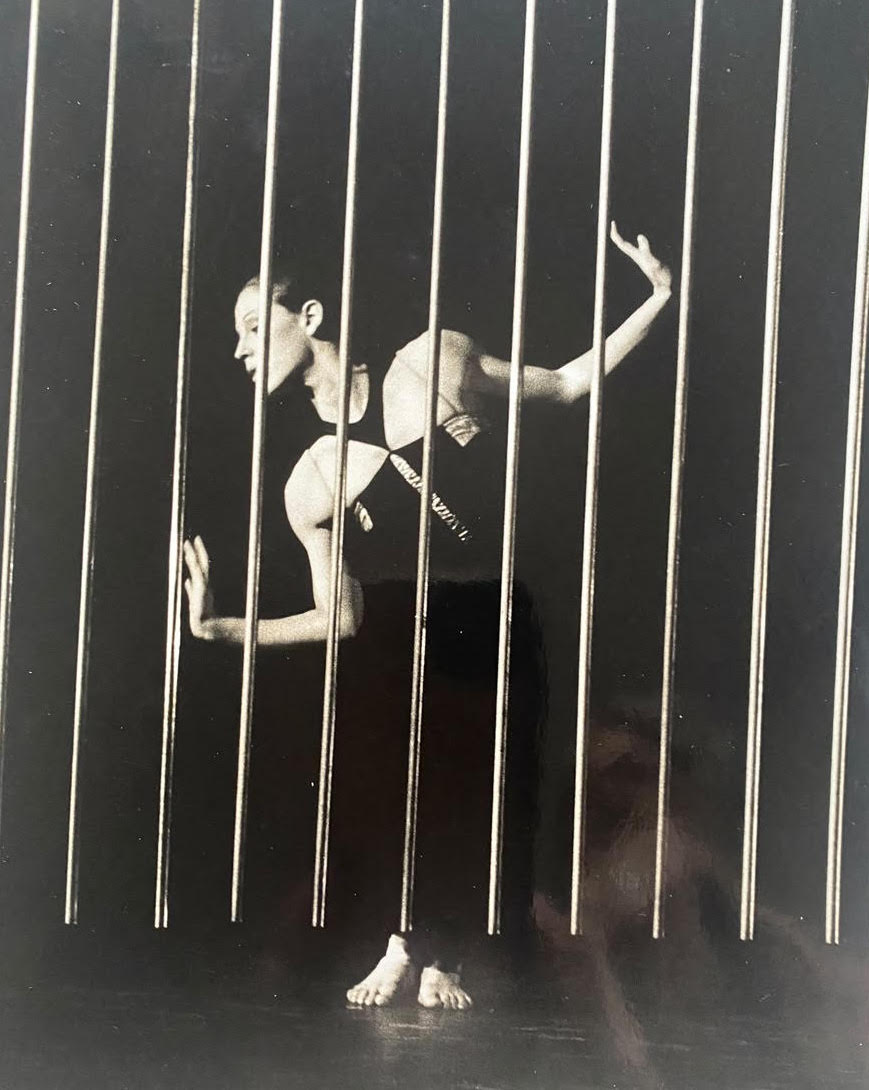
Metallics (1964) with Holly Cavrell, Courtesy Cavrell
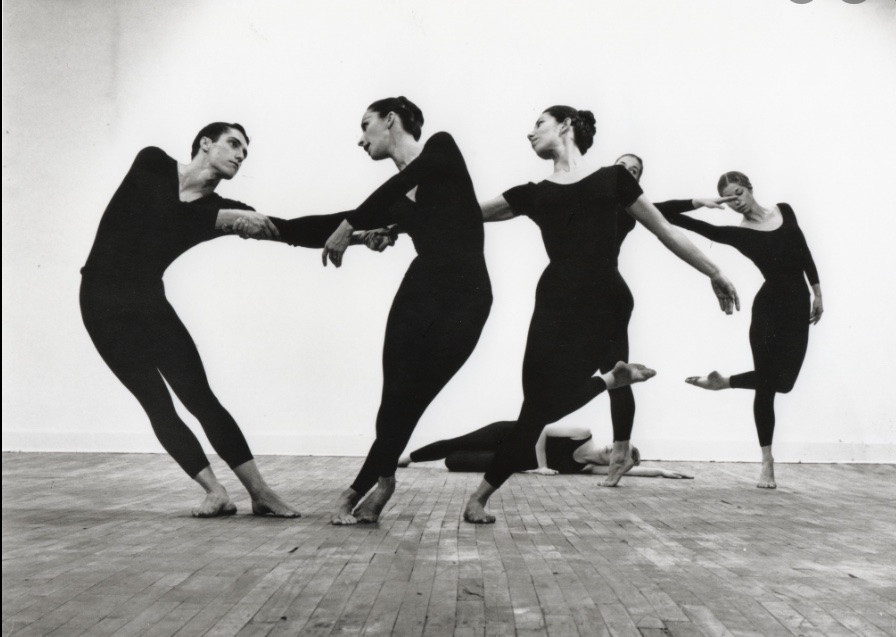
After Feuer decamped for Sweden in 1963, Sanasardo started the Sanasardo Dance Company, which quickly attracted both audiences and critics. As a performer, he had a double-edged intensity. As Doris Hering noted, “He could be simultaneously evil and heroic.”[3] According to Nielsen, he created his best work in the 1960s including Metallics, Shadows, The Path, and Pain. Anna Kisselgoff described Metallics, which entered the reps of both Ailey and Nederlands Dans Theater, as “an enigmatic psychological study in solitude.” Deborah Jowitt wrote in the Village Voice, “Sanasardo is concerned with human feeling, with powerful emotion. His dancers are all steel-and-fire supermen—beautiful and almost terrifying in their strength.”[4]
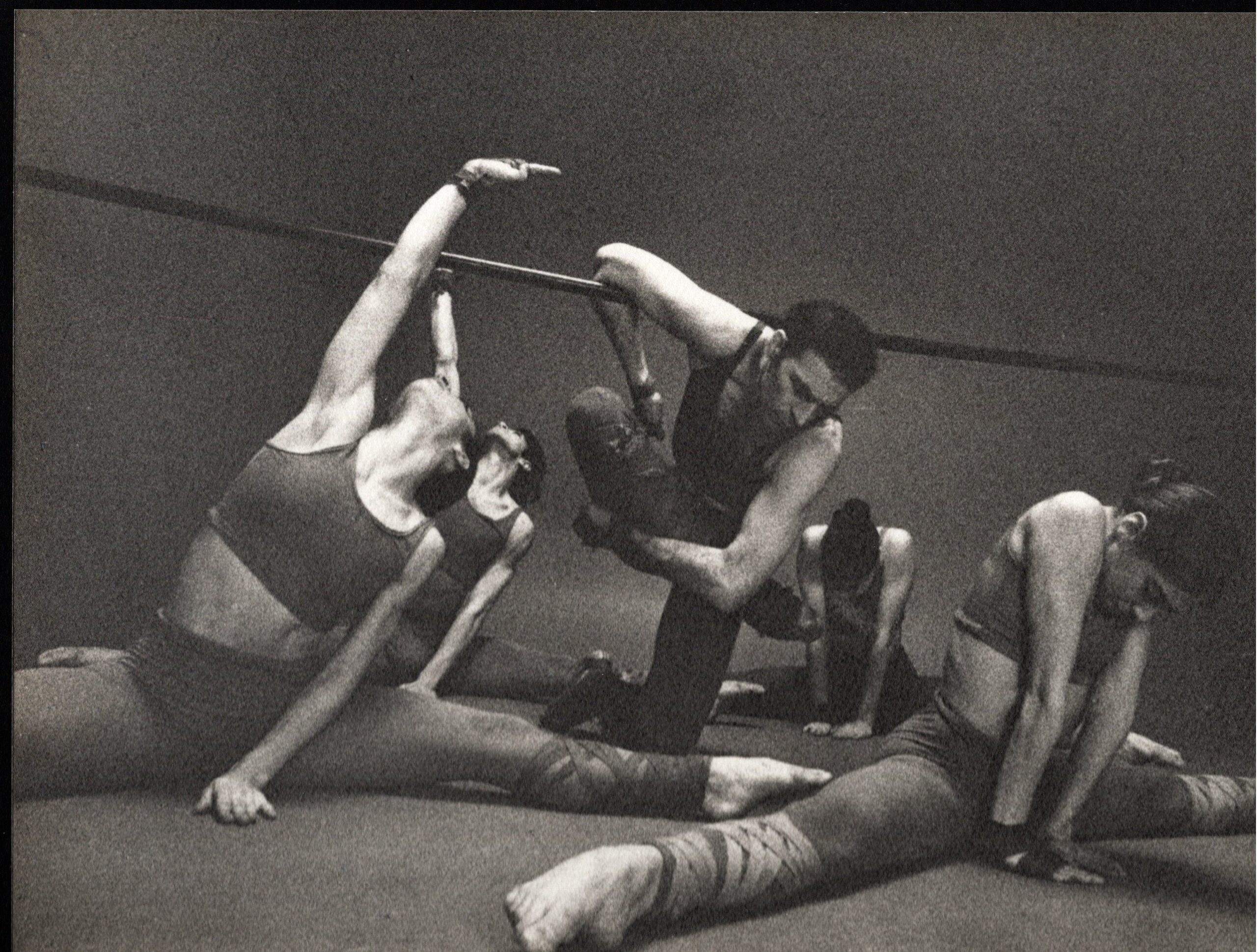
Pain (1969), with Sanasardo, center, ph © Max Waldman, 1970
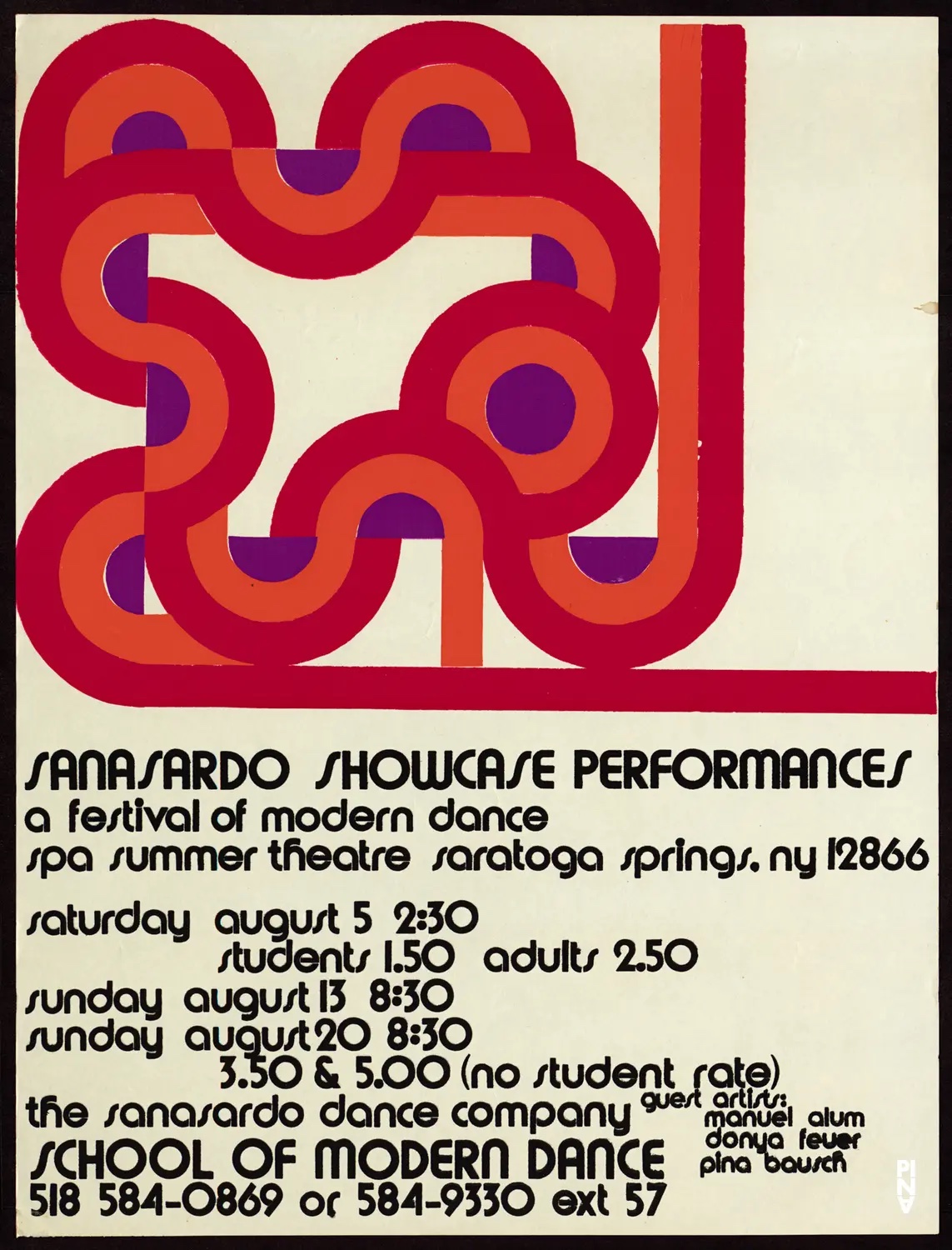
Poster forfrom Bausch Fndn
Sanasardo was a revered teacher, fielding requests from all over the country, including for the Ailey company. From 1969 to 1974, he founded and led the School for Modern Dance at Saratoga Performing Arts Center in Saratoga Springs, NY, with his protégé Manuel Alum as assistant director. During the summer of 1972, Pina Bausch joined his residency, and that summer the showcase included works by guest artists Alum and Bausch. Pina showed Nachnull (After Zero) and PHILIPS 836 887 DSY, and Manuel showed Sextetrahedron. French dancers Dominique Mercy and Malou Ariado, whom Alum had met in France, were part of the company that summer. When Paul could no longer procure visas for them, they both became founding members of Pina Bausch’s company in Wuppertal the following year.
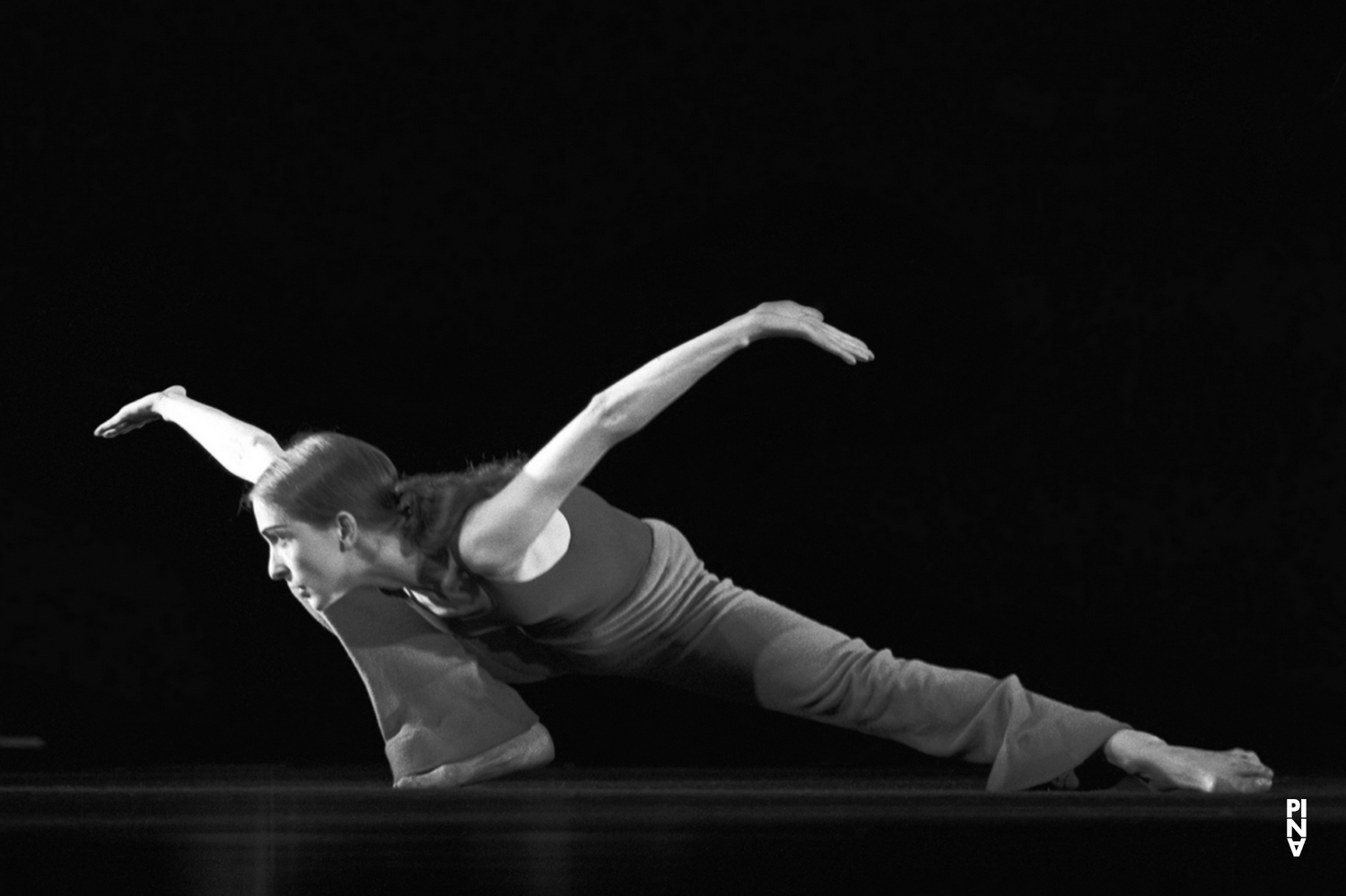
Pina Bausch in her solo PHILIPS 836 887 DSY, included in the Sanasardo Showcase, 1972, Bausch Fndn
In 1971, Doris Hering, reviewing a concert that Sanasardo shared with Alum, wrote, “What I like most in the choreography of both Sanasardo and Alum is the deep sense of responsibility. It extends them beyond themselves. More than that, it affects their beautifully trained and obviously committed company. It also frees their choreography.”[5] However the constant pitch of angst was sometimes hard to sit through, causing Anna Kisselgoff to remark, “No one leaves a Sanasardo concert laughing.”[6]
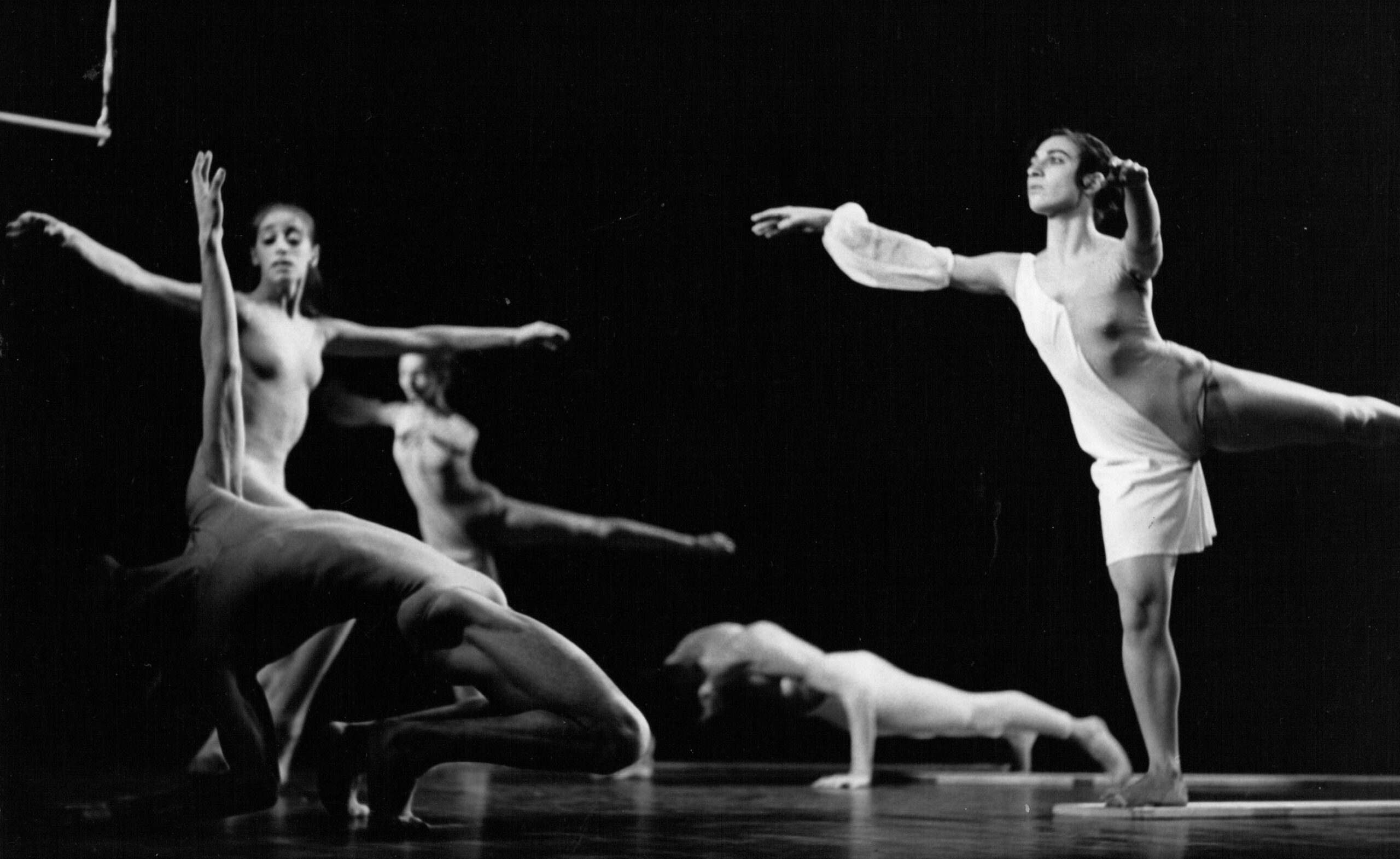
Cut Flowers (1966) with Mark Franko at right, ph Oleaga, Courtesy Franko
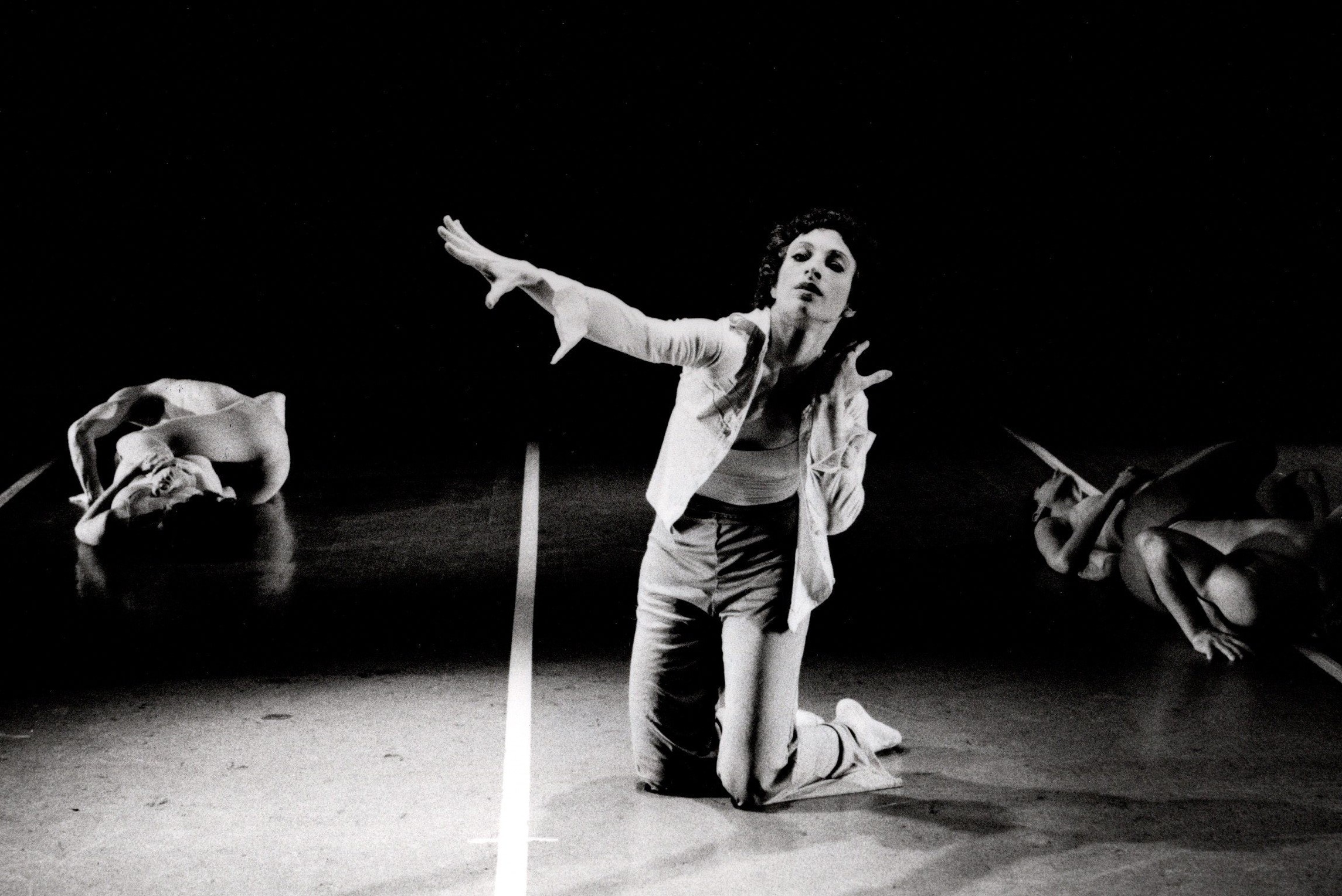
A Consort for Dancers (1975), with Diane Germaine, center, ph Lois Greenfield, Courtesy Germaine
But Sanasardo was finding his way. “You learn by doing,” he said in an interview. “Your dancers have a tremendous influence on you.” [7] As if to prove that, Sanasardo generously gave opportunities to his main dancers to show their own choreography. They included Willa Kahn, Diane Germaine, Gerri Houlihan, Joan Lombardi, and Manuel Alum. It was risky for Sanasardo. On at least one occasion, Alum, who was an extraordinary dance artist, was reviewed more favorably than Sanasardo. (My historical essay on Alum as one of my Unsung Heroes of Dance History is here.) In 1971, Clive Barnes wrote in the New York Times, that Sanasardo’s
works have a high degree of polish and finesse. What they do not have is that quality of raw creativity that ironically enough is quite often shown by Mr. Sanasardo’s best‐known student and leading dancer, Manuel Alum. Mr. Alum is a disciple of all of Mr. Sanasardo’s virtues and adds a certain abrasive quality of his own.[8]
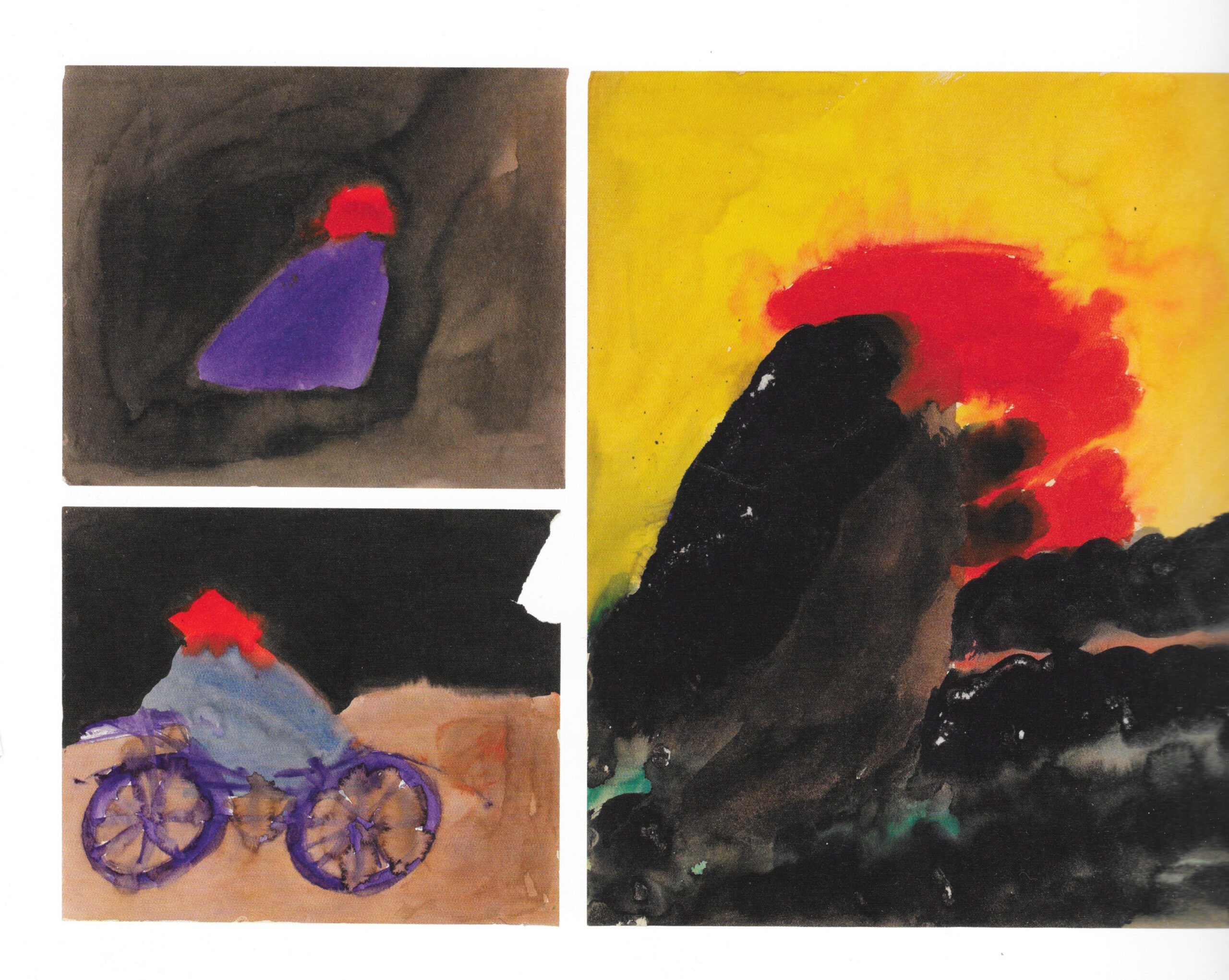
Sanasardo put his company on hold in 1978 when he went to Tel Aviv to direct the Batsheva Dance Company on a three-year contract. When he returned three years later, he resumed making dances, and Kisselgoff wrote that “Mr. Sanasardo is still at his best when he is exorcising his demons.”[9] But, as Nielsen says, “His heart wasn’t in it.” He disbanded his company in 1986. He and his life partner, William Weaver, moved to a small farmhouse in Cooperstown, NY, where he could paint in a silo. After Weaver died, in 2003 he returned to Chicago, where he was active, teaching steadily (free of charge) and choreographing with Larry Long at the Ruth Page Center for the Arts. He made a new ballet for Joel Hall Dancers to recordings by Nina Simone (an idea that he had hatched earlier with Alvin Ailey). And he continued painting.
In 2011, he was honored by the American Dance Guild with a Lifetime Achievement Award.
§§§
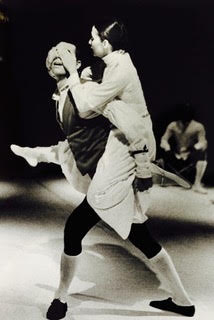
Memory Suite (1975) with Nielsen and Janet Panetta, Courtesy Nielsen
Sources: Douglas Nielsen, David von Ehrlicher, Chicago Dance History Project 2016 interview, my essays on Pina Bausch and Manuel Alum, the International Dictionary of Modern Dance, and Mark Franko’s book, Excursion for Miracles.
Memories from his dancers…
Paul always told the story that when Antony Tudor first saw Paul dance a solo, he said, “You couldn’t teach that to anyone” In four words: Feelings. Action. Drama. Humanity. No steps. Who but Paul Sanasardo would dare choreograph an entire evening to the spoken word from The Death Notebooks by poet Anne Sexton? (A Consort for Dancers, City Center Downstairs, NY, 1975.) We were actors who danced. After that Paul choreographed a duet, Abandoned Prayer, based on Christ and Judas. Paul was Judas. In rehearsal he kissed me on the cheek, but onstage he kissed me on the mouth. When Paul became the director of Batsheva Dance Company, I went with him and stayed three years. When we got back to NYC, Paul and I collaborated on a duet, Five Cases, which again felt more like a play without words.
—Douglas Nielsen is a performer, choreographer, teacher, art collector and former professor in the University of Arizona School of Dance. After performing and teaching in many countries, he founded his own group in 1981.
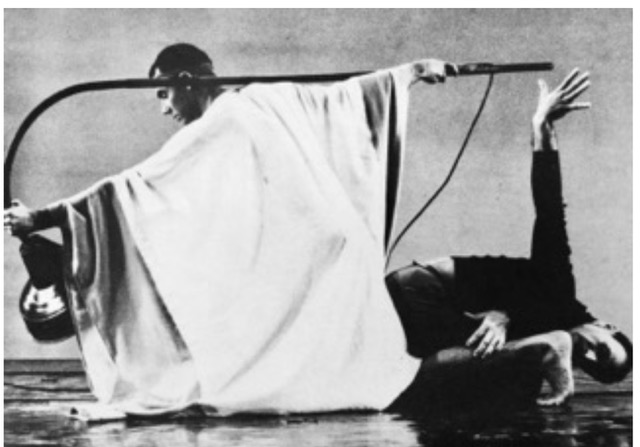
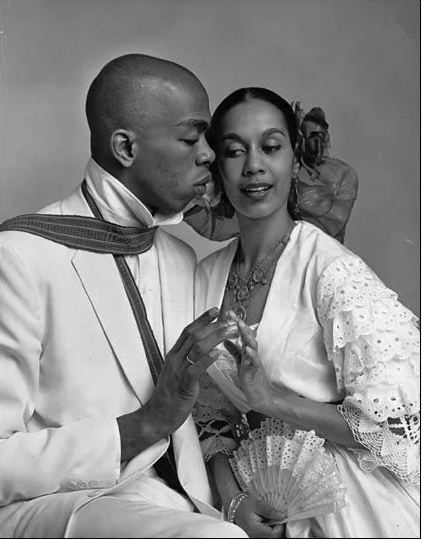
Both photos: Abandoned Prayer, with Nielsen and Sanasardo, Courtesy Nielsen
Paul was complex—a storyteller who could not be reined in, an old school taskmaster, passionate and overwhelming, not at all politically correct. Deep and dark and emotionally direct, Paul was also so very sentimental and generous in every way with a beautiful smile full of warmth and vitality. Through my magical introduction to dance as a member of his children’s company, my memories revolve around the tender treatment of his “children” in the dances that he and Donya Feuer created in that unique time and place in the late 1950’s/early 60’s at Studio for Dance. In the numerous times we connected throughout Paul’s long life, I was forever 12-year-old Judy Canner, one of his “children.” I am so grateful for Paul’s love and artistry, his forceful nature and his giving heart.
—Judith Canner Moss, Dancer/Choreographer/Teacher, on the faculty of Queensborough Community College
—I am also including this link to the short film/interview with Paul made by Sally Bowden and me in 2007, videotaped by Michael Moss with post-production/editing by Andrew Gurian.
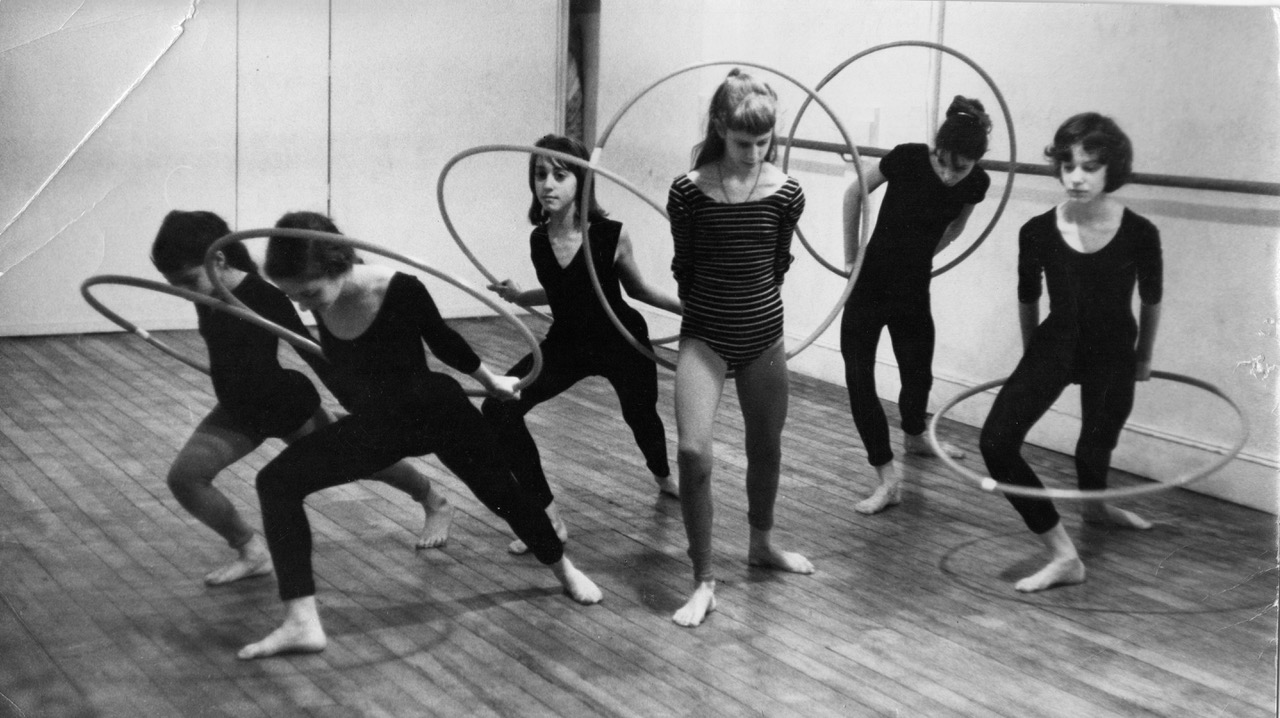
Children rehearsing: Ruth Frank, Ellen Shookhoff
Judith Blackstone, Kathy Bushnell, Willa Kahn, Judith Canner Moss, Courtesy Moss
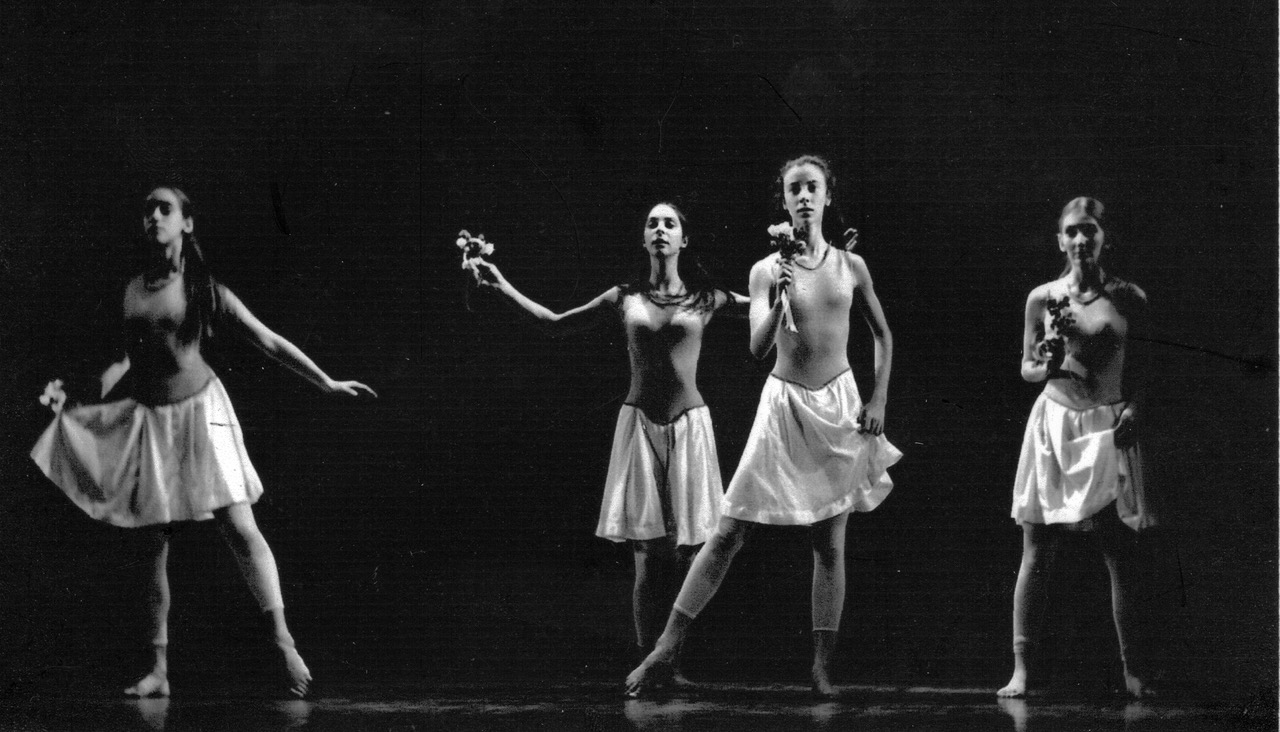
The Children’s Group in Sanasardo’s Pictures in Our House (1964): L to R: Judith Blackstone, Willa Kahn, Judith Canner Moss, Sally Bowden, Courtesy Moss
Paul’s advanced classes were unusually diverse even for the 1960s. Company members included at different times across the decade Loretta Abbott, Gus Solomons, jr., Martin Bland, Strody Meekins (who also danced with Eleo Pomare), Brenda Dixon-Gottschild, Diana Ramos, Michelle Llauger and Milagro Llauger, and, of course, Manuel Alum. In class one could see Juan Antonio, Ulysses Dove, Roberta Pikser, Clyde Morgan, Dyanne Harvey-Salaam, John Parks, Zita Allen, Uttara Coorlawala, and Virginia Johnson. Paul’s classes were a who’s who of New York dance—ballet and modern. Doing combinations across the floor toward the end of class invariably accelerated into a performance that all could see as well as be part of. With so much talent in the room and Paul’s demanding and inspiring way of teaching, nothing could be done by rote.
—Mark Franko, Dancer/choreographer/scholar, Emeritus UC Santa Cruz and Temple University, author of Excursion for Miracles.
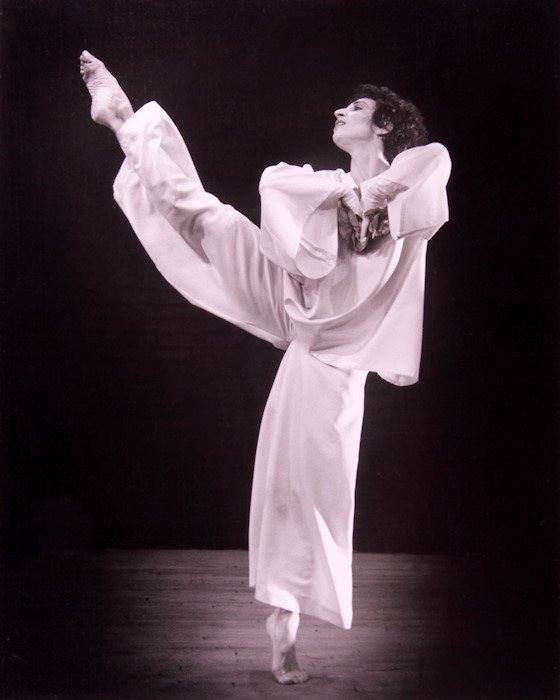
Diane Germaine in Shadows (1973), ph David Fullard, Courtesy Germaine
Paul Sanasardo was a humane mentor, friend, and very physical creator; his technique was nuanced, energetic, thorough and often collaborative. Paul was a strong, verbal, and poetic man full of communicated imagery and philosophy to invest a role we might be working on, or further our mastery of technique, or understand our life. Paul could be kind, he could be difficult, but working with him for thirteen years as his principal dancer became the important and continuing base for me to be able to continue later as my own artist in the field as choreographer and writer.
—Diane Germaine, Dancer/choreographer/writer.
I started dancing with Donya (Feuer) and Paul in their children’s company when I was 10. Although we were kids, there was nothing childish about the pieces they choreographed and we performed. A lot was expected of us and as a result, we gave a lot. Working with them then was wonderful. It shaped my childhood until I started dancing in the adult company when I was in my teens. Almost 70 years later I still have close ties to several of those “kids.”
—Willa Kahn
—After I left performing, I taught for several years and ultimately went back to school to become a doctor. I jokingly say I was looking for another profession with a ‘d’ but really I wanted to give back. For 30 years, I served an indigent population as a family doctor, retiring 7 years ago. While it was fulfilling work, it never had the transcendency of dance. I feel so lucky to have been able to do them both.
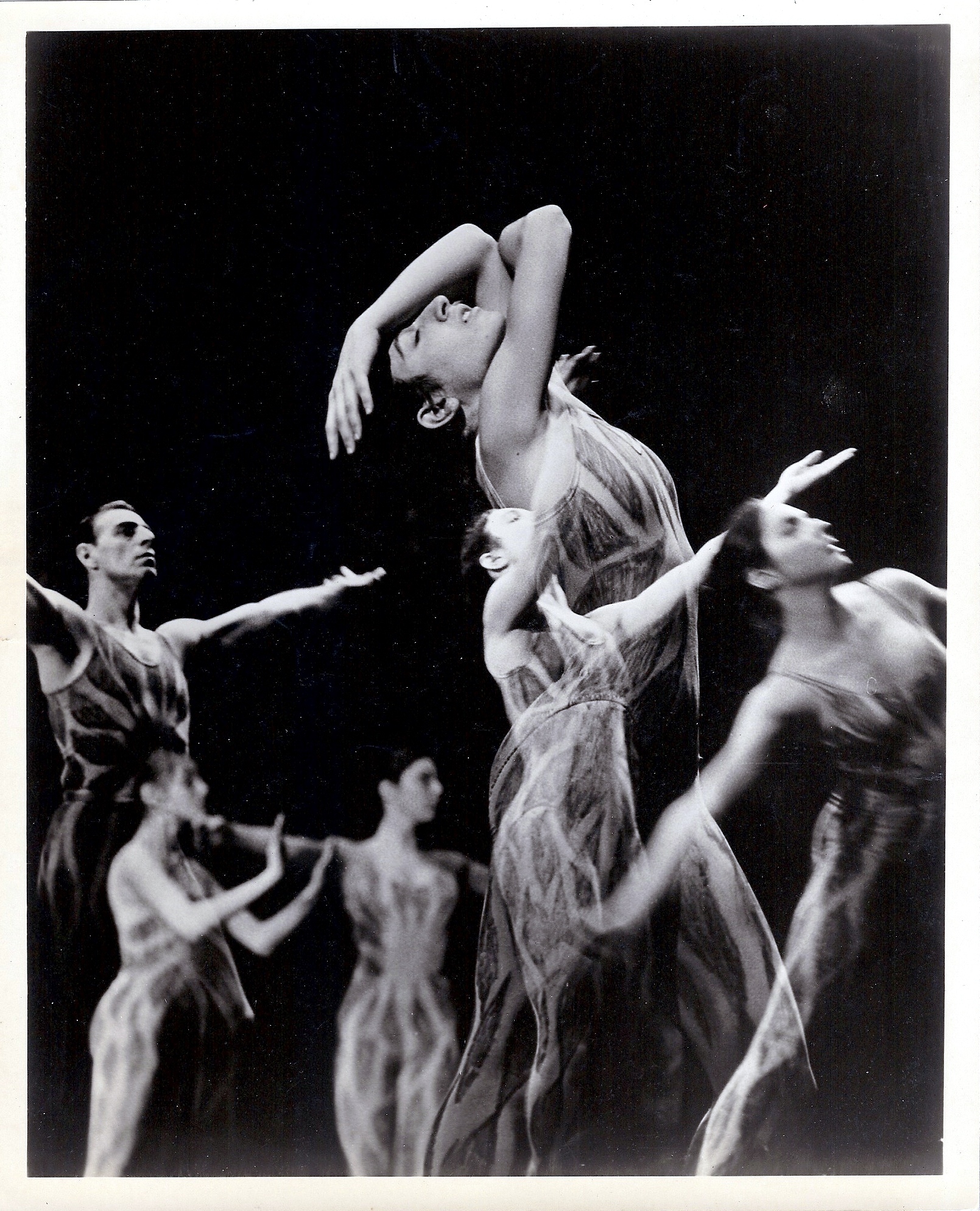
Fatal Birds (1965) composite, L to R: Sanasardo, Judith Blackstone, Willa Kahn, Germaine doubled, Willa Kahn, Courtesy Germaine
In February 1971, I was a beginner dancer arriving from France, striving to study modern dance, which I had discovered just a few months ahead. Having heard of Paul’s classes on 21st Street, I dropped by his studio. I took his class every day. His approach of technique was unique and extremely efficient, mixing Graham and ballet exercises in a perfect balance. It was gradual and altogether very dynamic. He made me progress so rapidly that he took me into his company after just a year and a half of training with him!
—Dominique Petit, who danced in Sanasardo’s company 1972-74, later danced with Carolyn Carlson and had his own company. He has recently worked with Akram Khan in Outwitting the Devil
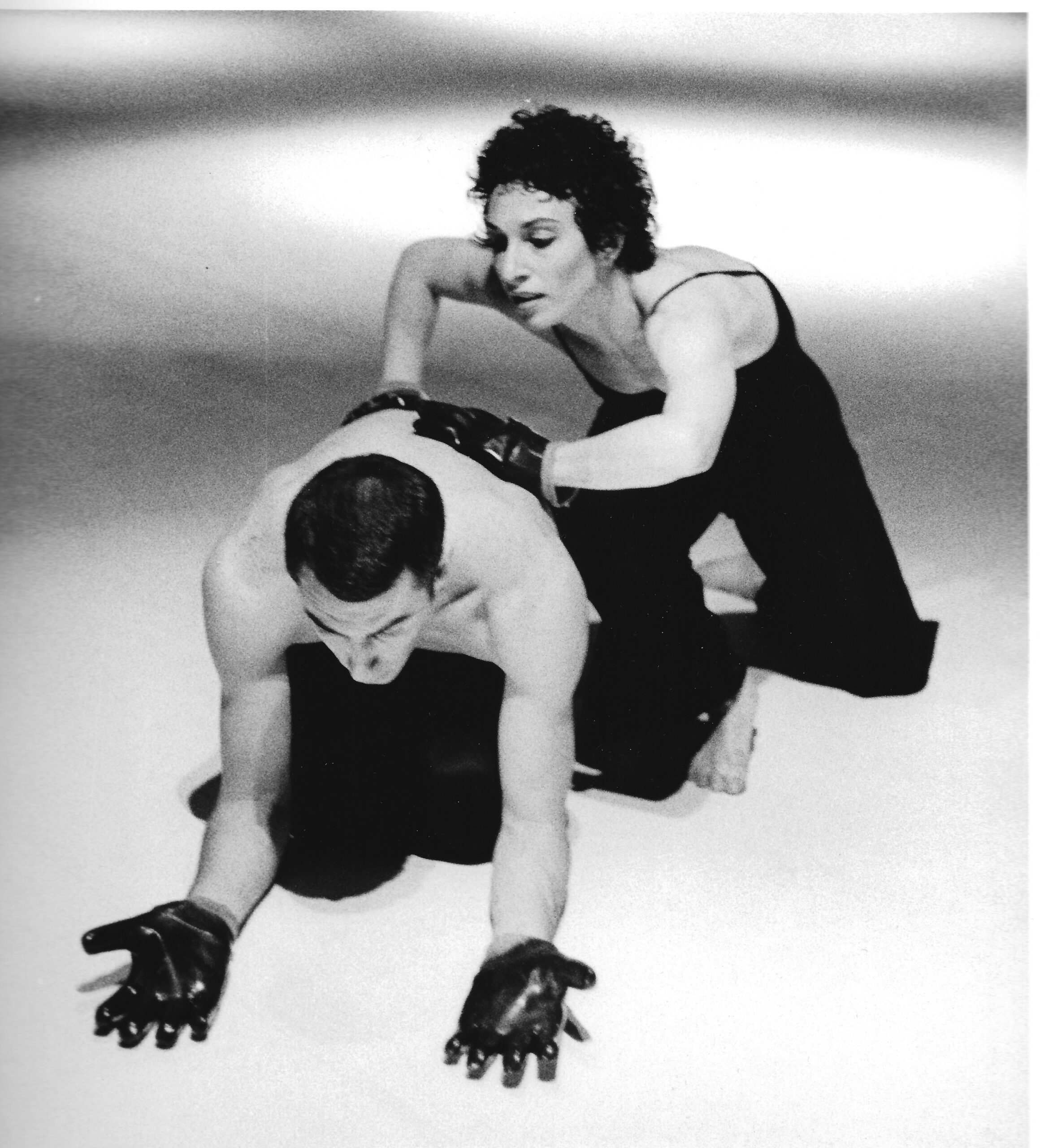
The Path (1972) with Nielsen and Germaine, ph © Lois Greenfield
Paul was inspirational, intelligent, intense, playful, expressive, theatrical and charismatic. Class was Paul’s vehicle for conveying his philosophy and thoughts. The essence of dance for Paul was to express ideas and emotions arising from life’s vital struggles. In his class, technique was strongly applied at the barre. For musical accompaniment Paul turned to Gene Lester on the piano, but Paul often added drums, cymbals, his voice, chants, all of which built intensity. His training helped mold me into the dancer/person I became. His imaginative spirit gave me the understanding, knowledge, and motivation to seek the expressivity of ideas and the potential for building a creative career as a choreographer, teacher, architectural designer, and painter.
—Joan Lombardi, member of Sanasardo Dance Company 1962–1984
Santa Fe, NM
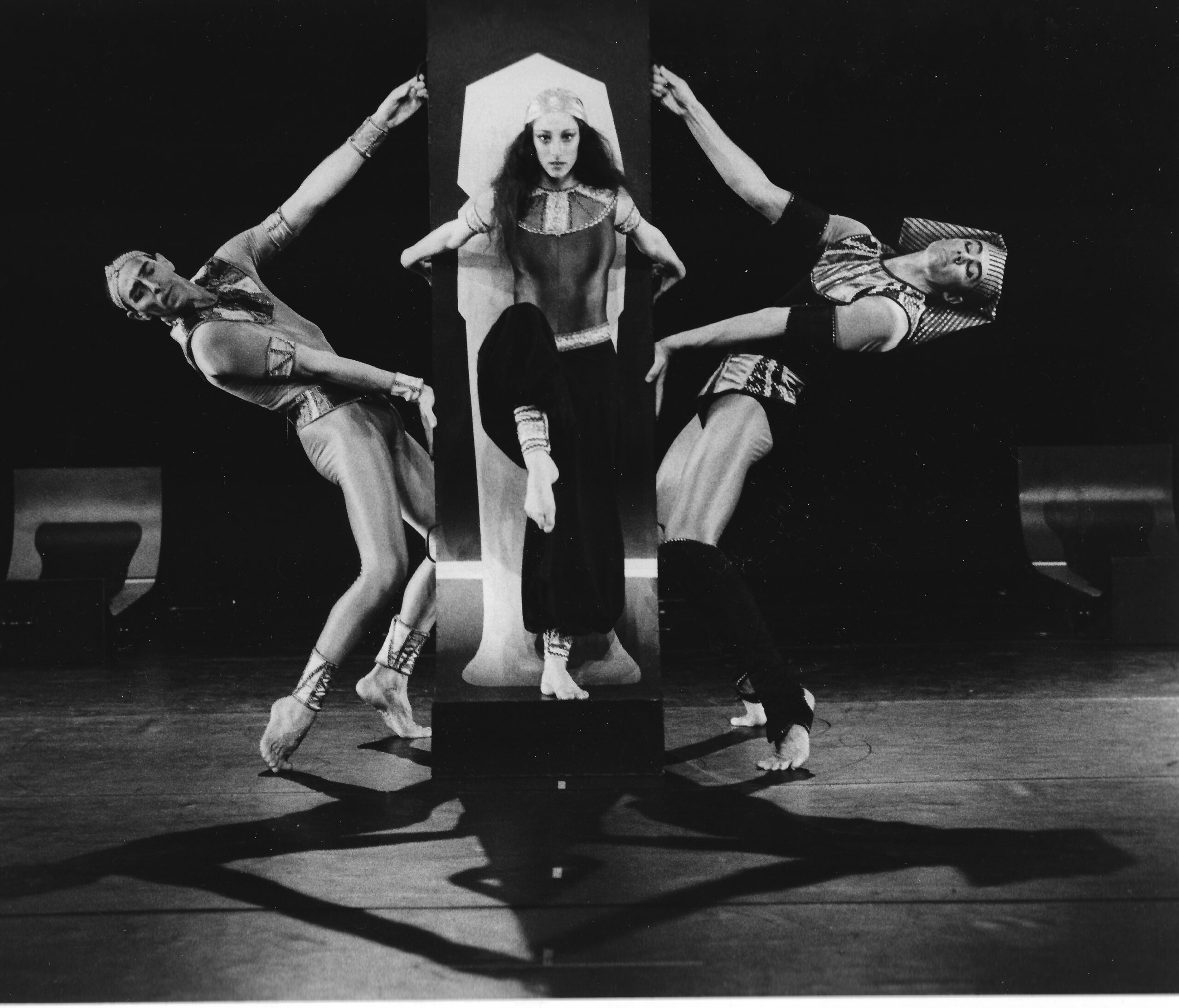
Triad (1977); L to R: Sanasardo as Julius Caesar, Naomi Sorkin as Cleopatra, Nielsen as Mark Anthony, ph @Lois Greenfield
Footnotes
[1] From Chicago Dance History interview
[2] Quoted in Excursion for Miracles, 65.
[3] Doris Hering, “A Darkening Pond: Paul Sanasardo Reviewed,” Dance Magazine, August 1971, 73-74.
[4] This quote came via Doug Nielsen.
[5] Doris Hering, “A Darkening Pond: Paul Sanasardo Reviewed,” Dance Magazine, August 1971, 73.
[6] Kisselgoff, “Dance: Sanasardo Group,” New York Times, April 28, 1973.
[7] Chicago Dance History Project interview, 2016. Accessed August 7, 2026.
[8] Barnes, “Dance: Three Works by Sanasardo,” New York Times, May 22, 1971.
[9] Kisselgoff, “Dance: Sanasardo,” New York Times, May 20, 1982.
In Memoriam Uncategorized 2