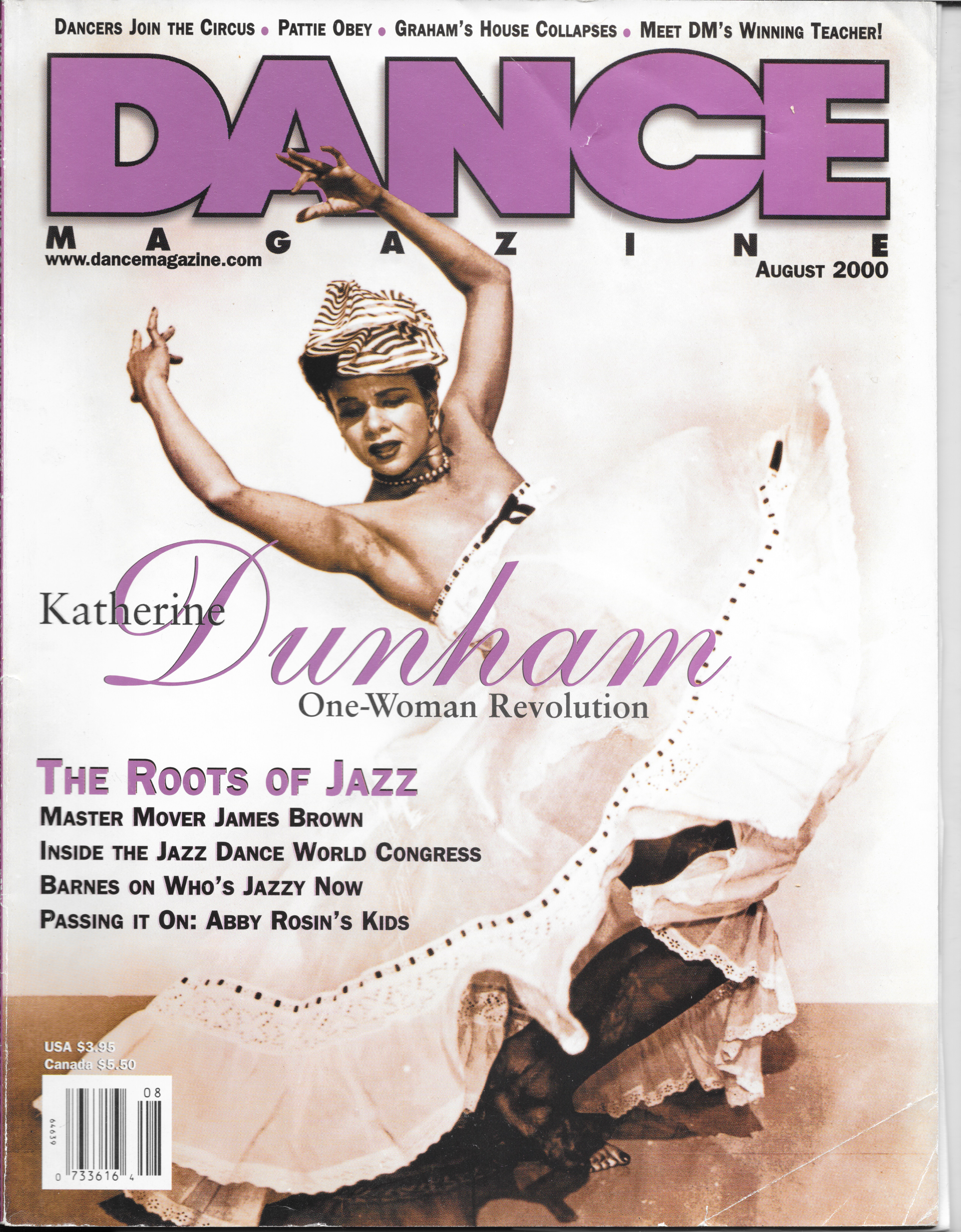
Katherine Dunham: One-Woman Revolution

[I wrote this article for the August, 2000 issue of Dance Magazine. Reprinted with permission.]

All Roads lead to Katherine Dunham. Well, not all. But sometimes it seems to be so. Jazz dance, “fusion” and the search for our cultural heritage all have their antecedents in Dunham’s work as a dancer, choreographer and anthropologist. She was the first American dancer to present indigenous forms on a concert stage, the first to sustain a black dance company, the first black person to choreograph for the Metropolitan Opera. She created and performed in works for stage, clubs and Hollywood films; she started a school and a technique that continue to flourish; she fought unstintingly for racial justice. She could have had her own TV show called “Dance Roots.”
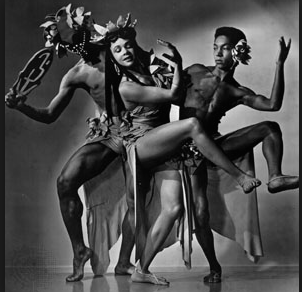
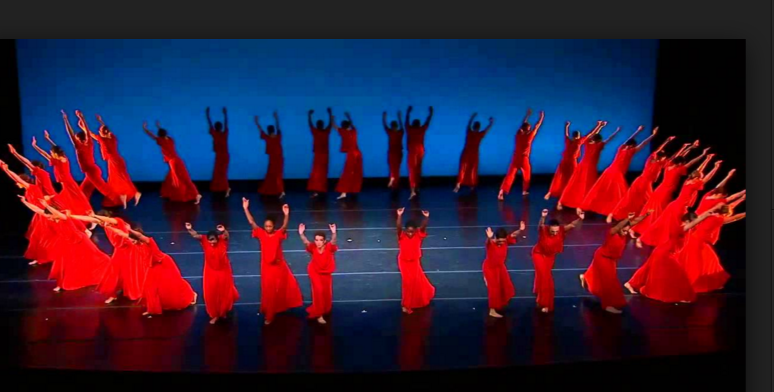
Rara Tonga (1940)

Dunham, 91, lives in Manhattan, where she is working on an autobiography, Minefield, while undergoing physical therapy for her surgically replaced knees. Surrounded by former dancers, friends and a bright-eyed two-and-a-half-year-old goddaughter, she regales them with stories, songs, and warm-hearted joking.

The young Katherine Dunham studied ballet with Mark Turbyfill of the Chicago Opera and the Russian dancer Ludmilla Speranzeva. When she was only 21, with Turbyfill’s help, she formed the short-lived Ballet Nègre. Soon after, she started the Katherine Dunham Dance Company, which was based in Chicago during the early years. Carmencita Romero, who danced with Dunham from 1933 to 1941, said the company performed a mix of cultures even then: “We did Russian folk dances with full skirts, Spanish dances influenced by La Argentina and Carmen Amaya, and plantation dances like Bre’r Rabbit an’ de Tah Baby.”

In 1935, Dunham, under the aegis of a Rosenwald fellowship, traveled to the Caribbean to research African-based dances. She returned in 1936, having passed rigorous initiation rites to become a mambo—a vaudun priestess. She soon choreographed pieces that reflect Haitian movements, for instance, the Yanvalou, in which the spine undulates like the snake god, Damballa. But more than that, she absorbed the idea of dance as religious ritual. She has said, “In vaudun we sacrifice to the gods, but the top sacrifice is dance.” Shango (1945), which depicts such a sacrifice, hypnotized audiences during the Alvin Ailey American Dance Theater’s celebration of Dunham, The Magic of Katherine Dunham, in 1987.
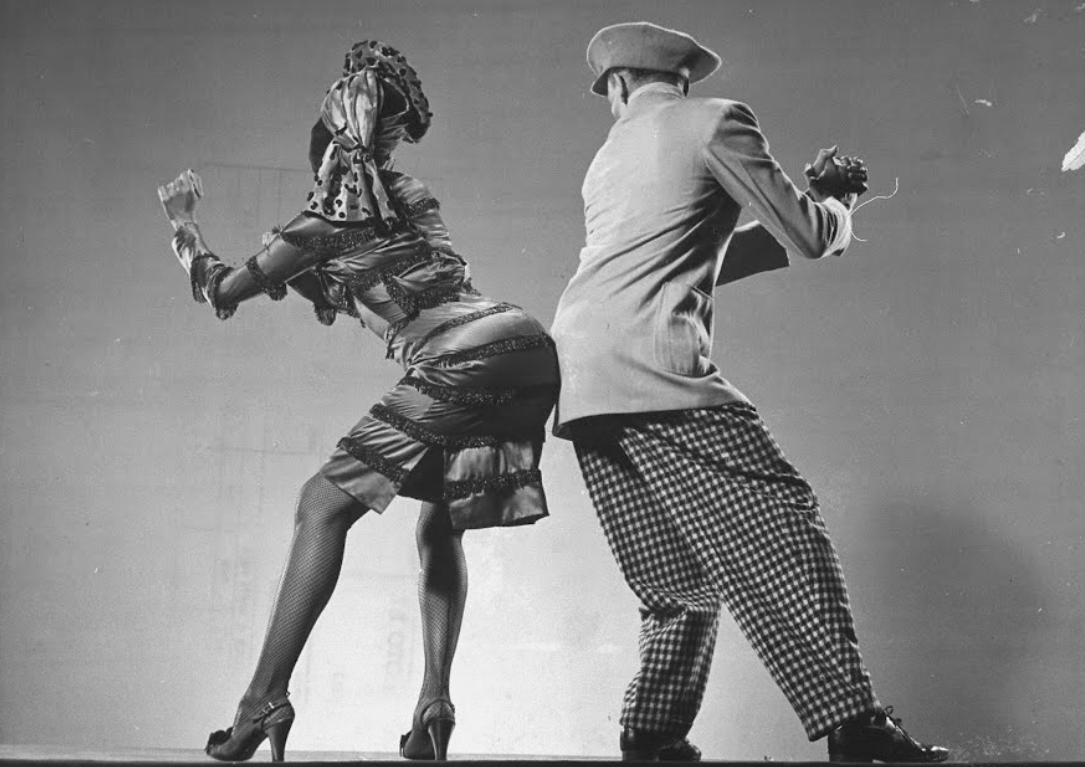
Barrelhouse Blues (1940)

Dunham also focused on American dance forms: “I was running around getting all these exotic things from the Caribbean and Africa when the real development lay in Harlem and black Americans,” she says. “So I developed more things in jazz.” Her revue, “Le Jazz Hot” (1940), included vernacular forms like the shimmy, black bottom, shorty george and the cakewalk. That same year, Dunham worked with George Balanchine on the choreography of the Broadway musical Cabin in the Sky. She recalls, “He took an Arab song and taught it to me for a belly dance.” About their collaboration, she confesses, “He was a help, but I was pretty adamant about what I wanted to do. We had a wonderful time together.”

One of the few works of hers that was filmed was Carnival of Rhythm (1941). In this clip she is seen dancing with Archie Savage, who had danced with Hemsley Winfield.

In 1943, the international impresario Sol Hurok presented Dunham’s company in “Tropical Revue” at the Martin Beck Theater on Broadway, adding Dixieland jazz musicians to boost its commercial appeal. The show became a hit, enjoying a six-week run, unusual for such a revue. Dunham was a glamorous performer, and it is rumored that Hurok had insured her legs for a million dollars. In an interview with biographer Ruth Beckford, Dunham demurred, saying the amount was a mere quarter million.

Dunham opened a school in Manhattan in 1945. Dana McBroom-Manno, who was a student there and later danced with Dunham, describes the Dunham technique as modern with an African base. “You use the floor as earth, the pelvis as center, holding torso and legs together. You work for fluidity, moving like a goddess, undulations like water, like the ocean. High leaps for the men. You elongate the muscles, creating a hidden strength. We use both parallel and turned out, so it’s easy to go from Dunham into any other technique. The isolations of the hips, ribs, shoulders that you see in all jazz classes were brought to us from the Caribbean by Miss Dunham. Also, she [talked about] Indian chakra points (in yoga, points of physical or spiritual energy in the body).” Romero, who has taught dance history at The Ailey School, emphasizes the spirit. “In Africa, all dance is based on animals, plants, the elements of the universe. The Dunham technique gives you a feeling of release and exhilaration by letting the body go.”
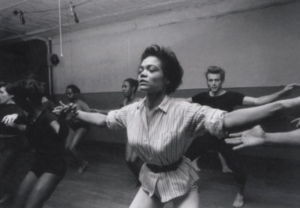
The Dunham school, Eartha Kitt in foreground, James Dean at right
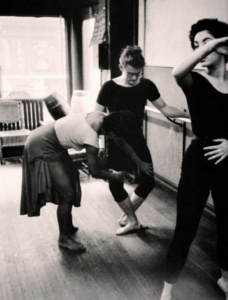
Syvilla Fort correcting James Dean


The Dunham school, in the Times Square area, thrived for ten years. Its thirty teachers offered classes in ballet, modern (José Limón was one of the modern teachers), “primitive,” acting, martial arts and more. Among its students were James Dean, Arthur Mitchell, Butterfly McQueen and Doris Duke. Donald Saddler, recently reminiscing, said Marlon Brando would come and play drums. Sometimes jazz bassist and composer Charles Mingus would come with a group of his musicians and play for classes.

Out of the school came a student group, directed by the legendary Syvilla Fort, that included Julie Belafonte, Walter Nicks, and Peter Gennaro. This group performed at schools and benefits. Belafonte—who met her husband, Harry, though one of these performances—recalls: “We were taught the rhythms of the movements with drums and with song in other languages; for instance, Portuguese and Haitian patois. In class anyone could break into song at any time.”

The Dunham company was an incubator for many well-known performers, including Eartha Kitt, Talley Beatty, Janet Collins, and Vanoye Aikens. In the 1940s and ’50s, its heaviest touring years, the company visited an astounding fifty-seven countries. Audience response was heady. Dr. Glory Van Scott, who danced with the company in 1959 and 1960, says, “Everywhere we went, audiences went crazy. In Paris, we’d do our show, and then we’d go dancing half the night at the Samba Club. The audience loved us so much, they would follow us there. It was unreal.”
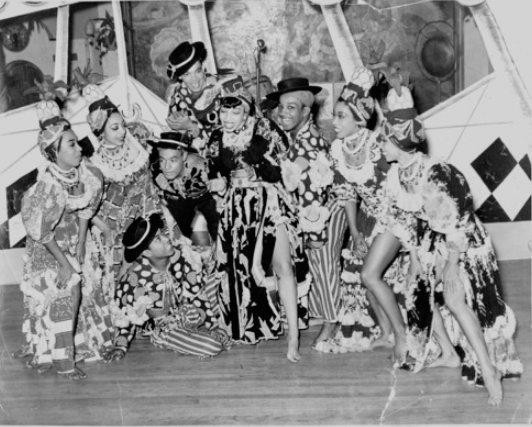
Dunham dancers, 1940s or’50s

But the company encountered racism at home, and Dunham responded with defiance. In 1944, while touring in segregated Louisville, Kentucky, she found a “For Blacks Only” sign on a bus and pinned it to her dress onstage. Afterwards, she declared to the audience that she wouldn’t come back to a place that forbade blacks to sit next to whites.
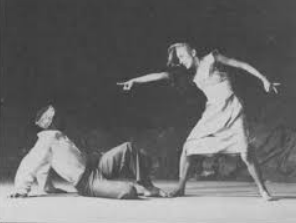
Southland, with Julie Belafonte at right

In Dunham’s Southland (1951), an impassioned response to the lynchings of blacks, Julie Belafonte played a white woman whose false accusation of rape leads to a black man’s murder. “It was very, very difficult for me,” Belafonte recalls. “I had to transpose my hatred of the character … it was an acting problem. I had to overcome it in myself.” Audience reaction was strong. Says Belafonte, “Everyone in the audience cried when we did it.”

The company premiered Southland in Santiago, Chile, despite warnings from the State Department, which wanted U.S. cultural exports to project only positive images of America. Possibly as a result, Dunham did not win support from the department, which funded tours by Martha Graham, José Limón and Paul Taylor. (In the days before the National Endowment for the Arts, this was the only program that sponsored international dance touring.) But another possible reason is that the State Department’s dance panel called her work “torrid.”

Dunham has lived her credo that “all artists are humanists.” Her home in Haiti, Habitation Leclerc, served as a medical clinic—as well as a tourist attraction, with its nightly drumming and dancing—for many years. Having given injections of vitamin B and penicillin to ailing dancers, she administered first aid for parasites and joint diseases. Once a week, local doctors helped her to diagnose and treat patients in exchange for the medications that she could get them from New York.

Dunham moved to East St. Louis, Illinois, during the racial troubles of the 1960s. Despite death threats and bomb scares, she helped a group of black youths by giving them classes in martial arts, drumming, and dance. During that period, the police were picking up young black men as a matter of course. On one occasion, Dunham railed against this racial profiling, getting herself thrown in jail.

While in her 80s, the choreographer made national headlines by going on a hunger strike to protest the U.S. government’s policy of returning Haitian refugees to face starvation and repression in their native land. She was supported in this effort by comedian Dick Gregory, filmmaker Jonathan Demme and the Rev. Jesse Jackson, along with hundreds of other Americans. It was only at the coaxing of Jean-Bertrand Aristide, the deposed and later reinstated president of Haiti, that she ended her fast after forty-seven days.

Asked about her courageous stand, Dunham says simply, “You can’t learn or acquire these things; I think they’re just put in you from the beginning.”

She feels it is an extension of her destiny to teach–“My guiding voices tell me I should teach, and that’s what I’ve been doing my entire life.” The Dunham technique is being taught all over the country. McBroom-Manno, who has taught Dunham technique at Adelphi University, The Ailey School, and now at the 92nd Street Y DanceCenter in New York, says, “I teach Dunham technique as a way of life. Nutrition, African-based religions and social conscience are all part of it.” Walter Nicks and Romero keep the Dunham technique alive in Europe, while McBroom-Manno passes it along in the United States.

“Everybody is an anthropologist,” Dunham says.
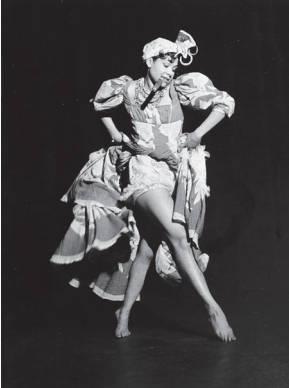
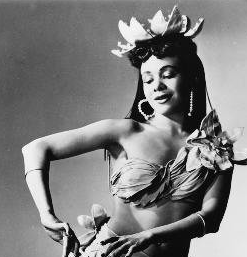
Dunham, 1940s, (Courtesy Special Collections Research Center, Morris Library, Southern Illinois University Carbondale)

“My objective is to see that different cultures get to know each other.” McBroom-Manno relates how, as a scholarship student getting free lunch at the school, she was required to learn the traditional Japanese tea ceremony. “We would be squirming and carrying on, but she wanted us to learn the serenity and silence of that tradition.” In preparing for Aida (1963), McBroom-Manno and the rest of the cast, dancers from both Dunham’s group and the Metropolitan Opera ballet company, studied karate at the Dunham school to perfect a processional before the African king.

Dunham’s influence is global. She helped to train the Senegalese National Ballet, and her performances inspired the start of many national groups, such as Ballet Folklorico de Mexico. Her numerous awards include a 1968 Dance Magazine Award, the Kennedy Center Honors, the American Dance Festival Scripps Award, the Albert Schweitzer Award and, just this spring, the Duke Ellington Award.

She is still concerned about Haiti. During a May 25 interview, she was gratified to hear that very day that Haiti had held free elections without incident.

But her thoughts linger on the art of dance. “Dance has been the stepchild of the arts for a long time. I think now it’s time for it to take its place among the other arts.”

It is also time for Katherine Dunham to be honored as one of the great innovators in the field of dance and one of the great humanitarian artists in history.
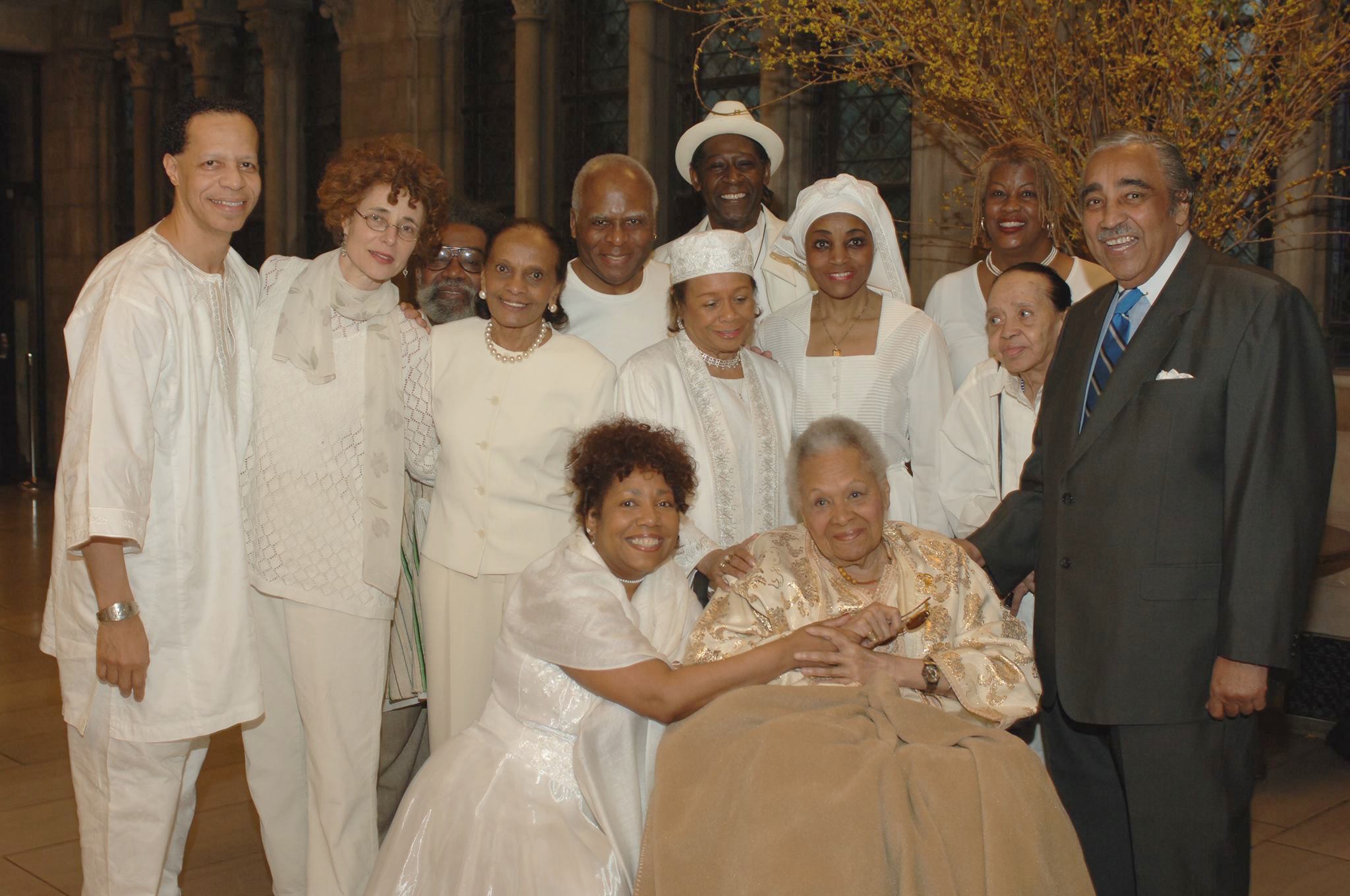
Dunham, seated with Melony McGant, and friends, Boule Blanche, Riverside Church, c. 2004. From left: Reginald Yates, me,
Louis Johnson, Mary Hinkson, Terry Carter, Micki Grant, Stanley Strohman, Glory Van Scott, Ruby Streate, Madeline Preston, and Congressman Charles Rangel.


Like this Historical Essays 4

Are Women Dancers Still Discriminated Against?

I co-wrote the article below forty years ago. Since the issue has come up again (actually it never went away) I decided to post it. This diatribe was useful back in 2000 when a group of choreographers called the Gender Project got together to address discrimination against women in dance. Reading this article from 1976, they were appalled at how familiar it sounded.

 Although I basically stand by what we said and the data we gathered, I now feel some distance from the strident tone. During the ’80s and ’90s, AIDS devastated the dance community. So many of my male colleagues were dying that I dropped all my anger about how hard it was for women to get a gig. At least we were alive. We were dancing, we were having babies. I’ve written about this change of heart in my book, Through the Eyes of a Dancer.

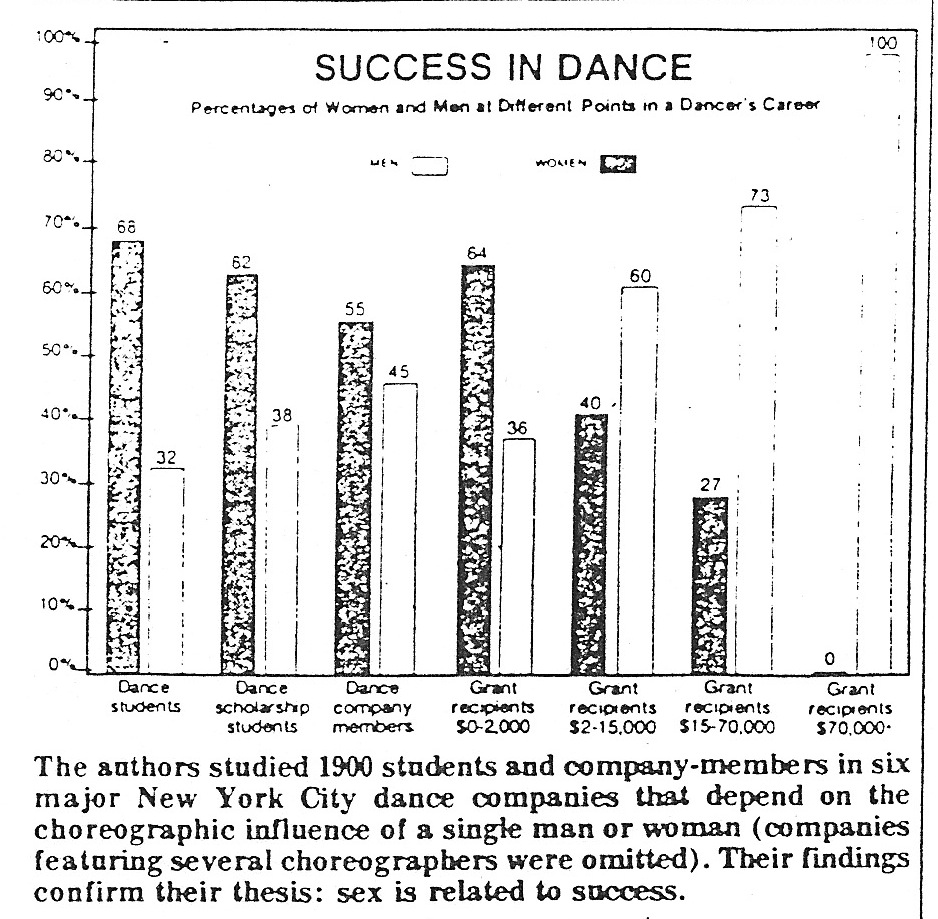
Back in the 1970s, Stephanie Woodard and I were collaborating on choreographic projects, and our rehearsal-break conversations led to a desire to expose the discrimination against women. Because we were both teaching at Trinity College in Hartford, we had ample opportunity to observe the difference in male and female student behavior. (At that time there were only two genders, nothing in between.) Stephanie, a dance ethnologist, knew about ballet history, so all the references to Taglioni et al are hers. Sorry for the lousy reproduction of the chart here; it’s from a xerox of a xerox. The chart is based on data we gathered, but I can’t vouch for the sources, because I just don’t remember. 

Reading this over so many years later, I don’t completely agree with all our statements. So, in the manner of Yvonne Rainer’s “A Manifesto Reconsidered,” I am inserting my current reactions and updates in double brackets.

∞∞ When a Woman Dances, Nobody Cares ∞∞

Co-written by Wendy Perron and Stephanie Woodard
Village Voice, March 1, 1976

“When a woman dances nobody cares. All women can dance. But when a man dances, now that’s something.” —a high school dance teacher in California in 1963

In the dance business, men are in the minority. But not the usual sort of minority. Instead of being abused and ridiculed in their attempts to be accepted, they are praised and encouraged. [[Whoa! Of course, male dancers were abused and ridiculed routinely by other boys when they were students.]]

Dancers and critics alike are proud of the ever-increasing numbers of men in dance because their presence has legitimized it. No art is recognized as an art until men do it, from cooking to medicine to dance. And then it becomes dignified, arduous, skilled.

From an artistic point of view, American modern dance is the achievement of women. Isadora Duncan and Loie Fuller discovered it, Martha Graham and Doris Humphrey explored it, and the excitement of it unfolds today through women like Trisha Brown and Twyla Tharp. Over the years women have pushed back the boundaries of dance, extending the movement vocabulary, creating new modes of performance, revolutionizing concepts of composition.

Dance critic Marcia B. Siegel recently wrote: “With the exception of [Charles] Weidman and [Ted] Shawn [[those are huge exceptions!]], men didn’t begin making significant choreographic efforts outside classical ballet [[what about tap?]] until the mid-1930s, when modern dance had attained artistic recognition, built its own audience, and begun training future dancers. Now that there is something to be won, more men are entering the field and taking over.” [[That’s a bit harsh—and I don’t agree with the sentiment.]]

Ballet has allowed women as well as men to hold influential positions as performers and choreographers. It is popular today to show disdain for ballet in the nineteenth century, when women were its focus. Contemporary critics are impatient with the contrived plots and the affected acting and are embarrassed to think that male dancers had only secondary roles and were called “porteurs” or “carriers.” Walter Terry, renowned ballet critic, lectured at Harvard Summer School Dance Center last year [[I was teaching there that summer]], extolling the ascendancy of men in dance—to a lukewarm student audience of a hundred women and eight men.

However, the technique of ballet, with its feather-light leaps, its long balances, its mercurial changes of quality from one kind of step to another, was developed by women largely to appear ethereal. Of course, it was sexism—ranging from a desire to idealize women as fairies and nymphs to a desire to watch women’s bodies—which allowed the ballerinas center stage. But once there, women, with their more pliant bodies, gave ballet its fleet, supple style.

Today an increasing dance audience goes hand in hand with increasing commercial success for men. Male dancers are getting hired and male choreographers are getting grants way out of proportion to their numbers.

In the chart that accompanies this article, we compiled data on 1,900 students, scholarship students, and company members of six major New York City modern dance and ballet companies with affiliated schools (almost all asked not to be named). In addition we obtained data on 316 grants given by the National Endowment for the Arts (1974–1975) and the New York State Council on the Arts (1971–1974). We included only companies that depend on the choreographic influence of a single man or a woman, for example, the New York City Ballet or Dan Wagoner and Dancers. Grants to companies that featured several choreographers, e.g., American Ballet Theatre, or collaborative choreography, e.g., Grand Union, were omitted. The resulting data show a clear relationship between gender and success in dance.

Success in dance

Behind these figures lies a wealth of stories, like that of the dancer who counted only two women choreographers out of the fifteen he had worked with during his four years with the Joffrey Ballet. Or the woman who could run down a list of auditions where she’d been good enough but not man enough for the job.

We interviewed fifteen young professional dancers and choreographers to find out how this situation affects their careers, what happens when a man or a woman tries to get a performing or teaching job, how men and women are treated in class, whether there are separate standards for men and women, and whether both women and men contribute to the problem. Because of the sensitive nature of their disclosures, the interviews quoted below are pseudonymous.

Most dance companies are equally composed of men and women, which gives the impression that dance is one of those rare places where equality and fairness are the order of the day. But as the chart shows, many more women than men are competing for about the same numbers of places. At a typical audition ten times more women than men will appear. For example, at Rudy Perez’s recent audition, six men and fifty-five women tried out. All six men, but only fifteen (or less than one third) of the women, were called back. [[This was when Perez still lived in NYC, before he moved to Los Angeles. I was dancing with him a couple years before writing this article.]] 

Untrained men with a modicum of athletic ability tend to have a physical assertiveness that passes for performing skill. Such men are often accepted with barely a passing thought as to how they actually dance. One Connecticut dance company, whose women each had seven to twenty years of training, was forced to accept men with two or three years of training each because a female guest choreographer refused to do a large-scale piece only for women. We know of a young athlete, who, during one of his first dance classes in the Midwest, was spotted by a renowned choreographer and invited to dance with his New York company…Another was picked up at a discothèque. [[But there is something to be said for outsider dancers. Larry Keigwin was a club dancer before becoming a postmodern dancer.]]

The growing number of men has increased competition among them somewhat. An administrator in the school of one of New York’s leading ballet companies said, “Four years ago we would have given a scholarship to any boy who walked in the door.” He went on to say that nowadays they could be more selective, but were nevertheless still supporting boys with less training than their female scholarship students.

Now that we have men in dance, we have dance in the colleges, too. And college administrators are eager to preserve this connection, making sure that dance at their schools doesn’t slip back into being “women’s work.” “When are you girls going to hire a man?” the dance department chairwoman of a prestigious New England college was asked by a dean. [[This was at Trinity College, where Stephanie and I were both teaching; it was said to the director of the department in our presence.]]

Another dance department chairwoman felt obliged, since she had an all-woman faculty, to hire men to give master classes. She thought this would please the administration by making dance look more serious, and hoped it would attract more male students. One teacher, in telling a dean that dance enrollments were up, was asked, “But how many of them are boys?”

“Amy,” a charismatic performer and teacher who applied for a guest position in a college summer program, was rejected and then asked if she could suggest a good man. She says, “I tried to think of one who was available, but all the men I knew were knee-deep in jobs. They finally found someone. He’d been dancing half as many years as I had.”

Things look different through a man’s eyes. Every male dancer we spoke to vehemently defended the work he had put into his success. Ballet dancers point out that because present-day technique is heavily influenced by the characteristics of women’s bodies, they have a hard time mastering it. (Although men can generally jump higher, are stronger and have straighter torsos, women have the crucial advantage of being freer in the hips and upper back and having suppler feet.) [[This parenthetical statement may be irrefutable, but the generalizations still make me cringe.]] Also women have more often danced since childhood, giving them a head start in their technique. This may account for the feeling among many male dancers that they are victims in a “woman’s world.”

Despite this no one can deny that men have more opportunities. “Don,” a talented and vibrant modern dancer, admitted, “I couldn’t be where I am professionally if I weren’t a man.” He started dancing three years ago at the suggestion of a dramatic coach. With a little army discipline behind him and a natural ease of movement, he was asked to dance professionally after eight months. He quickly saw that there was more room for him in dance than in theatre. Much attention came his way in dance classes and although he knew the reason was simply a dearth of men, he made the most of it. “I get offered a lot of jobs,” he says. “I always take the one I can learn the most from.” He is fed up with women saying, “Oh, you’re a man, that’s different,” because he feels he chose his goal wisely and worked to make it happen.

Men are becoming a top attraction because they sell at the box office and they sell on stage. The Martha Graham Dance Company, whose repertoire traditionally features female protagonists, has begun to take in male dancers who have never even studied the technique. This is quite a change from the days when the Graham technique was sacred and a dancer was profane until she or he had spent years getting it under the belt.

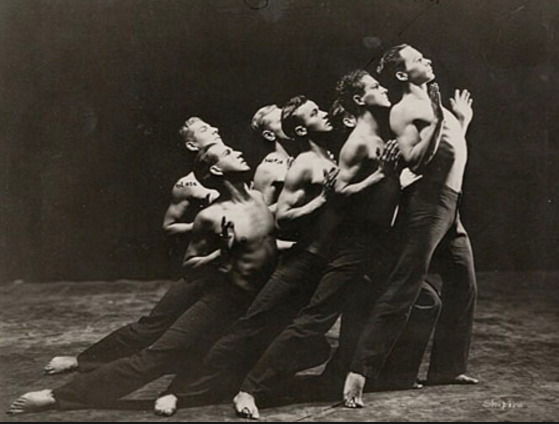
Ted Shawn and His Men Dancers, 1920s or '30s

Ted Shawn and His Men Dancers, 1930s

And if a man sells, an undiluted flock of them sells better. The American prototype is Ted Shawn’s muscular, spectacular all-male company of the 1930s. Today’s counterpart is Pilobolus, a group of gymnasts whose debut in 1972 as an all-male dance company was greeted with near-hysterical acclaim.

All-male groups are praised for their virility, whereas all-female groups are seen as somehow deficient. The insinuation, whether vocalized or not, is “Couldn’t they find a man?” [[I think this has changed. It seems to me that all-woman groups and works often attain some measure of acclaim.]]

Panorama (1935), choreographed by Martha Graham

Panorama (1935), choreographed by Martha Graham

Women have undeniably contributed to this syndrome. If resistance to women’s success did not exist, women would probably create it. “Sheila,” a beautifully sharp-featured woman who has danced for several well-known choreographers, has rarely chosen to dance for a woman. Looking back, she analyses it this way: “Women like having a man around…it’s like choosing a doctor. You want to be led by a man, get the attention of a man. Deep down inside, you think he knows something and you don’t.” [[Arrrgggghhhh.]]

Asked why success in dance comes more easily for men than women, one woman answered, “Both men and women have doubts. Women let their doubts stop them, and men don’t.”

We have both taught beginning dance classes. Time and time again, we’ve seen that, in a new and possibly intimidating situation, men will be generally more aggressive, physically and personally. As a dance teacher, you see the whole problem embodied before your eyes.

“Scott,” a contemporary danseur noble, has guested with several international ballet companies. He readily claims that women ballet dancers are, hands down, technically superior in almost every company. “Scott” resents the low standards expected of men. “They can always throw a man out there to hold a woman up and he’ll look good, but he can’t dance.”

“Scott” himself loves partnering women; he takes pride in being the catalyst, the gallant guy who assists her to new heights. But, as he says, “When you lift all day long, you tighten up—not just your arm muscles, but your legs and back also. When I don’t have to lift, I become freer in my musculature.” (A more bitter young dancer complains that he is being used as a professional weight lifter rather than an artist.)

After working with many choreographers of both sexes, “Scott” reached a conclusion that surprised even him. “I get the feeling that when women do something it’s almost like fighting…fighting for women’s rights. It’s do or die. Total involvement. We (men) have been conditioned to be the breadwinners and they have to fight to show they can do it. It’s more intense.”

What women dancers have been able to do all along is to be spectacular and subtle at the same time. The exquisite feats that audiences marvel at are accomplished not by strength alone, but with sensitivity and skill. From Camargo to Taglioni to Cynthia Gregory, and from Duncan to the best of our contemporary dancers—Sara Rudner [[who is still a terrific dancer]], Jennifer Muller [[she no longer dances but her company has been going since 1974]], Carolyn Lord [[a ballet dancer turned downtown choreographer who now runs the Construction Company space]]—women have achieved a formidable mastery of the art and a range any performer would aspire to.

However, the quality of the dancing isn’t always what catches the audience’s fancy. Sometimes it’s the (undeniable) sexuality of the dancers. In the right cultural milieu—and this is it—men can become sex objects as easily as women. As Siegel says, “The featuring of men in ballet has created a new theatrical meat market.”

The only way to remove dance from the realm of sex-objectism is to become more familiar with it, so that we are comfortable watching the dancers, and their sexuality is not the overriding concern, eclipsing all other pleasures. [[I wish we’d come up with a more activist ending. If you think of something, please write it in the comments box below.]]

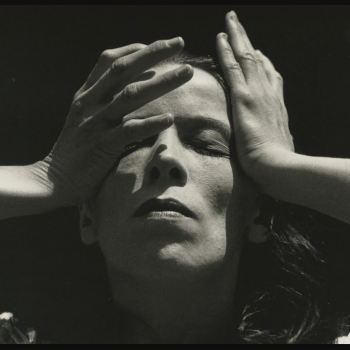
Photo of Martha Graham on homepage by Imogen Cunningham.


Like this Featured Historical Essays Uncategorized 3

Sara Rudner on Early Tharp

In light of this being the 50th-anniversary year of Twyla Tharp’s choreographic life, we asked Sara Rudner, who was deeply involved in Tharp’s early dancing-making, to come to NYU Tisch Dance (where I am an adjunct) to talk about working with her. Rudner, who is now the director of dance at Sarah Lawrence College, imbued her dancing with light and depth and helped create the Tharp style. Rudner’s talk, which focused on Tharp’s work but also touched on her own choreography, took place in one of the NYU Tisch Dance studios on September 25, 2015. Luckily, one of our sharp grad students, Donald Shorter, turned on the voice memo of his cell phone and recorded the event. I transcribed his recording and edited the interview slightly, then got Sara’s input to clarify some sections. To learn more, go to the Tharp website. 

Wendy: How did you first start working with Twyla?

Sara: My friend Margy Jenkins  was working with her. We were neighbors on Broome Street. Twyla was doing a show and she needed another dancer, and Margy said, “I know someone.” And Twyla wanted to see who I was before she didn’t pay me—before she didn’t pay me. [laughter] No one was paying anybody, there was no money, but I did receive $50 for the first performance of Re-Moves.

Wendy: The NEA [National Endowment for the Arts] didn’t start till later in the 60s.

Sara: There was no New York State Council on the Arts. Anyway, so Margy took Twyla to see a performance I was doing at Judson Hall. Barbara Gardner had done a piece and someone got injured and I stepped in and I learned the piece. Margy said that Twyla came in [to see me dance] and stayed for a few minutes and said, “She’ll do.” [laughter] That was the beginning.

Wendy: And boy did she do! Sara defined Twyla’s work for 20 years.

Sara: We came from very different backgrounds—I was a New York City kid, born and raised in Brooklyn. I had no art training. I ran around and swam.

Wendy: And you didn’t do ballet training.

Sara: I had a little bit of baby ballet. I knew what that was, and then nothing. But our energy was very similar. So one of the first times we met [in the studio], I saw her rubbing her hands, saying Ah, you’ve got a lot of energy.

Sara Rudner and Twyla Tharp in The Bix Pieces (1972), photo by Tony Russell

Sara Rudner and Twyla Tharp in “The Bix Pieces” (1972), photo by Tony Russell

Wendy: She was probably thinking, Ooh what I can do with this girl!

Sara: I was really almost a blank slate. The first time Margy told me that she was studying with Merce Cunningham, I said, “Who’s she?” I had no idea. I had a degree in Russian studies from Barnard College, I was 20 years old and I knew nothing. So it was a perfect opportunity because I was a blank slate and had a lot of energy. I’d been a swimmer and a runner, so I was strong and well coordinated.

Wendy: That’s so interesting because now, one of the people she likes is John Selya, who was a surfer. Twyla always liked someone who looks like a person onstage rather than a dancer with this kind of I’m-dancing-for-the-balcony-seats projection. And you were definitely that person.

Sara: In the beginning experimentations she chose to work with Margy Jenkins, who’s a statuesque woman, and then with me and then with herself. So she was not into the cookie-cutter thing, she was experimenting with the kinds of people. When I say experiment, I mean she experimented like crazy. We did all sorts of things that most people if they look at them now they would say, That’s not dance. The first thing I ever did with Twyla was with a stopwatch; it was at Judson Church. My part was [gets up and walks a straight line, the long side of a rectangle]. Then I got to a corner and I returned to where I began to give the stopwatch to Margy, maybe Twyla, and she walked the diagonal; and Twyla, or maybe Margy, walked the short side of the rectangle.

Wendy: Was that Re-Moves?

Sara: Yes, Re-Moves, 1966, was task-based. Twyla was looking at stuff from the bottom up. She had done all this dancing; she had done a lot of ballet. There are pictures of her in a tutu, wearing a tiara.

Wendy: Do you think she was influenced by the other stuff going on at Judson? Yvonne Rainer and Trisha Brown and Lucinda Childs were also very task-based.

Sara: Yes, task based. She was also very influenced by the minimalist painters.

Wendy: Of which her husband, Robert Huot, was one.

Sara: Yes. Those early pieces had props, objects, were spatially very structural. They were circles, squares, oblongs. They [minimalist painters, sculptors and dancers] were all hanging out together. Twyla was in that group of people who went to Max’s Kansas City and drank a lot and ate ice cream. That’s what I remember about Max’s Kansas City is the ice cream sundaes Sundays. But eventually—Twyla’s a dancer. She loved movement; she loved complicated things, she loved a great physical challenge. And the physical challenges in those early pieces were really intense. In the same piece, Re-Moves, there’s a balcony at Judson and she hung a ladder, a rope ladder down, and I climbed down the rope ladder backwards. I was wearing black leotard and tights—we all were—and a white felt hat.
Wendy: Yeah, you looked like nuns in the photos.

Sara: The hat was a triangle, and the tip was in the middle of the forehead.

Wendy: And Robert Huot probably designed it.

Sara: He designed it, yeah. The thing she asked me to do was to walk backwards on relevé after coming off the ladder and make zig-zag patterns. So if the ladder was there, the pattern was [demonstrates in the space] zig-zag zig-zag all the way down till I ended on the floor. The entire time I had to slowly lower my arms and head, flex my spine, bend my knees until I was lying supine on the floor. It took about 10 minutes.

Wendy: Were there other people doing other things, or that was it?

Sara: I was supposed to give a cue in performance but I went so slowly that the cue I was supposed to give was late. Technically I was not so great, and the task took a lot of control and concentration. It might have been easier if I had gone faster.

Wendy: Most of these pieces were in silence, right? Was there music?

Sara: No but she would choreograph to music. We would dance to Beethoven, Mozart. We didn’t perform to music until Three Page Sonata for Four (1967), with music by Charles Ives. She was extremely musical, even to the point of translating musical scores to lines. She would set up a straight line, I followed the rhythm of one musical line, she the other. We would take the rhythms and go back and forth on the lines. Something like that [demonstrating]. It never looked like music; it was just us translating those musical phrases.

In Judson basement, rehearsing for Three Page Sonata for Four (1967); left to right: Margery Tupling, Rudner, Tharp, Wright; photo by Robert Propper.

In Judson gym, rehearsing for “Three Page Sonata for Four” (1967); left to right: Theresa Dickinson, Rudner, Tharp, Margery Tupling; photo by Robert Propper.

Wendy: In her later work, one of the things she’s known for is her range of music—classical, rock, jazz.

Sara: Wide ranging, big appetite for dance art. Huge. Huge energy; questioning all the time. Very intense intellect. She brought extreme passion into our work together. She was also a monster mover. This woman …she was unbelievable,…watching her dance was really extraordinary.

Wendy: My eye always went to Sara, because Sara, in addition to being an incredible mover, has a kind of sweetness. [To Sara:] Your whole body was in every movement. Whereas Twyla gave off a different energy like, “I’m getting through this.” It was more belligerent.

Sara: She was fierce. She was hyper-mobile in her joints. She had strong muscles so could keep all that together and she had great power and reach. She also had a personality. What happened was, because we had a range of personalities and physicalities, it gave the work a more everyday look, less like a corps de ballet.

Wendy: Rose Marie Wright was six feet tall. She told me in one interview, “When I was dancing in Pennsylvania Ballet, they didn’t know what to do with me. They just couldn’t cast me in anything.”

Sara: In toe shoes, she’s like 6 foot 3 inches.

Wendy: And she said, “When I got to Twyla, Twyla knew what to do with me.” And Twyla put her to work. It was the three of them: Twyla, Sara and Rose were like the three goddesses for years.

Sara: We did a lot of work together, a lot of hours. What I learned from Twyla besides the amazing experiences she gave me, was how to work, how to be in a studio and just focus on what I was doing. Let’s do it again. Let’s do it again. Oh, maybe we should do it again. One more time—17 more times later—one more time. Let’s do it one more time.

Wendy: Because the work was so intricate.

Sara: It was very intricate, and to put that into your muscle memory so that you could then be fairly accurate. There were pieces I never did correctly. I never did it the way it was written. We were a team so we could pick up and be where we needed to be.

Wendy: But she also wanted a little freedom in there, didn’t she?

Sara: Not in The Fugue.

Wendy: How much movement did you contribute?  The Fugue (1970) had certain variations; did you make your own variations?

Sara: No, that was a set piece. The time we started doing things individually was in Medley which was created before The Fugue. Medley was danced outdoors in 1969 on the great lawn and at American Dance Festival when it was in New London, CT, and this was a real experiment for her. We were all working down in Kermit Love’s studio on Great Jones Street. There was a studio and she’d take us in one by one and she would do something, and the others didn’t know what she was doing in there. She would say, Don’t tell the others what we did. She had made some phrases and then she just did them and said, What do you remember? So we each came up with something different. She started working more improvisationally with us. She also worked with each of us separately in different ways. She wrote down words that were prompts, and then she’d string whatever we did together. That’s the first piece she didn’t dance in. So that piece led me to be an individual dancer.

Rehearsing at the Metropolitan Museum, 1970. Rudner at left with braid.

Rehearsing at the Metropolitan Museum for “Dancing in the Streets of London and Paris, continued in Stockholm, and Sometimes Madrid,” 1970. Rudner at left with braid.


Wendy: How were you earning a living? You were spending hours and hours in the studio with Twyla, not getting paid very much. What else were you doing?

Sara: I worked for a slumlord in his office. In 1965–66, I worked for the Free Southern Theater. It was an integrated group of actors who went down south and blew everybody’s mind. And then I started working for Merce Cunningham, in Merce’s office at Brooklyn Academy of Music. I did clerical work; I typed. (I learned typing in my high school.) Rose babysat. Theresa Dickinson did administrative work for arts organizations and proofreading for science textbooks. Margery Tupling had her own source of money. I could work for half a day; I could leave work at noon and take a class, then go to rehearsal.

Wendy: When did you start choreographing yourself?

Sara: The first thing I did was the program with Douglas [Dunn] in 1971 at Laura Dean’s place. I started with Twyla 65-66 and then I stayed with her until ’74. In the early ’70s I started working with you guys [Wendy Rogers, Risa Jaroslow and Wendy Perron] and I started doing other things on my own. Twyla was amazing because she insisted at some point that the dancers she was working with get paid 52 weeks a year. We didn’t have a lot of money. Part of my curiosity about being in dance was Let’s take responsibility for your artistic ideas: Rehearsals, going on tour, the bus, the airplane, whatever. I wanted to learn more about the business of making dances, putting them on, working with dancers. So in 1974 I said I think I need to do other things,, and she said, Are you gonna have a baby? [laughter] What could you possibly wanna do…and she was right in many ways. (I did have a baby many years later.) But I was hanging out with other dancers, and people were talking about what they were doing. I was 30 years old and I was thinking, Yah maybe I should find out about other things. So I went off and made a couple solos, and danced with Wendy P. and Risa and Wendy Rogers, we did marathon dances. Five hours at St. Mark’s Church.

Wendy: You had a whole philosophy about that, so talk about that.

Sara: As far as I was concerned, dancing happened whether someone watched you or not. Dancing was always going on. So the idea behind this was, we were dancers and this is what dancers do – dance. I had initially asked for seven hours, but Barbara Dilley [director of Danspace at the time] and the people at Danspace, said six, five maybe. So we bargained. But the idea was, we’re just gonna keep on dancing. You [the audience] can come and go whenever you want. We started at 5:00 pm and we ended at 10 pm. We worked our way up methodically. We created all this basic material that we all danced together, the phrases we made together then we set up improvisations.  “Brain Damage,” one of the sections, was the hardest concept to realize.

Wendy: I can’t forget “Brain Damage.”

Sara: “Brain Damage” was one pattern in the arms and another pattern in the legs, it was like a five against a seven, so nothing fit together.

Wendy: And there was running in circles, and slightly different versions of it, which I extricated myself from because I didn’t have the stamina to run. [This clip from “Running” section, as performed in 1975 at Oberlin (without Sara), is mostly with Wendy Rogers and Risa Jaroslow.]

Sara: We were running around, and did some improvisation, we didn’t have music.

Wendy: Didn’t we have a fan making noise?

Sara: Yes, we had a backdrop, which was painted with floral designs by visual artist Robert Kushner; it was hung across the altar at St. Mark’s. At that point, St. Marks’ Church had fixed pews, a big wooden cross, and a red linoleum floor. Bob hung curtains in panels, and he had fans that blew these panels. When we weren’t dancing we were hiding behind the panels.

Rudner in her own work, photo by Nathaniel Tileston

Rudner in her own solo, “33 Dances on her 33rd Birthday,” 1977, photo by Nathaniel Tileston

Wendy: There were just four of us.

Sara: Just four of us for five hours. It was intense. And my mother asked why we didn’t shave under our arms. [laughter] We were making a statement. “It’s not nice,” she said. But she came and watched. And people did come and go.

Wendy: Carolyn Brown stayed the whole five hours, and so did Kenneth King. The whole thing was to have dance be a continuum [to the students] not like a thing that had a beginning, middle, and end. You guys read the Merce Cunningham essay “The Impermanent Art.” Very much along those lines: Dancing is as impermanent as breathing.

Sara: It’s just what we do. [to the students] I know you guys have the same experience. You come here in the morning and you work all day. So we just put it all together. I couldn’t get to do that kind of thing with Twyla because her aesthetic was really to be in theaters and make those pieces and that’s what she wanted to do.

Wendy: And she changed more towards the theatrical. The things you were describing with the stopwatch, in the beginning…

Sara: That was open spaces. That was very simple. And then we had our hair done, and put on beautiful costumes.

Wendy: The haircutting was a big deal. In 1972 all dancers, whether ballet or modern, had their hair in a bun. And all of a sudden, Twyla and her two main dancers had their hair cut at Sassoon and they were stylish-looking. And then everyone went, Why do we have to have our hair in a bun? For women in downtown New York, it was a landmark influence; we started wearing our hair in more the way we might want to rather than like ballet girls. Onstage it made it even more that thing of They’re people rather than “dancers.” It made the performers closer to the audience somehow.

Sara: They could identify more. Especially during the ’70s, in hippie land, and feminist land. And we all were different. Twyla had a blunt bowl cut. Rose had longer hair, shaped, and my hair was layered into curls.

Wendy: And this was during the feminist time, and it had to do with what Twyla was doing onstage because her women were very athletic, they could do a lot physically. The first company was just women, and they were so strong and they didn’t have to relate to a man. It’s the way Martha Graham’s company started too: it was all women at first.

Sara: And then things progressed. Wendy and I were talking about the dichotomies of Twyla’s work: the Apollonian and the Dionysian. There were these very methodical pieces, and then there was a piece called Jam. Jam was premiered at Barnard College in 1967 and we were just throwing fits. We wore thick plastic costumes, full body suits and if you just blew on them, they made a horrible noise. You know those lights when you’re driving and you need flashers because your car is breaking down? One side is a spotlight and the other side is the flasher. So these spotlights were in our faces and we were in these noisy costumes. We had these fits and we would shake. Twyla choreographed it to James Brown. We would stop while Margy was doing something very serene. It was really pretty wild.

Wendy: But that sounds like Deuce Coupe. She had the ballet person being serene and then all you guys were doing crazy stuff. [To the students] Deuce Coupe was in 1973, and it’s when she brought her own dancers to the Joffrey’s ballet dancers. The music was the Beach Boys, so that was already a kind of sacrilege. In the first version, what she had for a set was about five kids who were already doing graffiti on subways. There was a scroll upstage, and they would come in spraying the graffiti, and the scroll would go up and they’d spray graffiti on the new stretch of paper. So she had two kinds of dancers, Beach Boys music, and the graffiti kids, and the whole thing made a statement of smashing high art and popular art together.

Sara: And this tour [Tharp’s 50th-anniversary tour] is Bach and Yowzie.

Wendy: Apollonian and Dionysian, two different halves.

Sara: She started that with Bad Smells and Sinatra Songs (both 1982). Bad Smells was everybody wearing rags. It was an intense dance. That was the first time she used a big screen. SONY had this big screen and Tom Rawe was filming it while it was going on. No one was using video that way. She was pushing the envelope early and hard.

Wendy: That takes a lot of courage. Where do you think she got that courage from, or how did that manifest in your work with her?

Sara: When we got in the studio we just worked. Twyla never came in and started talking about “It was a horrible review, I don’t know what I’m doing, I’m feeling lousy today.” Nothing like that. If you read her book, Push Comes to Shove, she had an early childhood full of schedules. Wake up. 6:30: Work on my English composition. 6:45: Practice my viola. All through the day. In her family, she was the first child; she was the genius child. She did it with hard hard work. As hard as we thought we worked, she worked twice as hard. I can remember being on our first tour in 1967. We were in Germany and we were dancing on some crap floor, and she cut her foot and I went up to her and said, “Twyla your foot,” and she said [loud, stern voice], “Go back to the dance!” It was just another world for me, being in the presence of that kind of energy and ambition and determination. Thank god she had the brilliance to carry this on. In seven years she made 35 pieces.

Wendy: When I met you, you had that same kind of determination in work, and that was a new world for me. The focus: just keep working working working.

Sara: That’s what we do. Things do shift as you get older. I would hear her coaching dancers, going back to Deuce Coupe, I would hear her saying things to them that she never said to us.

Wendy: Probably because you just did them intuitively.

Sara: And she also then thought about her work. Sometimes you make something and don’t know what you’re doing until you perform it, and finally you start understanding what was coming out, what that intuition was.

Wendy: I remember one thing she said, when I was in one of her “farm clubs,” which is when she had a bunch of people working, when we were doing almost like a tendu, and she said, “You must feel personally about every move.” I understood that because I already felt that and I loved hearing that from her. It’s a really simple statement but instead of saying “You must do it correctly,” she said, “You must feel personally about it.” I think that’s a key to how she brought personalities out.

Rudner in Eight Jelly Rolls (1971)

Rudner in Tharp’s “Eight Jelly Rolls” (1971)

Sara: Twyla was extremely generous in the studio, fun and intense to work with, so you wanted to meet the challenges. And she did it herself; it wasn’t like she was sitting back. It was great because you didn’t have eyes on you so you could do what you had to do. You weren’t being scrutinized by a master. She is fun to work with. She’d say, “What can you do?” and she’d laugh and giggle. She takes what the dancers can do and pushes them to do more. I think that’s why people love working with her. After I took time off—for three years I went out and had a company and did all kinds of things—I went back, which was a real gift to me because I had an injury, a detached retina. At that time in the early 80s when you have a detached retina, they didn’t do laser surgeries yet. You were in bed on your back for weeks on end. I had a lot of time to think, to think about who I was: I was about 37. What do I want to do now? I’ve had a company, I’ve done this touring thing. Managers wanted me to do things I don’t want to do. They would never let me do big open pieces.

Wendy: They’re gonna force you to be on a stage!

Sara: Yeah, to be on a stage, with three pieces on a program, and this and that. So I went back. As a dancer I could appreciate all the work that went into creating the choreography, creating the touring schedule, the company structure. It was like, “Oh, you’re gonna do all that for me and I can dance?!?! Fabulous!” So I truly appreciate how hard it is to make those structures and make them work.

Wendy: What pieces was she making then?

Sara: Baker’s Dozen (1979). She made Catherine Wheel (1981) during that time; she made Sinatra Songs. She made Bad Smells.

Wendy: [to the class] If you see the video of The Catherine Wheel and the “Golden Section,” Sara is really the goddess in it. You just can’t imagine anyone moving more beautifully.

Sara: Well that whole section of the dance was about transcendence/heaven. Like In the Upper Room (1986), it was the aspirational, heavenly place as opposed to the hell that was the main body of that dance. Saint Catherine was martyred at the wheel, the human family was fighting with each other, the father fucking the cat; it was horrible stuff. She meant it to be hell, malicious. Then came “The Golden Section.” It was all early David Byrne, the Talking Heads. He made the score for this piece.

¶¶¶ Questions from the students were not recorded. ¶¶¶


1 person likes this Historical Essays 4

John Cage’s Revolutionary Relevance

John Cage’s revolutionary idea: Dance (or any art) is not about something, it is something.

Cage watching Carolyn Brown in her dressing room at BAM, 1970

Cage watching Carolyn Brown in her dressing room at BAM, 1970

He lived this philosophy rather than preached it. His m.o. was curiosity, joy, and hard work, and it’s now been captured in John Cage Was, a big new book of photos taken by James Klosty between 1967 and ’72. Those were the years Klosty trailed the Merce Cunningham Dance Company, whose members included Carolyn Brown, Mel Wong, Sandra Neels, who has reconstructed Cunningham’s work, and Douglas Dunn. Accompanying these masterful yet spontaneous photographs are quotes from dancers, composers, and visual artists, all incorporating the words “John Cage was.”

Cage was the architect of the ideas that made Merce Cunningham a renegade: the idea of creating music and dance separately but performing them simultaneously; the idea that there is no silence—there is always sound inside us or around us—and no stillness; and the idea of chance as an alternative to personal taste when composing music or dance.

He was also Cunningham’s musical advisor, driver of the VW tour bus, and the father figure who made touring fun for the dancers. His hobbies—playing chess and hunting for mushrooms—were legendary.

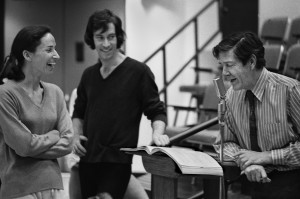
Cage on right, dancers, from left are, Carolyn Brown, Sandra Neels, Susanna Haymen-chaffee, Mel Wong, Chase Robinson

Cage on right, dancers, from left are, Carolyn Brown, Sandra Neels, Susana Hayman-Chaffey, Mel Wong, Chase Robinson, 1971

Many well-known people have colorful ways to describe Cage in this book. Baryshnikov calls him a “wicked genius.” Twyla Tharp calls him a “gentle anarchist.” Robert Wilson contributes a visual poem about his “renaissance mind.” Carolyn Brown, whose own book on Cage and Cunningham, Chance and Circumstance is passionately complex, says Cage was “the heart and soul of the Cunningham Dance Company, making the experience of dancing with Merce an ever-surprising, vital, life-changing voyage.” The composer John Luther Adams writes, “Cage’s music is all about…the experience of listening.” You will find other quotes by Yvonne Rainer, Mark Morris, Stephen Sondheim, Gavin Bryars, and Yoko Ono.

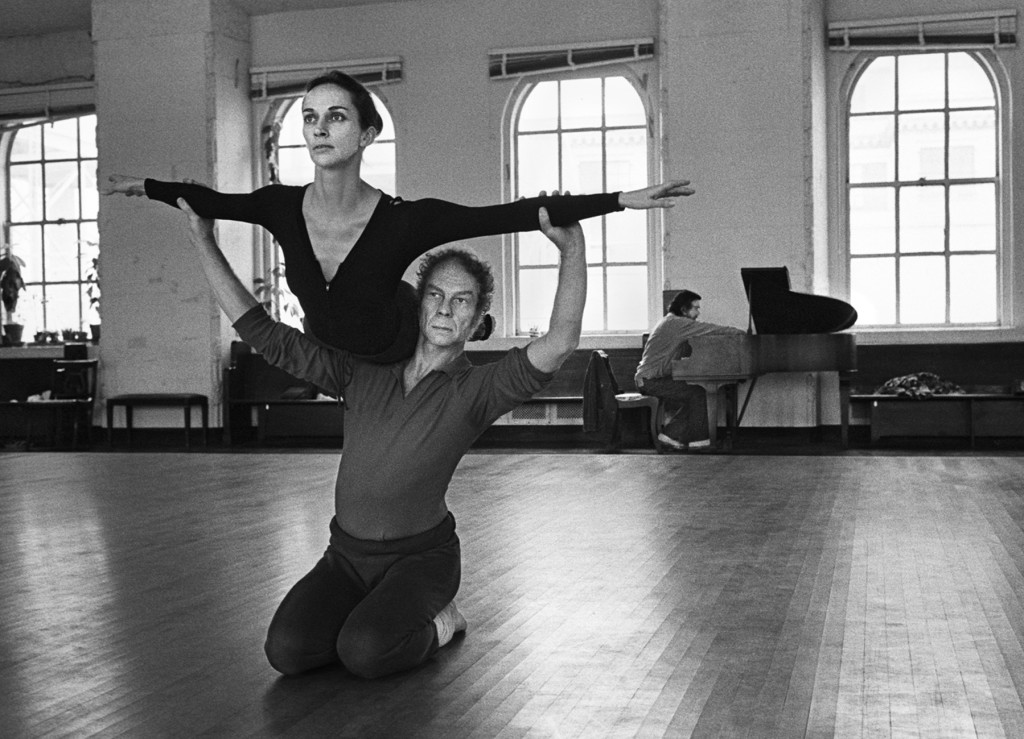
Merce and Carolyn Brown rehearsing Suite in Westbeth Studio, 1972

Merce and Carolyn Brown rehearsing Suite in Westbeth Studio with Cage at the piano, 1972

Klosty’s photos reveal Cage to be an impish, spontaneous person. (I remember when he “played” the cacti at Danspace in 1977, with utter glee at the sound of each pluck of the prickly plant.) He was always up for a photo op, unlike Cunningham who, it may be apparent in these pages, was less eager to cooperate with the camera.

Cage with Carolyn Brown and Chase Robinson, 1971

Cage with Carolyn Brown and Chase Robinson, 1971

As Klosty writes in his introduction, he hopes that readers will find here “glimpses into an always searching, unfailingly playful, uniquely beautiful spirit.” And those glimpses abound in these pages. And if you want to find out why Ain Gordon, son of David and Valda, at the age of 5 or 6, called John Cage his best friend, well, buy the book.

I love the clarity of Cage’s idea that art or dance is something in itself rather than in the service to something else. And yet I still hear people struggling to define what a dance is “about,” assuming they’ll find a theme or “meaning” if they dig under a pile of form or pattern. Yes, sometimes there is a theme that can be identified, but other times there may be a focus, not necessarily a theme.

I think Cage liberated us from certain stale expectations and conventions. He accomplished that with his gusto for life as much as with his groundbreaking ideas. Thank you, James Klosty and Wesleyan University Press (which has published seven of Cage’s books, starting in 1961), for reminding us of his presence with this profusion of beautiful, at times poetic images. Click here to order the book.

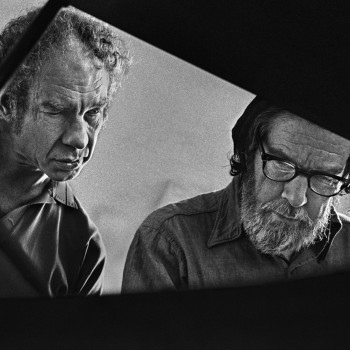
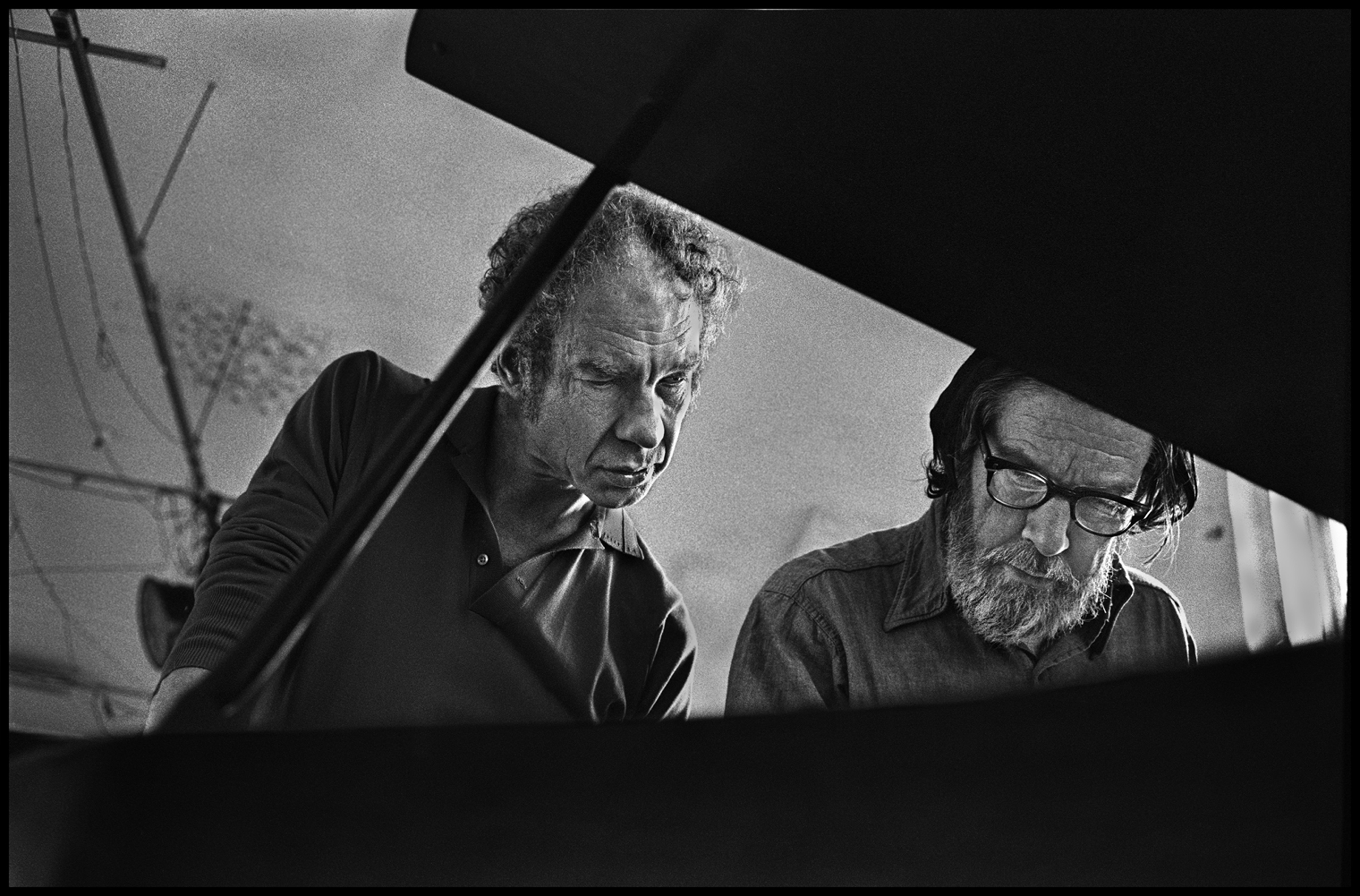
Merce and John at Westbeth, possibly looking into the makings of Cage's "prepared piano," 1972

Merce and John at Westbeth, possibly looking into the makings of Cage’s “prepared piano,” 1972. All photos by James Klosty


Like this Featured Historical Essays Uncategorized 2