Trisha Brown’s Horizontal Dreaming

Every time she started choreographing, Trisha Brown tried to come up with a new vocabulary. But I want to talk about something that stayed the same: Trisha’s love for the body horizontal. Whether it was lying on the ground or being thrust flat out into space (I call it Trisha’s magic carpet), it’s a way to undercut expectations as well as to honor a certain kind of sensuality.

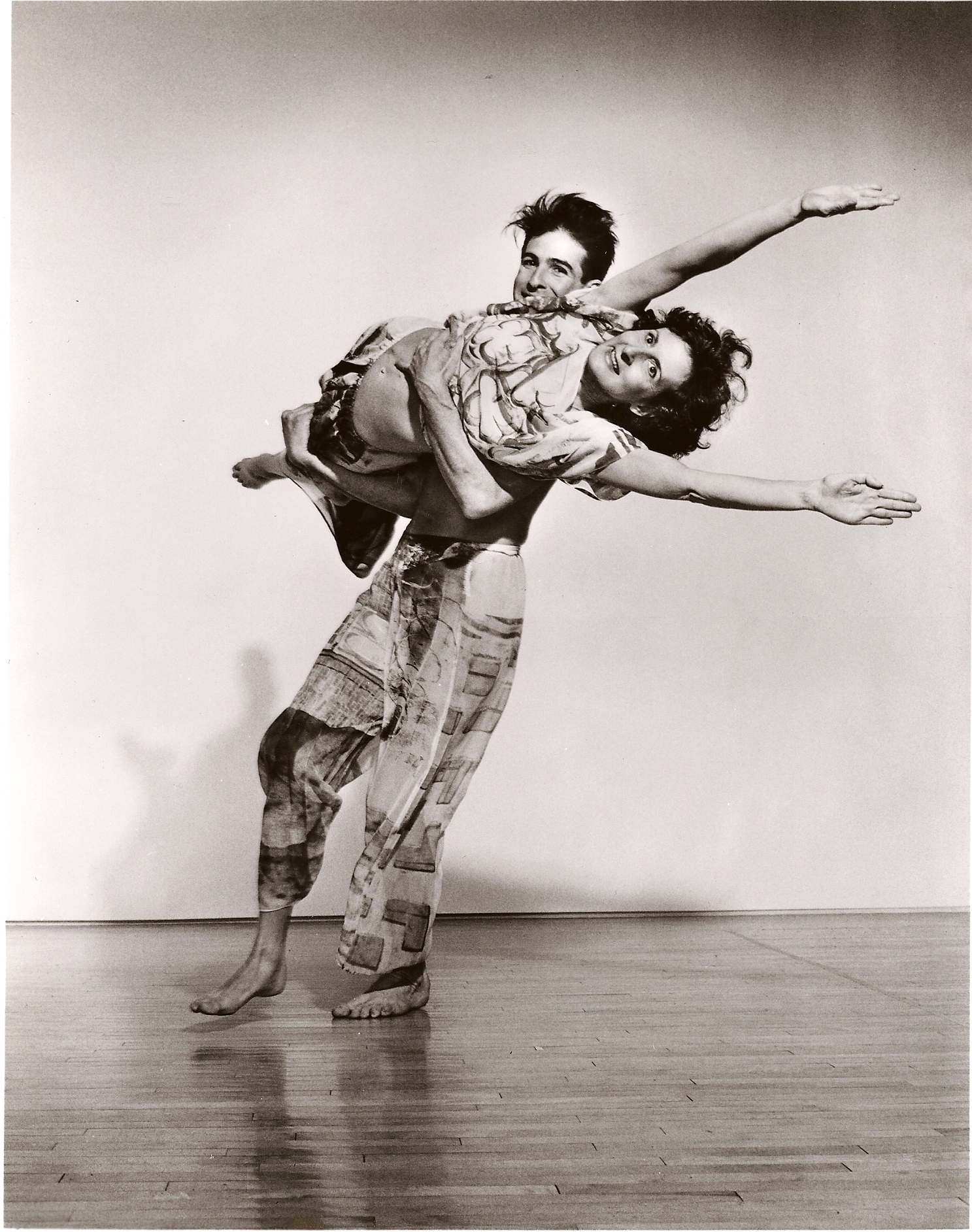
As you can see in this video from the Pew Center for Arts & Heritage, I enjoy recalling this image that recurred over the years. Back in 1960 on Anna Halprin’s deck, she whisked a broom handle out so suddenly and forcefully that her body followed it, flying parallel to the deck for an instant. In Walking on the Wall (1971), we got a visceral jolt from seeing bodies, with the aid of harnesses, walking perpendicular to the wall. That image was reprised in the beginning of Set and Reset (1983), when one dancer was held aloft by four others so that she could walk on the vertical surfaces surrounding the stage. Elsewhere in Set and Reset, which slyly camouflaged choreographic preparation, there were startling moments of sudden horizontality.
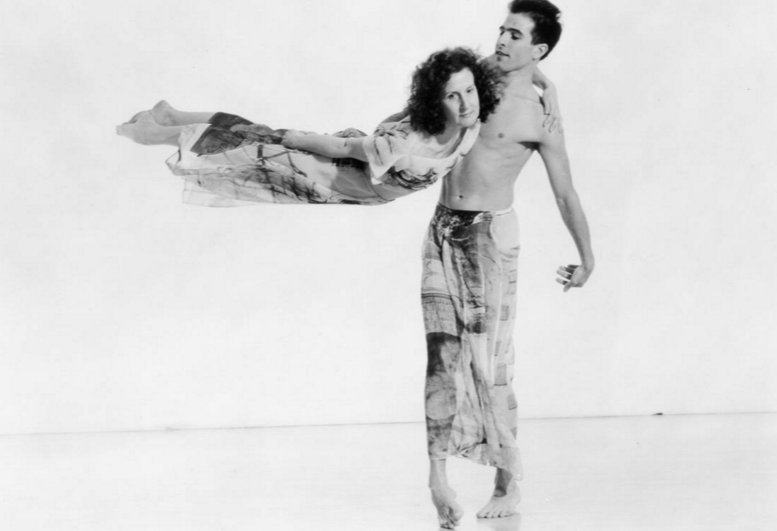
Trisha Brown and Stephen Petronio in Set and Reset, © estate of Jack Mitchell

Trisha Brown and Stephen Petronio in “Set and Reset” © estate of Jack Mitchell

But when we taped this interview at Pew last fall, I wasn’t remembering all the examples of her use of the horizontal. And now they are coming back to me, starting with O zlozony / O composite, a trio originally commissioned by Paris Opera Ballet in 2004 that was performed by Pennsylvania Ballet June 9–12.

The piece begins and ends with a strong image: The two men find different ways of keeping the woman (in this case Lillian DiPiazza) aloft, and yet it is nothing like a standard ballet lift. As you can see from this rehearsal clip, they work together to maneuver her into an orbiting motion in the air, parallel to the ground. Associate artistic director Carolyn Lucas told me that they call it the rotisserie. But to me, it’s like DiPiazza is dreaming her airborne dream. She could be a slow-motion Superwoman, with cape flying behind her. It’s especially evocative because during this section Laurie Anderson’s sound score has a mesmerizing sensuousness, with a woman’s soft, wistful voice reciting a poem in Polish.
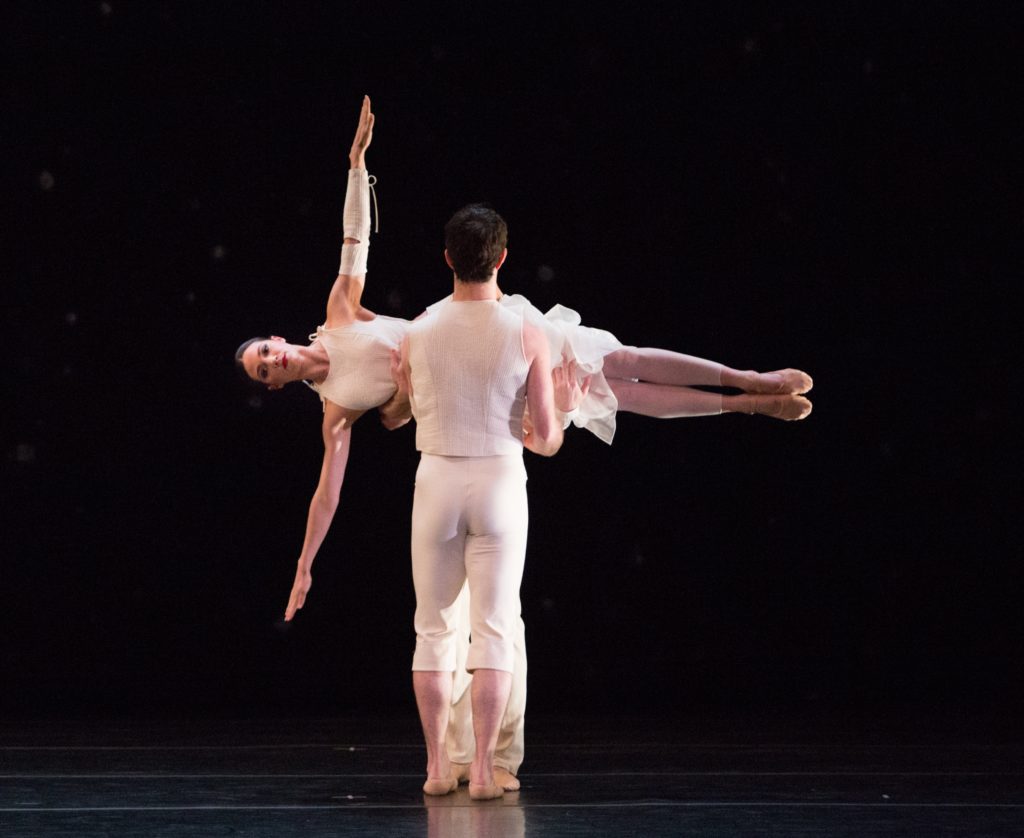
Lillian DiPIazza with Ian Hussey and Aaron Akbar of PAB in O zlozony/O composite, photo by Alexander Iziliaev

Lillian DiPIazza with Ian Hussey and Aaron Anker of PAB in “O zlozony/O composite,” photo by Alexander Iziliaev

There was the time in Lateral Pass (1985) when Randy Warshaw was harnessed to hover over the other dancers, among them but horizontal in midair. Almost like a Chagall figure in the sky twisting his head around to see people on land.

During that performance at the Whitney in 1971, Trisha brought Skymap (1969). In this performer-free piece, the whole audience lay down while listening to her voice speaking on tape. Like stargazers at night, we looked up to the ceiling in the darkened gallery and let our imaginations respond to Trisha’s fanciful riff. With her richly multi-timbered voice, she gave words personalities and we “saw” the word h-o-r-s-e gallop across the “map” on the ceiling. We were participating in Trisha’s wittily imagined cross-country trek where words and names had personalities.
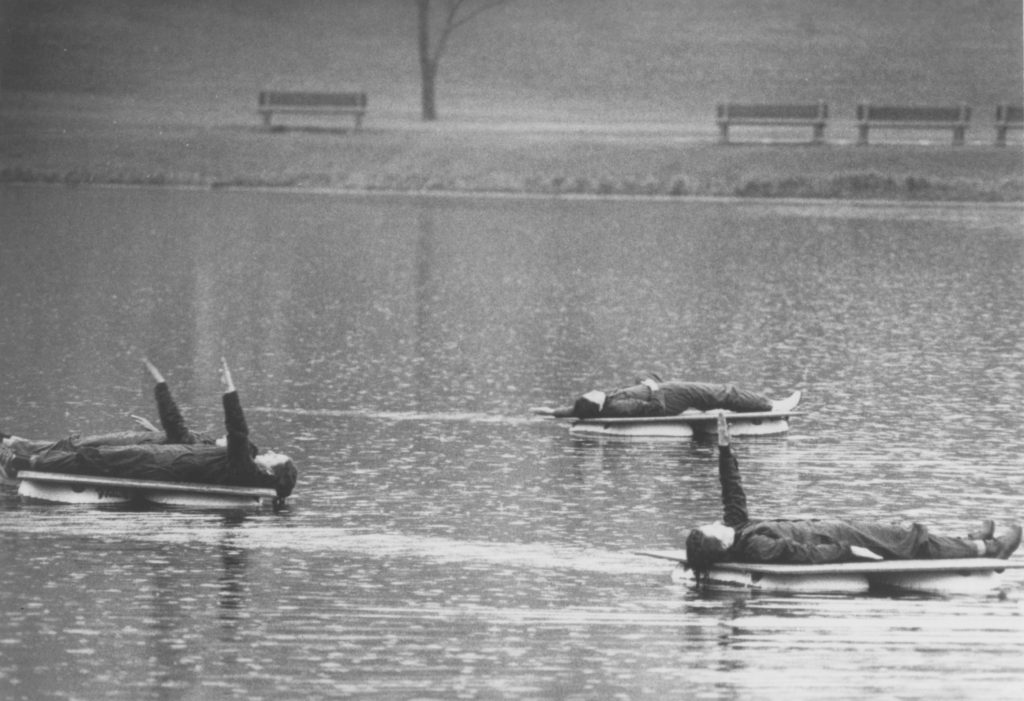
Group Primary Accumulation in Minneapolis, photo by Boyd Hagen

“Group Primary Accumulation” on Loring Pond in Minneapolis, photo by Boyd Hagen

Two other examples of being horizontal on the ground—or on water—are further examples of her synergy between rigor and sensuality. In Group Primary Accumulation (1973), four women on their backs accumulate simple gestures for arms, legs, and head. In Minneapolis, she sent those dancers out on rafts in a pond. In her opera L’Orfeo (1998), baritone Simon Keenlyside sang an aria from a prone position. I doubt if any opera singer before has done that before. But, psychically and poetically, Trisha loved the relaxation of the body that let the mind wander.

Addendum:
I recently was struck by similarities between the way Trisha challenged us to see the body from unusual angles and the exhibit of the Hungarian Bauhaus photographer/painter/etc now at the Guggenheim. In the photo on the left, taken on a ship in 1928, he looks up through the feet to the rest of the body, similar to the kind of angle I’ve seen in O composite, Newark (1987), and other Brown works.
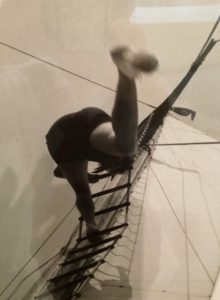
Lazlo Moholy-Nagy, 1928
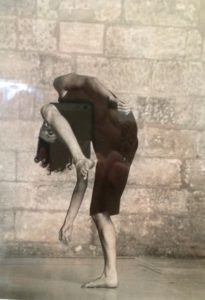
Lazlo Moholy-Nagy, 1928

Trisha Brown, 1982, photographer unknown

Trisha Brown, 1982, photographed by Guy Delahaye


Another Moholy-Nagy photo, where we see a woman lying prone where you wouldn’t expect it, reminds me of Trisha’s ability to place a magic carpet in an otherwise formalist context.
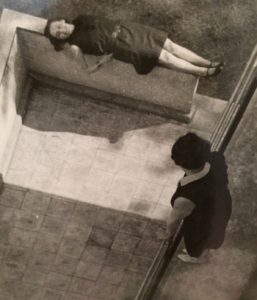
Moholy-Nagy, 1928

Moholy-Nagy, 1928


2 people like this Featured 2

Eiko: Mourning Becomes Exhilarating

How could an evening devoted to grief be so uplifting? That was true of “Precarious: Guest Solos 1,” a collection of invited solos at Danspace Project on the Lower East Side. But it was also true of the entire month-long Platform 2016: A Body in Places, which included performances, workshops, photograph exhibits, talks and other wanderings from February 17 to March 23.

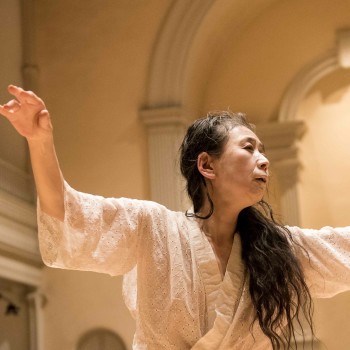
The answer is Eiko Otake, recently redefined as a solo dance artist. When you’re in the presence of her dancing, her aura fills time and space. You lose track of what century or country you’re in. She seems to transform the very air she occupies. You tap into a whole world of grief that, like a beautiful poem, makes you want to be near it.

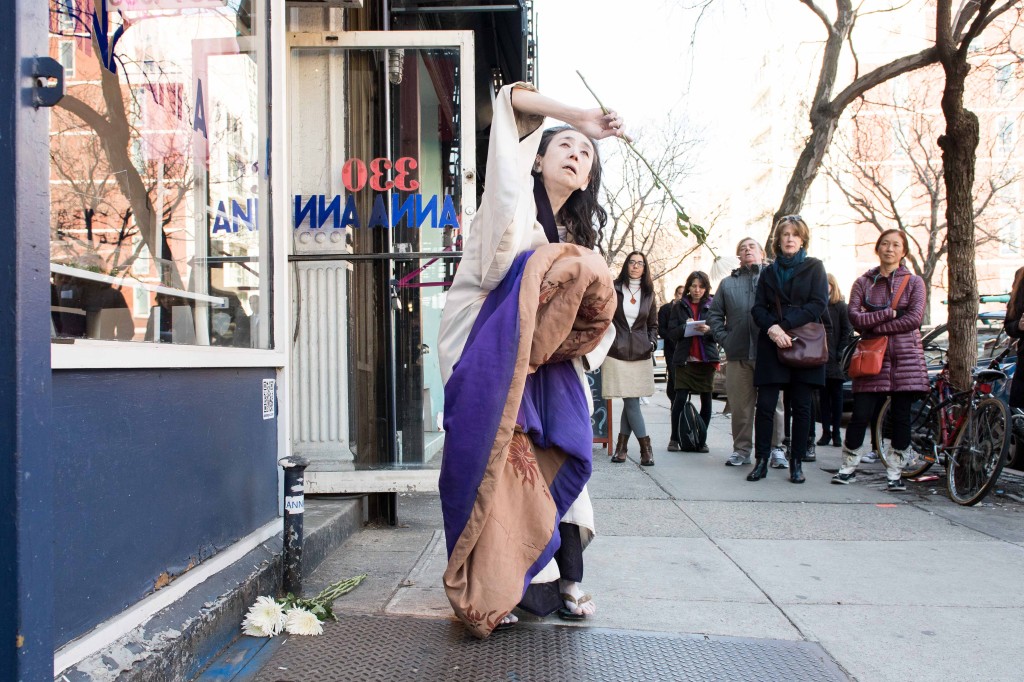
Eiko at local shop, photo by Ian Douglas

Eiko at local shop, photo by Ian Douglas

As a duo, Eiko and Koma could change the way you looked at the world. When you watched them inch along with their archetypal slowness, whether in a theater, a pool of water, or a museum, you might get the eerie feeling that a Japanese painting from a previous century was coming to life. Maybe you felt you were witnessing a primordial world that has no beginning or end.

During the Platform, Eiko’s stature grew from large to huge. It’s not only that Eiko herself expanded as an artist, but that her ideas and presence radiated like moonbeams, connecting to the luminous darkness in other artists and issues. It’s like the long and deep connection she had with Koma imploded, then exploded into a scintillas flying in different directions.

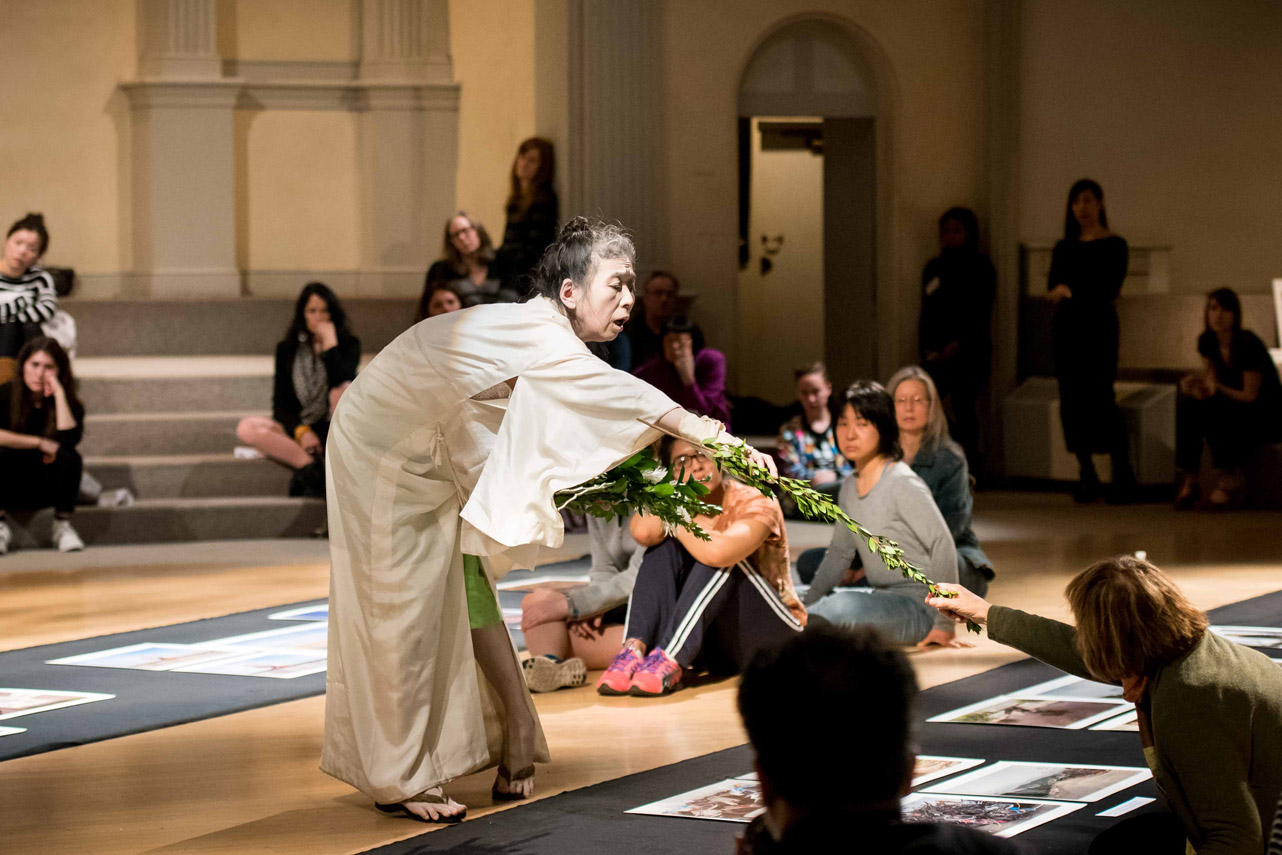
The Platform provided an Eiko-a-day infusion of spirit somewhere on the Lower East Side. I attended 3 of the 25 or so events and participated in one “Bearing Witness” talk session. Eiko brought her dancing, like a breeze of sorrow, into different sites. She might lurk in the shadows and then appear on the balcony, threatening to drop her kimono over the edge; she might whip her carefully collected reeds against a wall. Just when you thought she would fade away and die, she erupted with a burst of anger, rage, or subhuman moaning as though suddenly remembering all her children were dead. She included audience members by offering a stalk, or beckoning us to follow her.

Eiko, connecting with the audience, photo by Ian Douglas

Eiko, connecting with the audience, photo by Ian Douglas

A new element since her barefoot days with Koma was a pair of wooden sandals. She clomped around in them, teetered, and almost fell out of them. You were sure she would twist an ankle. (She didn’t, but she did sprain a wrist the first week and performed the rest of the Platform with a bandaged hand.)

A typical beginning of one of her solos: Nestled close to the ground, she doesn’t budge for minutes. We see the swirling designs of her kimono move before we see her shift underneath. Her fingers and the soles of her feet look so fragile. Brian Seibert in his New York Times review of March 2, described the startling sight:

“At 9 a.m. on Monday, if you had peeked through the storefront window of Dashwood Books on Bond Street in Manhattan, you would have seen a body on the floor, sleeping or possibly dead. Slowly, out of tattered Japanese robes emerged whitened feet, gnarled and aged and terribly exposed.”

Seibert also wrote about the powerful effect of looking into her eyes:

“When her gaze briefly meets yours, it’s still unclear whether she sees you, but the possibility is enough to be harrowing. It’s a look you might have seen on a homeless person or a refugee, a piercing look that reminds you of your sins and makes you count your blessings.”

I too received that piercing look and was transfixed by it. I had actually seen her just before the show started, when she happily confessed that she was nervous. Minutes later, she became a completely different creature.

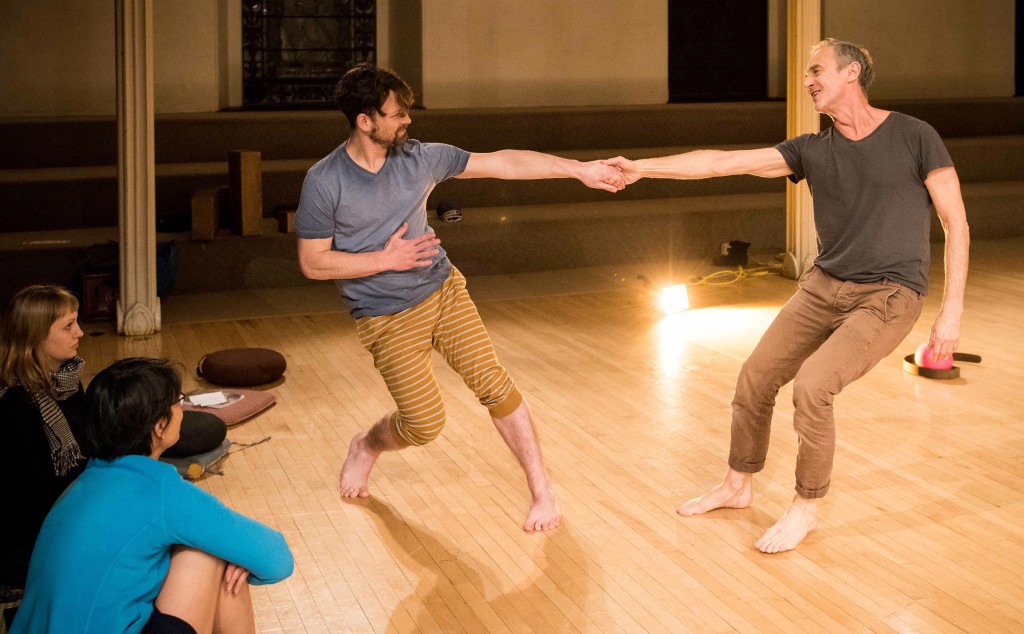
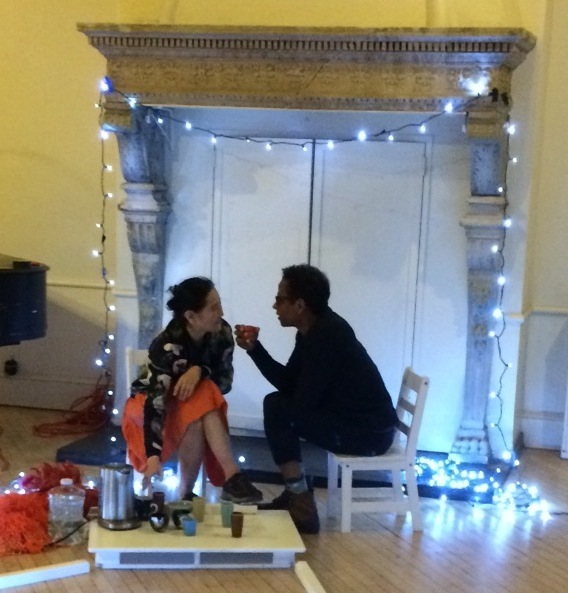
Talking Duets with Davdi Brick and John Kelly, curator Lydia Bell is at left, photo by Ian Douglas

Talking Duets with David Brick and John Kelly (curator Lydia Bell is at left), photo by Ian Douglas

But in some ways her work partnering other dancers was even more startling. As Siobhan Burke pointed out in The New York Times, during “Talking Duets I” many got a whiff of Eiko’s sense of humor for the first time. Instead of an ancient goddess in whiteface, she became a downtown denizen with delightful witticisms of body and voice. She danced with Emmanuelle Huynh, leading off a series of duets. To give some shape to these chance encounters, Danspace director Judy Hussie-Taylor posed questions from a table. I remember David Brick carrying John Kelly and, in answer to a question, Kelly was singing a lovely Irish ditty.

Eiko’s playful timing and natural warmth seemed to be contagious. I’d never seen Bebe Miller be so funny.

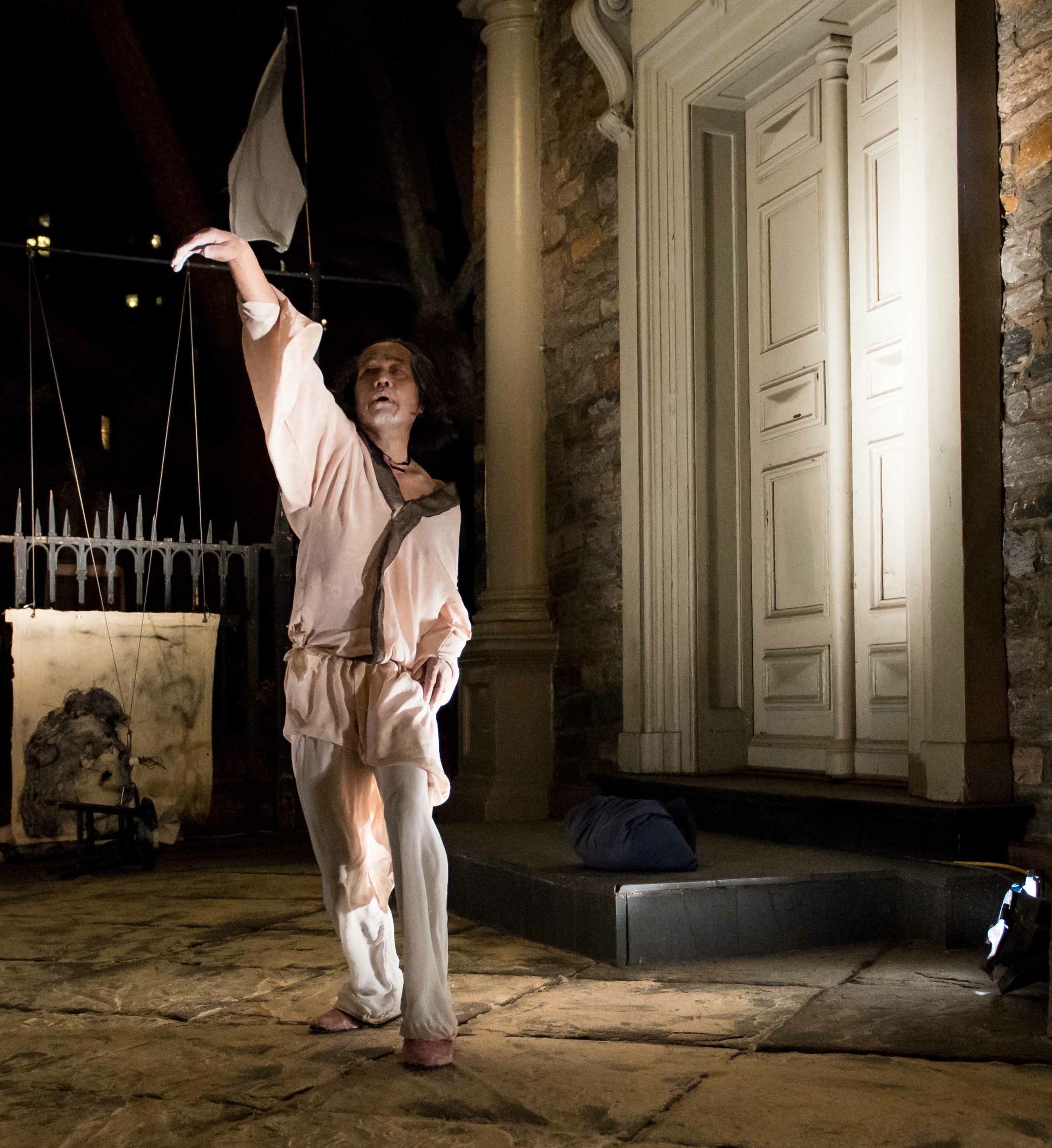
Koma, in his solo on the porch, photo by Ian Douglas

Koma, in his solo on the porch, photo by Ian Douglas

But to return to the grief evening, or rather the invited solos inspired by grief (Judy Hussie-Taylor had given each artist a quote from Judith Butler), the diversity of interpretations was  part of what was uplifting. Koma chose to perform his solo, “Dancing with My Painting and Lion,” outside in the cold, lurching from dirt ground to stone lion statue while tango music played. Beth Gill, inspired by Eiko and Koma’s Husk (1987), oozed along the carpeted risers in the Sanctuary during almost the whole three hours. And Donna Uchizono quietly interviewed audience members in the Parish Hall about a remembered loved one before improvising with that information. After being deep in conversation with audience member Ralph Lemon, she immersed herself in a remarkably evocative improvisation.

Donna Uchizono with Ralph Lemon, in prelude to her solo improvisation, photo by me

Donna Uchizono with Ralph Lemon, in prelude to her solo improvisation, photo by me

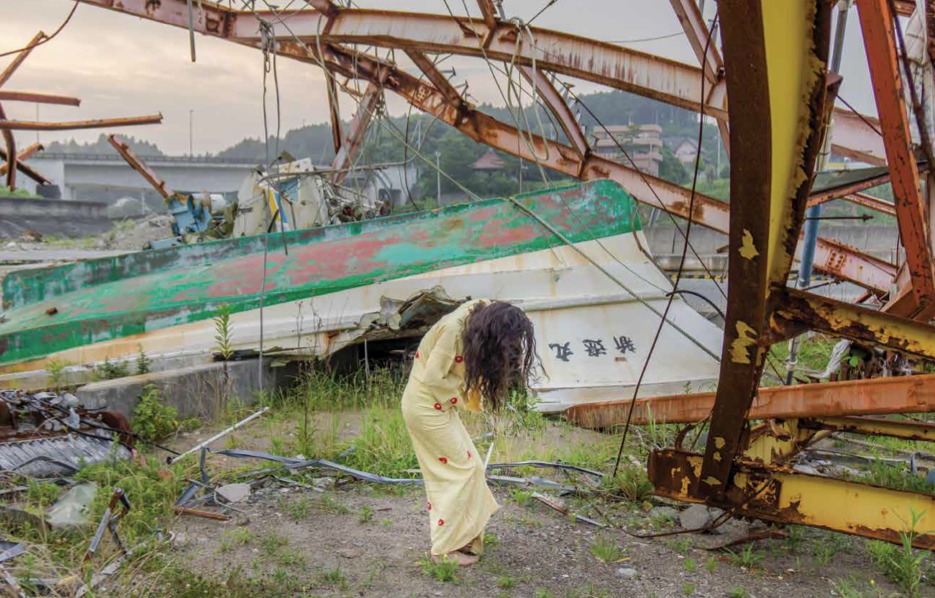
Part of the inspiration for the Platform can be traced back to Eiko’s harrowing project with photographer William Johnston, A Body Fukushima (2014). Together they traveled to irradiated areas in and around the damaged Fukushima Daiichi nuclear reactors. These images of Eiko, even more “terribly exposed,” yet fitting in harmoniously to those godforsaken landscapes, are uncannily beautiful.

Near Fukushima, 2014, photo by William Johnston

Near Fukushima, 2014, photo by William Johnston

After one of the solos in the neighborhood, I was overwhelmed. I visited Eiko “backstage.” I said to her, “Your body carries all the sadness of the world.” Her immediate response was, “Don’t we all?”

I participated in a “Bearing Witness” event as a commemoration of five years since the nuclear meltdown at Fukushima. Prompted by the idea of the artist as wanderer, scholars and performers spoke about various ramifications of Eiko’s work. Yoshiko Chuma, fresh from a work period with dancers in Palestine, talked about the dangers facing people there. Both Yoshiko and Eiko are fearless wanderers who enter dangerous territories without a second thought.

Eiko expressed her worry that the Body in Fukushima images were merely beautiful and did not prompt action. But I expressed my thought that the photos go beyond beauty and reach into the observer’s feelings. They create a connection with the unfortunate people from Fukushima who are living in exile, and by extension, with all refugees.

This Platform provided a long, lingering look at a monumental artist, one who is willing to embody the sorrows of life on this earth. With Eiko’s generous spirit, the Platform shed light on other artists’ experience as well. Kudos to Danspace, to Hussie-Taylor, and to Platform curator Lydia Bell for choosing and shaping this deeply moving and thought-provoking experience.

Although the Platform ended in March, you can still see some of Eiko’s solos in this video collage.

1 person likes this Featured Leave a comment

Are Women Dancers Still Discriminated Against?

I co-wrote the article below forty years ago. Since the issue has come up again (actually it never went away) I decided to post it. This diatribe was useful back in 2000 when a group of choreographers called the Gender Project got together to address discrimination against women in dance. Reading this article from 1976, they were appalled at how familiar it sounded.

 Although I basically stand by what we said and the data we gathered, I now feel some distance from the strident tone. During the ’80s and ’90s, AIDS devastated the dance community. So many of my male colleagues were dying that I dropped all my anger about how hard it was for women to get a gig. At least we were alive. We were dancing, we were having babies. I’ve written about this change of heart in my book, Through the Eyes of a Dancer.

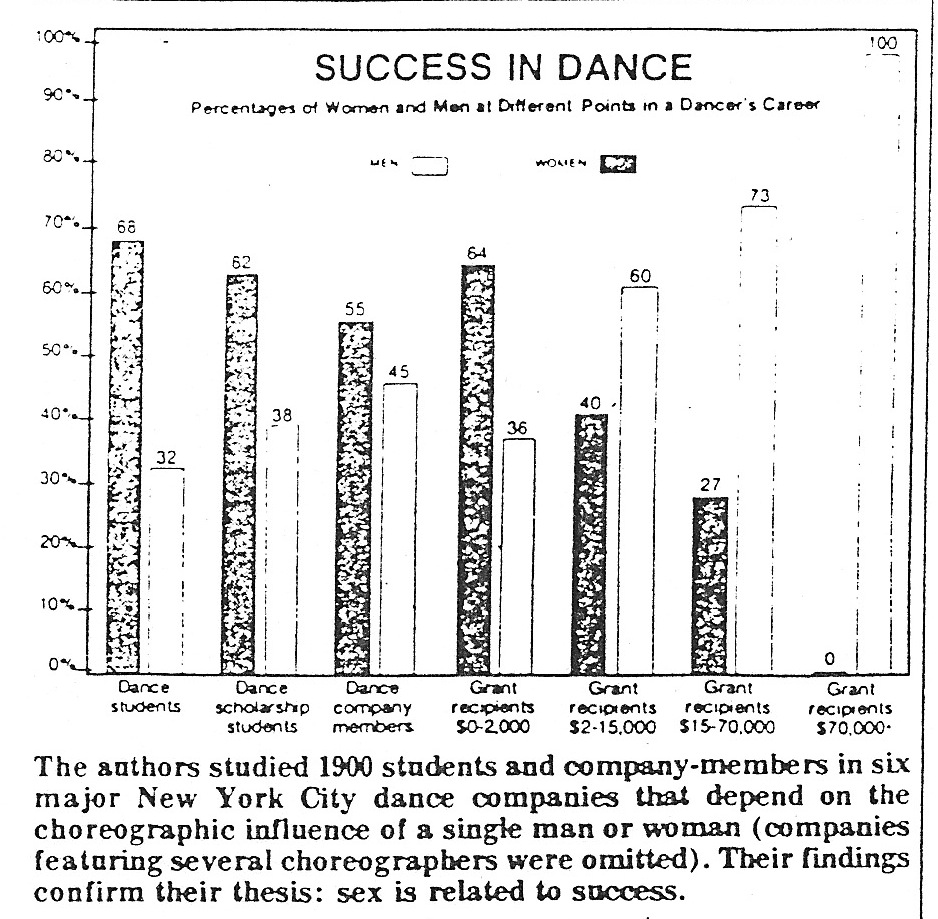
Back in the 1970s, Stephanie Woodard and I were collaborating on choreographic projects, and our rehearsal-break conversations led to a desire to expose the discrimination against women. Because we were both teaching at Trinity College in Hartford, we had ample opportunity to observe the difference in male and female student behavior. (At that time there were only two genders, nothing in between.) Stephanie, a dance ethnologist, knew about ballet history, so all the references to Taglioni et al are hers. Sorry for the lousy reproduction of the chart here; it’s from a xerox of a xerox. The chart is based on data we gathered, but I can’t vouch for the sources, because I just don’t remember. 

Reading this over so many years later, I don’t completely agree with all our statements. So, in the manner of Yvonne Rainer’s “A Manifesto Reconsidered,” I am inserting my current reactions and updates in double brackets.

∞∞ When a Woman Dances, Nobody Cares ∞∞

Co-written by Wendy Perron and Stephanie Woodard
Village Voice, March 1, 1976

“When a woman dances nobody cares. All women can dance. But when a man dances, now that’s something.” —a high school dance teacher in California in 1963

In the dance business, men are in the minority. But not the usual sort of minority. Instead of being abused and ridiculed in their attempts to be accepted, they are praised and encouraged. [[Whoa! Of course, male dancers were abused and ridiculed routinely by other boys when they were students.]]

Dancers and critics alike are proud of the ever-increasing numbers of men in dance because their presence has legitimized it. No art is recognized as an art until men do it, from cooking to medicine to dance. And then it becomes dignified, arduous, skilled.

From an artistic point of view, American modern dance is the achievement of women. Isadora Duncan and Loie Fuller discovered it, Martha Graham and Doris Humphrey explored it, and the excitement of it unfolds today through women like Trisha Brown and Twyla Tharp. Over the years women have pushed back the boundaries of dance, extending the movement vocabulary, creating new modes of performance, revolutionizing concepts of composition.

Dance critic Marcia B. Siegel recently wrote: “With the exception of [Charles] Weidman and [Ted] Shawn [[those are huge exceptions!]], men didn’t begin making significant choreographic efforts outside classical ballet [[what about tap?]] until the mid-1930s, when modern dance had attained artistic recognition, built its own audience, and begun training future dancers. Now that there is something to be won, more men are entering the field and taking over.” [[That’s a bit harsh—and I don’t agree with the sentiment.]]

Ballet has allowed women as well as men to hold influential positions as performers and choreographers. It is popular today to show disdain for ballet in the nineteenth century, when women were its focus. Contemporary critics are impatient with the contrived plots and the affected acting and are embarrassed to think that male dancers had only secondary roles and were called “porteurs” or “carriers.” Walter Terry, renowned ballet critic, lectured at Harvard Summer School Dance Center last year [[I was teaching there that summer]], extolling the ascendancy of men in dance—to a lukewarm student audience of a hundred women and eight men.

However, the technique of ballet, with its feather-light leaps, its long balances, its mercurial changes of quality from one kind of step to another, was developed by women largely to appear ethereal. Of course, it was sexism—ranging from a desire to idealize women as fairies and nymphs to a desire to watch women’s bodies—which allowed the ballerinas center stage. But once there, women, with their more pliant bodies, gave ballet its fleet, supple style.

Today an increasing dance audience goes hand in hand with increasing commercial success for men. Male dancers are getting hired and male choreographers are getting grants way out of proportion to their numbers.

In the chart that accompanies this article, we compiled data on 1,900 students, scholarship students, and company members of six major New York City modern dance and ballet companies with affiliated schools (almost all asked not to be named). In addition we obtained data on 316 grants given by the National Endowment for the Arts (1974–1975) and the New York State Council on the Arts (1971–1974). We included only companies that depend on the choreographic influence of a single man or a woman, for example, the New York City Ballet or Dan Wagoner and Dancers. Grants to companies that featured several choreographers, e.g., American Ballet Theatre, or collaborative choreography, e.g., Grand Union, were omitted. The resulting data show a clear relationship between gender and success in dance.

Success in dance

Behind these figures lies a wealth of stories, like that of the dancer who counted only two women choreographers out of the fifteen he had worked with during his four years with the Joffrey Ballet. Or the woman who could run down a list of auditions where she’d been good enough but not man enough for the job.

We interviewed fifteen young professional dancers and choreographers to find out how this situation affects their careers, what happens when a man or a woman tries to get a performing or teaching job, how men and women are treated in class, whether there are separate standards for men and women, and whether both women and men contribute to the problem. Because of the sensitive nature of their disclosures, the interviews quoted below are pseudonymous.

Most dance companies are equally composed of men and women, which gives the impression that dance is one of those rare places where equality and fairness are the order of the day. But as the chart shows, many more women than men are competing for about the same numbers of places. At a typical audition ten times more women than men will appear. For example, at Rudy Perez’s recent audition, six men and fifty-five women tried out. All six men, but only fifteen (or less than one third) of the women, were called back. [[This was when Perez still lived in NYC, before he moved to Los Angeles. I was dancing with him a couple years before writing this article.]] 

Untrained men with a modicum of athletic ability tend to have a physical assertiveness that passes for performing skill. Such men are often accepted with barely a passing thought as to how they actually dance. One Connecticut dance company, whose women each had seven to twenty years of training, was forced to accept men with two or three years of training each because a female guest choreographer refused to do a large-scale piece only for women. We know of a young athlete, who, during one of his first dance classes in the Midwest, was spotted by a renowned choreographer and invited to dance with his New York company…Another was picked up at a discothèque. [[But there is something to be said for outsider dancers. Larry Keigwin was a club dancer before becoming a postmodern dancer.]]

The growing number of men has increased competition among them somewhat. An administrator in the school of one of New York’s leading ballet companies said, “Four years ago we would have given a scholarship to any boy who walked in the door.” He went on to say that nowadays they could be more selective, but were nevertheless still supporting boys with less training than their female scholarship students.

Now that we have men in dance, we have dance in the colleges, too. And college administrators are eager to preserve this connection, making sure that dance at their schools doesn’t slip back into being “women’s work.” “When are you girls going to hire a man?” the dance department chairwoman of a prestigious New England college was asked by a dean. [[This was at Trinity College, where Stephanie and I were both teaching; it was said to the director of the department in our presence.]]

Another dance department chairwoman felt obliged, since she had an all-woman faculty, to hire men to give master classes. She thought this would please the administration by making dance look more serious, and hoped it would attract more male students. One teacher, in telling a dean that dance enrollments were up, was asked, “But how many of them are boys?”

“Amy,” a charismatic performer and teacher who applied for a guest position in a college summer program, was rejected and then asked if she could suggest a good man. She says, “I tried to think of one who was available, but all the men I knew were knee-deep in jobs. They finally found someone. He’d been dancing half as many years as I had.”

Things look different through a man’s eyes. Every male dancer we spoke to vehemently defended the work he had put into his success. Ballet dancers point out that because present-day technique is heavily influenced by the characteristics of women’s bodies, they have a hard time mastering it. (Although men can generally jump higher, are stronger and have straighter torsos, women have the crucial advantage of being freer in the hips and upper back and having suppler feet.) [[This parenthetical statement may be irrefutable, but the generalizations still make me cringe.]] Also women have more often danced since childhood, giving them a head start in their technique. This may account for the feeling among many male dancers that they are victims in a “woman’s world.”

Despite this no one can deny that men have more opportunities. “Don,” a talented and vibrant modern dancer, admitted, “I couldn’t be where I am professionally if I weren’t a man.” He started dancing three years ago at the suggestion of a dramatic coach. With a little army discipline behind him and a natural ease of movement, he was asked to dance professionally after eight months. He quickly saw that there was more room for him in dance than in theatre. Much attention came his way in dance classes and although he knew the reason was simply a dearth of men, he made the most of it. “I get offered a lot of jobs,” he says. “I always take the one I can learn the most from.” He is fed up with women saying, “Oh, you’re a man, that’s different,” because he feels he chose his goal wisely and worked to make it happen.

Men are becoming a top attraction because they sell at the box office and they sell on stage. The Martha Graham Dance Company, whose repertoire traditionally features female protagonists, has begun to take in male dancers who have never even studied the technique. This is quite a change from the days when the Graham technique was sacred and a dancer was profane until she or he had spent years getting it under the belt.

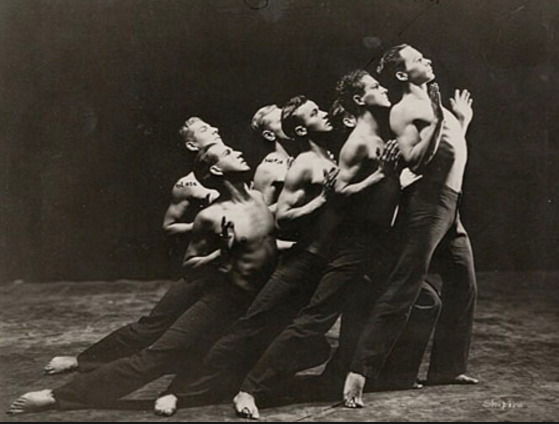
Ted Shawn and His Men Dancers, 1920s or '30s

Ted Shawn and His Men Dancers, 1930s

And if a man sells, an undiluted flock of them sells better. The American prototype is Ted Shawn’s muscular, spectacular all-male company of the 1930s. Today’s counterpart is Pilobolus, a group of gymnasts whose debut in 1972 as an all-male dance company was greeted with near-hysterical acclaim.

All-male groups are praised for their virility, whereas all-female groups are seen as somehow deficient. The insinuation, whether vocalized or not, is “Couldn’t they find a man?” [[I think this has changed. It seems to me that all-woman groups and works often attain some measure of acclaim.]]

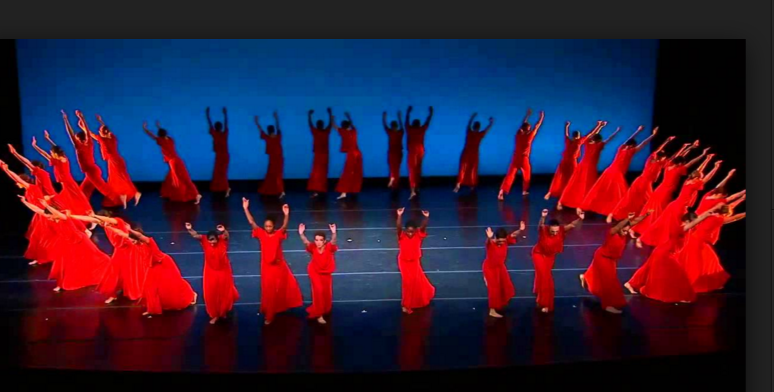
Panorama (1935), choreographed by Martha Graham

Panorama (1935), choreographed by Martha Graham

Women have undeniably contributed to this syndrome. If resistance to women’s success did not exist, women would probably create it. “Sheila,” a beautifully sharp-featured woman who has danced for several well-known choreographers, has rarely chosen to dance for a woman. Looking back, she analyses it this way: “Women like having a man around…it’s like choosing a doctor. You want to be led by a man, get the attention of a man. Deep down inside, you think he knows something and you don’t.” [[Arrrgggghhhh.]]

Asked why success in dance comes more easily for men than women, one woman answered, “Both men and women have doubts. Women let their doubts stop them, and men don’t.”

We have both taught beginning dance classes. Time and time again, we’ve seen that, in a new and possibly intimidating situation, men will be generally more aggressive, physically and personally. As a dance teacher, you see the whole problem embodied before your eyes.

“Scott,” a contemporary danseur noble, has guested with several international ballet companies. He readily claims that women ballet dancers are, hands down, technically superior in almost every company. “Scott” resents the low standards expected of men. “They can always throw a man out there to hold a woman up and he’ll look good, but he can’t dance.”

“Scott” himself loves partnering women; he takes pride in being the catalyst, the gallant guy who assists her to new heights. But, as he says, “When you lift all day long, you tighten up—not just your arm muscles, but your legs and back also. When I don’t have to lift, I become freer in my musculature.” (A more bitter young dancer complains that he is being used as a professional weight lifter rather than an artist.)

After working with many choreographers of both sexes, “Scott” reached a conclusion that surprised even him. “I get the feeling that when women do something it’s almost like fighting…fighting for women’s rights. It’s do or die. Total involvement. We (men) have been conditioned to be the breadwinners and they have to fight to show they can do it. It’s more intense.”

What women dancers have been able to do all along is to be spectacular and subtle at the same time. The exquisite feats that audiences marvel at are accomplished not by strength alone, but with sensitivity and skill. From Camargo to Taglioni to Cynthia Gregory, and from Duncan to the best of our contemporary dancers—Sara Rudner [[who is still a terrific dancer]], Jennifer Muller [[she no longer dances but her company has been going since 1974]], Carolyn Lord [[a ballet dancer turned downtown choreographer who now runs the Construction Company space]]—women have achieved a formidable mastery of the art and a range any performer would aspire to.

However, the quality of the dancing isn’t always what catches the audience’s fancy. Sometimes it’s the (undeniable) sexuality of the dancers. In the right cultural milieu—and this is it—men can become sex objects as easily as women. As Siegel says, “The featuring of men in ballet has created a new theatrical meat market.”

The only way to remove dance from the realm of sex-objectism is to become more familiar with it, so that we are comfortable watching the dancers, and their sexuality is not the overriding concern, eclipsing all other pleasures. [[I wish we’d come up with a more activist ending. If you think of something, please write it in the comments box below.]]

Photo of Martha Graham on homepage by Imogen Cunningham.


Like this Featured Historical Essays Uncategorized 3

Martha Graham and the Asian Connection

I wrote this in April 2014 for Dance Magazine’s website. Recently, when searching for it to recommend to a student, I noticed it was missing from the site, so I decided to re-post it here. These musings were prompted by the 2014 season of the Martha Graham Dance Company, but they had been brewing for some time. I thank the late Blondell Cummings for helping to jog my memory.

Although the Graham season this weekend emphasized Martha’s Greek connection, it got me thinking about her Asian connection. From the legendary Yuriko in the 1940s on down to the latest star, Xin Ying, these dancers have each been breath-taking interpreters of Graham’s vision.

I’ve read that Graham cultivated an Eastern look herself and that she felt flattered whenever anyone mistook her for Asian. It’s possible that, since she had a long torso and short legs, her close-to-the-floor technique was particularly suited to Asian bodies. And of course, she had a great affinity with sculptor Isamu Noguchi, whose sets for many of her pieces gave them a spare, Eastern look. About the relationship between Graham and Noguchi, Takako Asakawa once said, “In art, they were like husband and wife.”

Whatever the reason, more Asian dancers have found a home in her work than in any other modern dance company—and many of them have been brilliant. By the way, Graham’s interest in Asian forms goes back to Michio Ito, the early modern dancer with whom she had danced in the Greenwich Village Follies in 1924.

Here are the Asian dancers I remember:

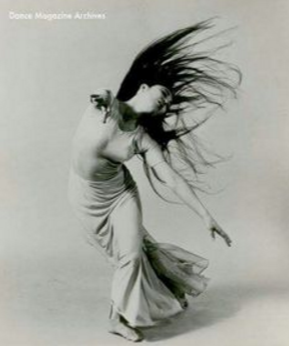
Yuriko, Dance Magazine Archives

Yuriko, Dance Magazine Archives

Yuriko Kikuchi — Known simply as Yuriko, this legendary dancer started as a seamstress for Martha. As Japanese Americans during World War II, her family was forced to live in an internment camp. (These camps were recently brought to light in the Broadway musical Allegiance.) Yuriko danced with Graham from 1944 to 1967 and continued to appear as a guest artist. As a stager, she set the glorious stampede known as Panorama (1935) on the company. (She also played Eliza in the original Broadway musical The King and I (1951) as well as in the movie (1956), both choreographed by Jerome Robbins.


Takako Asakawa in Diversion of Angels, ph Martha Swope, Library for the Performing Arts


Takako Asakawa — (at right) As the woman in red in Diversion of Angels, she would cross the front of the stage, relevé with one leg lifted, and contract in a spasm of joy at the peak of the relevé. I’ve never seen any dancer, in a modern or ballet company, perform this passage with the same slicing, gripping electricity that Asakawa had.


Yriko Kimura as Clytemnestra, 1970s, photo by Max Waldman

Yuriko Kimura as Clytemnestra, 1970s, photo by Max Waldman

Yuriko Kimura — Known as “Little Yuriko” and also from Japan, she danced with the company in the 1960s and 70s. Onstage she was both vulnerable and strong, with exquisite sensitivity, like a filament in a light bulb—unforgettable! I believe she still teaches in Japan.


Dawn Suzuki — A strong and rooted dancer, she used to demonstrate for the classes I took at the Graham studio in the 60s.


Miki Orihara, photo by John Deane

Miki Orihara — As a mainstay of the company from 1987 until recently, she has excelled in lead roles in Appalachian Spring, Errand Into the Maze, and Satyric Festival Song. She teaches in Japan and the U. S. and has also served as Yuriko’s assistant. In 2018 she presented a solo concert that celebrated generations of Asian American dancers.


Rika Okamoto — She had a keen sense of drama when she danced with the company in the 1990s. She also danced with Pearl Lang and later became one of the original Tharpettes in Come Fly Away. Her charisma led to her stealing the show of Tharp’s 50th-anniversary tour.


Feng-Yi Sheu, photo by John Deane

Feng-Yi Sheu, photo by John Deane

Fang-Yi Sheu  Around 2004, when it seemed the Graham company would go under, Feng-Yi became the reigning star, galvanizing the public with her forcefulness and uncanny Martha-like presence. Trained in Taiwan by former Graham dancer Ross Parkes, she graced the January 2005 Dance Magazine cover as a “25 to Watch.” She has also worked with Christopher Wheeldon, Cloud Gate Dance Theatre, and Akram Khan, and co-founded her own company in Taiwan. You can see her on the big screen in The Assassins.


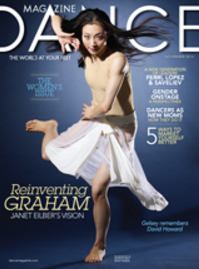
Xiaochuan Xie, Dance Magazine cover, NOvember 2013, photo by Nathan Sayers

Xiaochuan Xie, Dance Magazine cover, November 2013, photo by Nathan Sayers

Xiaochuan Xie — Trained in China, “Chuan” is another powerhouse dancer who can be as delicate as she is forceful. Although she has the visceral fire in her belly that marks a Graham dancer, she can also radiate sunshine and sweetness in roles like Creon’s daughter in Cave of the Heart. In November 2013 she landed on Dance Magazine’s cover. Last season she followed in Yuriko’s footsteps, dancing a radiant Eliza in The King and I at Lincoln Center.


OeuHu Chien-Pott in Depak Ine, photo by Yi-Chun Wu

PeiJu Chien-Pott — An astonishing performer, Chien-Pott, originally from Taiwan, is a current star of the Graham company. Not only is she powerful in the Graham classics, but she has mastered the fluid, whipping-around choreography of Andonis Foniadakis in Echo and the animal-like strangeness of the lead solo in Nacho Duato’s Depak Ine. She danced with the company from 2011 to 2016. She gave a powerhouse performance in the kung-fu musical Dragon Spring Phoenix Rise with choreography by Akram Khan at the Shed in 2019.


Akiko Kanda in 1961, ph Zachary Freyman for Dance Magazine

I just learned about was Akiko Kanda, profiled in the Aug. 1961 Dance Magazine in “Brief Biographies: Dancers you should know.” Along with Takako and Little Yuriko, she attended Graham’s lec-dem in Tokyo in 1955. Seeing Martha in a red dress demonstrate her work galvanized her to decide to come to NYC to study with Martha, which she did the following year. She joined the company in 1958 and danced featured roles for years. She returned to Japan in the early 60s to teach and choreograph.


Xin Ying

Since 2011, Xin Ying has performed major roles. She is also very active on Instagram where you can see her beguiling improvisations. Here in Grahams Satyric Festival Song (1935)


Did I miss anyone?


Equal time for male dancers: When I first posted this almost two years ago, one reader pointed out that females were not the only gender of Asians in Graham’s company over the years. Click here to read my post-posting on Asian men in the group.


1 person likes this Featured Uncategorized 4

Best & Worst of 2015

Although I cut down a bit on my dance addiction this year, I still saw many terrific performances—and a few clunkers. I tried to stick to world premieres or company premieres but other things snuck into this list.

BEST CHOREOGRAPHY (in order of how strongly it hit me)

• Polaris, by Crystal Pite with 6 Kidd Pivot dancers and 60 NYU Tisch Dance students. Massive. Inventive. Shocking in its brutal beauty, masterful in its craft, it was part of “Thomas Adès: Concentric Paths—Movements in Music,” commissioned by Sadler’s Wells in 2014, brought to NYC by Lincoln Center’s White Light Festival in coordination with NY City Center.

"Polaris" by Crystal Pite, photo by Kevin Yatarola

“Polaris” by Crystal Pite, photo by Kevin Yatarola

• Andrea Miller’s Whale at the Joyce with her company Gallim. Almost unbearable cravings alternating with giddy flesh contact. Howling, dragging, hurtling through the air. A celebration of awkwardness. Yes, Miller is obviously influenced by Ohad Naharin, but she’s got her own unstoppable zing.

Andrea Miller's Whale, photo by Yi-Chun Wu

Andrea Miller’s “Whale,” photo by Yi-Chun Wu

• Birdgang Dance Company, an urban dance group from the U.K. in its U.S. debut, at the Breakin Convention at the Apollo (produced by Sadler’s Wells). Dancer/choreographer/actor Ukweli Roach created and starred in Vice, a searing depiction of addiction. The power and precision blew me away.

Sara Mearns and Adrian Danchig-Waring in Kim Brandstrup's Jeux. Photo by Paul Kolnik

Sara Mearns and Adrian Danchig-Waring in Kim Brandstrup’s “Jeux.” Photo by Paul Kolnik

• Kim Brandstrup’s Jeux, for New York City Ballet, takes you from a cocktail party to film-noir creepiness. Haunting use of Debussy’s music and Jean Kalman’s eclipse-like lights.

• Michelle Dorrance on two occasions: First, The Blues Project, with Toshi Reagon and BIGLovely at the Joyce in April, with fellow tap stars Derick K. Grant and Dormeshia Sumbry-Edwards. Delving into what the blues means individually, culturally and musically. And then, only months later, Myelination, a commission from Fall for Dance. Knockout rhythm and shape, spiced with weird and wonderful (partly improvised) solos and poignant duets. Dorrance has taken tap from being just “numbers” to being real choreography.

Alexander Ekman in Thoughts at the Bolshoi, photo by Jack Devant

Alexander Ekman in “Thoughts at the Bolshoi,” photo by Jack Devant

• Another choreographer who impressed me twice was Alexander Ekman. His cheeky, large-cast Tulle, mounted on the Joffrey Ballet, placed tutu-wearing dancers in everyday situations to hilarious effect, at the Auditorium Theatre in Chicago. In Moscow at the Benois de la danse, he dashed around the vast Bolshoi stage, charming the crowd with his witty words (translated into Russion on tape) and actions in Thoughts at the Bolshoi. Irreverent and reverent at the same time, this Swedish choreographer has the ability to see things from a fresh angle.

• David Neumann’s Noh-influenced dance/play I Understand Everything Better, at Abrons Arts. To see Neumann play the role of a delirious older man is to see him become more vulnerable as well as philosophical. Influenced by his work with Big Dance Theater, he created a dreamlike environment in which objects have their own choreography.

Louise Lecavalier in her "So Blue"

Louise Lecavalier in her “So Blue”

• Louise Lecavalier’s keenly focused So Blue, at New York Live Arts. Her famous fearlessness from the 1980s (when she was the star of La La La Human Steps) found a counterpart in her uncanny momentum as an older performer—one who happens to look like David Bowie. A beautifully shaped (mostly) solo concert, depending only on her singularity as a mover.

• Time It Was/116, an utterly delightful encounter between the scintillating New York City Ballet ballerina Tiler Peck and master clown Bill Irwin (who also happens to be one of New York’s greatest dancers). The performers co-choreographed this brilliant romp with Damian Woetzel, who commissioned it for Vail Dance Festival; the NY premiere was at Fall for Dance.

• Justin Peck’s Rodeo: Four Dance Episodes, for NYCB. The kinetic thrill of people running at top speed across the expanse of the stage of David Koch Theater matched Peck’s brazenness at appropriating Aaron Copland’s famous music for Agnes de Mille’s famous ballet. In section after section, Peck’s inventiveness tumbled forth, with the merest hint of the original source.

• Dream’d in a Dream by Seán Curran Company at Brooklyn Academy of Music. A beautiful reimagining of Central Asia carried on the currents of the Ustatshakirt Plus, a traditional Kyrgyz music ensemble. Gently transporting, veering away from folk dances and folk tunes in a good-natured glow of camaraderie. No aggression to show or prove anything, just an immersion in a faraway world.

• William Forsythe’s Duo2015 is an exhilarating example of his crazy wild idea of counterpoint. Two guys (Brigel Gjoka and Riley Watts), enthusiastically caught in a spider’s web of repetition and distortion, as part of Sylvie Guillem’s farewell performance at NY City Center, produced by Sadler’s Wells. I’d love to see it right after the original two-women Duo of 1996.

Partita_2_smaller__Anne_Van_Aerschot_11 copy copy• Anne Teresa De Keersmaeker and Boris Charmatz’s Partita 2 at Sadler’s Wells in London. Postmodern in the best sense: dance that creates structure and relationship from nothing but movement and squeaky sneakers. Energizing.
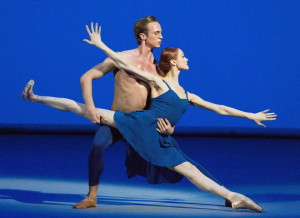
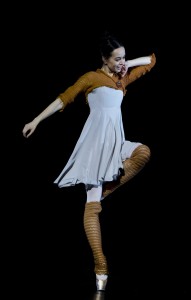
(photo by Anne Van Aerschot)

BEST REVIVALS

• The Snow Falls in the Winter, first made by Annie-B Parson on the short-lived Other Shore company, now set on the Martha Graham Dance Company at the Joyce. Co-directed by Paul Lazar, this piece uses lines from Ionesco’s absurdist play The Lesson to frame the piece. Parson and Lazar have elicited a new, ironic edge from these hard-working, virtuosic dancers.

• Rainforest performed by Stephen Petronio Company at the Joyce as the first in his “Bloodlines” series. The dancers got the quietly feral force of this 1968 gem of Merce Cunningham’s. Warhol’s silver pillows caused a lovely chaos onstage and in the house, where viewers either batted them back to the stage or held them down.

• The musical Spring Awakening, this time produced by Deaf West Theatre, most of whose members are hearing impaired. With American Sign Language crucial for communication, choreographer Spencer Liff found a dynamic way to express the urgency, defiance and sorrows of these young people of 19th-century Germany—and he expertly incorporated Broadway’s first wheelchair performer.

LOOKING BACK—WITH GUSTO

• Dancenoise: Don’t Look Back. Annie Iobst and Lucy Sexton brought back their wacky, anarchic duo with the full complement of fake blood and real nudity, dildoes and cowboy hats, now with the added “relevance” of appearing in a museum (the new Whitney building). We guffawed in mock shock, and tapped into that old feeling of madcap liberation.

• “get dancing,” a tribute to Andy De Groat organized by Catherine Galasso at Danspace (an earlier version at Fridays at Noon), revealing the richness and spirituality of “minimalist” dance of the 70s to a younger generation. Plus, it was heavenly to hear Michael Galasso’s music again.

• ABT’s 75th -anniversary gala, with glimpses from 23 ballets including Billy the Kid, Fancy Free, Push Comes to Shove, Rodeo and The Bright Stream. Spectacular dancing from Herman Cornejo, Marcelo Gomes, Maria Kochetkova, Xiomara Reyes, Daniil Simkin, Diana Vishneva, James Whiteside and others. We felt the weight and glory of ABT’s trajectory.

• Event, directed by Robert Swinston, former associate director of Cunningham’s company and current director of Compagnie CNDC (Le Centre National de Danse Contemporaine) in Angers, France. Presented at the Joyce with an intriguing set of flowy strips of art by French artist Jackie Matisse (yes—the granddaughter of Henri). Swinston was inspired in his choice of excerpts of Cunningham works from 1965 to 1990, and the French group danced it with verve, at the Joyce.

MIXING IT UP

• “Platform: Dancers, Buildings, People in the Streets,” dreamed up by Claudia La Rocco, at Danspace. A multi-week series that threw together ballet and postmodern, Balanchine and Judson Dance Theater, through the lens of legendary dance writer and poet Edwin Denby. Much food for thought.

• “The Hidden Erotic Body of Soviet Ballet: A Tribute to Leonid Yacobson” combined a talk with Yacobson scholar Janice Ross (see my book list here) with reconstructions of Russia’s radical choreographer who is little known in the West. His entwining Rodin duets were sensual and seamless and triggered debate. Fridays at Noon at the 92nd Street Y, Harkness Dance Center.

• Also at Danspace: National treasure Meredith Monk, whose music and dancing light up the soul, teamed up with poetry goddess Anne Waldman. From gutsy rhythms of suffering to giddy ghosts to transcendent vocals, they made us feel lucky to live in their times.

BEST PERFORMERS (roughly in the order I saw them)

• Xiaochuan Xie of the Graham company in The Snow Falls in the Winter, also as Eliza in The King and I at Lincoln Center. A piquant sort of vibrancy.

• Lloyd Knight in the Graham company: Physical strength, dramatic impact, and a sense of the human being underneath the dancer.

• Megumi Eda in On the Nature of Things by Karole Armitage at the Museum of Natural History. With her crystalline quality she embodies the sacredness of the music by Arvo Pärt, Philip Glass and others.

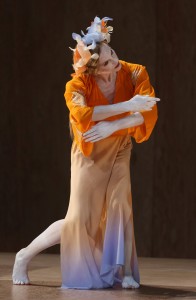
• Davalois Fearon in Stephen Petronio’s  Locomotor/NonLocomotor, mainly the second half when she engaged in brash, tough-love partnering with three guys, at the Joyce. A woman warrior in a bright turquoise leotard.

• Ballet West’s gemlike Arolyn Williams in Presto by Nicolo Fonte, at the Joyce.

• Natalia Osipova in Ashton’s The Dream, The Royal Ballet, at Lincoln Center, presented by the Joyce. Star wattage both before and after she fell on her behind.

"Trois Gnociennes" with Lopatkina and Yermakov. photo by Mikhail Logvinov

“Trois Gnociennes” with Lopatkina and Yermakov. photo by Mikhail Logvinov

• At the Benois de la danse, Moscow: The Mariinsky’s Uliana Lopatkina, transcendent in Dying Swan and dreamy yet precise in Trois Gnossiennes by Hans Van Manen.

• Alessandra Ferri in Wayne McGregor’s Woolf Works for The Royal Ballet, playing the roles of an author and her protagonist with dramatic focus, making you care what’s going on in her character’s mind. Royal Opera House, London.

Diana Vishneva in Ratmansky's Cinderella for the Mariinsky Ballet

Diana Vishneva in Ratmansky’s Cinderella for the Mariinsky Ballet

• During the Mariinsky Ballet’s season at BAM, outstanding performances were given by Vishneva in Ratmansky’s Cinderella, Kondaurova in Robbins’ In the Night, Xander Parish as Siegfried in Swan Lake, and Kristina Shapran in Without by Benjamin Millepied.

• Olsi Gjeci of Vicky Shick Dance in Pathétique, Miniatures in Detail, 92Y Harkness Dance Festival. Springs up like a cat, dances like he has a secret up his sleeve.

• Marie-Agnès Gillot in Wayne McGregor’s Tree of Codes at the Park Avenue Armory. A creature-woman extending her legs like tentacles. Kinda scary but fitting what I imagine Tree of Codes to be about.

• Soledad Barrio in Antigona, a Noche Flamenca production directed by Martín Santangelo with choreography by Barrio. Her gradually building heat culminates in wrapping her anger around her while heels clatter amazing rhythms into the floor. At West Park Presbyterian Church, last summer and again now until Jan. 23.

• Okwui Okpokwasili, coolly provocative in her delivery of Kathy Acker’s sometimes porno script, in Scaffold Room, a performance piece by Ralph Lemon at The Kitchen.

• Daniel Staaf of Gallim Dance in Andrea Miller’s Whale. In a cast of individuals who allow themselves to be painfully exposed, he was the most extreme: desperate in expressing need, a rock in accepting those who need him. It must have been emotionally exhausting.

• Meg Weeks in Andy de Groat & Catherine Galasso’s “get dancing” evening. Specifically in get wreck (1978), fan dance (1978) and notes on de groat, the new work by Catherine Galasso. Athletic freshness and buoyancy.

• Jennie Somogyi in Liebeslieder Walzer in her farewell performance with NYCB. This is how it’s done: melding emotion with strength and fluidity. We’ll miss you, Jennie.

• Rika Okamoto in Tharp’s Preludes and Fugues: a delicious sense of style. But even better in Yowzie, where she reveled in the crazy fun of it, morphing from a drunk to a pothead to a gorilla to the Iron Lady too heavy to lift. Astonishing go-for-broke performance.

• Edivaldo Ernesto in Sasha Waltz and Guests’ Continu at BAM’s Next Wave Festival. Sharp, puppet-like, dense, riveting.

• Tendayi Kuumba in Walking with ’Trane, by Jawole Willa Jo Zollar and Urban Bush Women at BAM, incorporating crazy sick vocal scatting into dance improv.

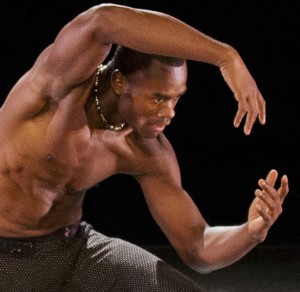
JamarSquare• Jamar Roberts in the Ailey company, magnificent in works by Robert Battle, Paul Taylor and Ron Brown and more. (photo of Roberts in Aszure Barton’s LIFT, by Paul Kolnik)
 

THE YEAR OF MISTY COPELAND

She shone in works from the Graham company gala to Ivy in On the Town, from Tharp’s Brahms-Haydn Variations to Swan Lake. In this last, she took her time to feel surrender and to let the anguish of Odette be expressed through her exquisite lines. She showed grace and humility in every public appearance. And she brought public attention to the dearth of female African-American ballet dancers.

A SLEW OF OTHER ABT DANCERS

Other breathtaking performances: Stella Abrera in Ashton’s Cinderella, Kim Kimin as Solor in La Bayadere, Maria Kochetkova and Sarah Lane in The Brahms-Haydn Variations,  Jeffrey Cirio in AfterEffect by Marcelo Gomes, Evgenia Obraztsova as Juliet.

PERFORMERS IN MUSICALS

• Tommy Tune: long, lanky and loving in the Gershwin musical Lady Be Good, NY City Center’s Encores! series

• Leanne Cope in An American in Paris. Gorgeous, breathy dancing, an open expressive face, and a voice that makes her a true triple threat.

• Alex Brightman in School of Rock: whether fidgeting, bouncing to his own music, or exploding, he’s a buoyant hurricane of energy.

• Making the most of a small cast: the six players of Dames at Sea all act, tap dance, and sing terrifically. The show is as much fun as some of the bigger, flashier musicals. Choreography by Randy Skinner.

BEST TRENDS

Wendy Whelan in David Michalek's "Hagoromo," photo by Julieta Cervantes

Wendy Whelan in David Michalek’s “Hagoromo,” photo by Julieta Cervantes

• Great dancers continuing to perform into “advanced” age: Wendy Whelan, Eiko, Ana Laguna, Carmen de Lavallade, and, as mentioned, Louise Lecavalier and Alessandra Ferri, are deepening their artistry every year. Audiences want to see them because they know they will see not only a great performance, but maybe they will learn something about life.

• Broadway Musicals Take on the Immigrant Debate: Not only the blockbuster Hamilton, but also the dance-crazy On Your Feet and the moving Allegiance tell complicated stories of racism and resistance. Hamilton highlights how international and multi-cultural the founding of the United States was. On Your Feet tells how brazen Gloria and Emilio Estefan were to bring the Cuban beat to American pop music. And Allegiance lays bare the disgraceful treatment of Asians during World War II. Of course, Fiddler on the Roof, which premiered in 1964 and has just opened as a revival, may have been the first to dramatize the painful trek from the Old World to the New. [And a friend just reminded me, duh, of West Side Story from 1964!]

MOST DISAPPOINTING

• ABT’s remake of The Sleeping Beauty with choreography by Alexei Ratmansky based on the original versions. Fascinating to ballet historians, it looked to me like everything got smaller: dancers taking up less space, being coy rather than daring, and our multi-cultural world shrinking back to the precious courts of Europe. Only the budget was large—six million dollars.

• Mark Morris’ After You at ABT. Pedestrian in the most banal sense. Morris’ usual wit and sense of form eluded him, not to mention his intuitive understanding of ballet line.

• The Age of Anxiety by Liam Scarlett, danced by The Royal Ballet, presented by the Joyce at Lincoln Center. Sturm and Drang overlaid on a plot that looked like Fancy Free and even had music by Leonard Bernstein. Dreadful portrayals of four supposedly typical New Yorkers, all of them belligerent.

• Passacaglia and Fugue in C Minor by Doris Humphrey, presented by Paul Taylor’s American Modern Dance. A great classic of the modern dance canon, it felt lost and faraway in the Koch Theater. The Limón Dance Company performed it well, but the organ sound was thin and the narrative felt incomplete.

But let’s not end on that note. Scroll back up to the things I was excited about, or click here to browse through my list of books published this year.


2 people like this Featured Leave a comment

New Dance Books of 2015

A flurry of new books arrived on my doorstep (so to speak), just in time for the gift-giving season. I’ve made a list of the ones that you might find especially engaging. I have not had the time to read them all the way through, but have dipped into each one, sometimes just enough to cull a key quote. The list includes memoirs or musings that I find illuminating and edifying. It does not include uber scholarly books, textbooks, or manuals on technique. Most of these books can be bought on Amazon, but it’s more PC to buy directly from the publisher or distributor, so I’ve inserted links. Enjoy.

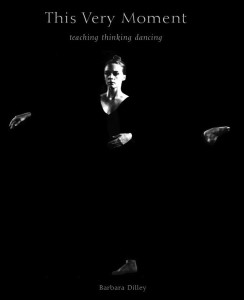
DilleySmallerThis Very Moment: teaching thinking dancing
By Barbara Dilley
Published by Naropa University Press
Available through Contact Editions
The radiance of Barbara Dilley, as both a dance artist and spiritual force comes off every page. She danced with Merce Cunningham, was a sweet, mischievous presence in the legendary improvisation group Grand Union, and went on to teach at Buddhist-centered Naropa University, where she started a dance program and eventually led the institution. Each chapter combines memoir and practice.
Quote (about performing with the Grand Union): “Intuition becomes a survival skill. It takes me forward through the unknown. I find companionship. In this environment an imagistic world explodes. I become part of stories bursting forth like Surrealist images.”

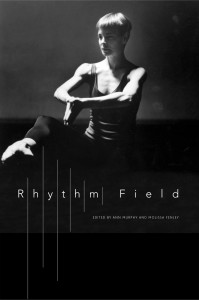
Layout 1Rhythm Field: The Dance of Molissa Fenley
Edited by Ann Murphy and Molissa Fenley
Published by Seagull Books London Ltd
Fenley’s exotically torquing movement vocabulary and exhilarating momentum marked her as a new, exciting dance artist in the 1980s. She continues to choreograph today. This slim volume has contributions from Elizabeth Streb, Philip Glass, Richard Move, Tere O’Connor and others.
Quote: “She appeared as if the movement was bursting out from her body without her permission, just streaming out, before the idea of streaming was coined for the Internet.”  —Elizabeth Streb, on working with Fenley

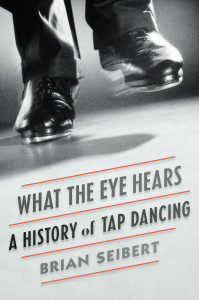
whattheeyehearsWhat the Eye Hears: A History of Tap Dancing
By Brian Seibert
Published by Farrar, Straus and Giroux (Macmillan) 
This author has a witty, appealing writing style that you can see in his reviews for The New York Times. The book is chock full of stories, loving descriptions, and accounts of shifting aesthetics since the inception of tap. Here’s what Elizabeth Kendall said in her New York Times review: “It…offers passion about its subject, deft evocations of dance action and a narrative mischief suited to tap’s trickster mentality.”
 

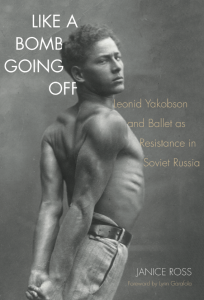
LikeBombCover1Like a Bomb Going Off: Leonid Yakobson and Ballet as Resistance in Soviet Russia
By Janice Ross
Published by Yale University Press
An unabashed provocateur, Leonid Yacobson (1904–1975) was one of the leading choreographers of Russia for decades. He was a favorite of both Plisetskaya and Baryshnikov, but his work was considered too sexy (close embraces were called pornographic), too modernist, or too Western for the Soviet authorities. That he survived the Stalin purges was amazing. In the ’70s he created many inventive works for his company, Choreographic Miniatures, but the troupe was forbidden to tour. The Soviet strikes against him were constant, and Ross highlights his heroism in standing against the totalitarian regime. A must-read for anyone interested in the development of Soviet ballet.

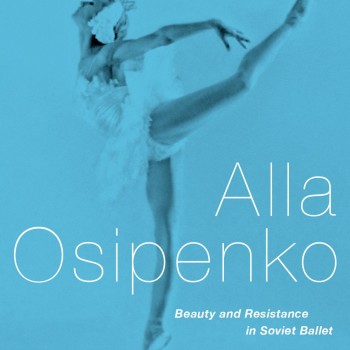
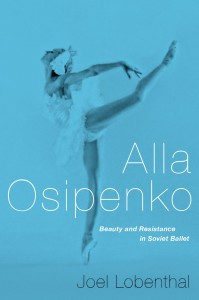
OsipenkoCoverAlla Osipenko: Beauty and Resistance in Soviet Ballet
By Joel Lobenthal
Published by Oxford University Press
Another book about the resistance of a ballet artist in the Soviet Union. Alla Osipenko, with her beautiful lines and rebel spirit, left her job as one of the top ballerinas of the Kirov (Mariinsky) Ballet to dance with renegade choreographer Leonid Yacobson (see Janice Ross’ book, above) and later Boris Eifman. Along the way are descriptions of the young Baryshnikov, the great pedagogue Vaganova, and Nureyev. In fact, the description of  Nureyev’s defection in Paris, right after performing with Osipenko and the Kirov, is one of the most harrowing passages.

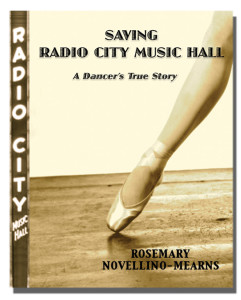
RadioCitySaving Radio City Music Hall: A Dancer’s True Story
By Rosemary Novellino-Mearns
Published by Turning Point Press
As dance captain of the Radio City Music Hall Ballet Company (yes, for many years there was a ballet company that performed as often as the Rockettes—four times a day), Rosemary Novellino-Mearns loved the stage, the theater, and its mission to entertain. But in the late 1970s, the choice of movies went downhill, audience numbers started falling off, and Radio City was slated for demolition. Alarmed, “Rosie” gathered some dancer friends together to protest what seemed like mismanagement. It turned into a long battle that cost her and her husband their jobs. She didn’t realize she was a David to the Goliath of the Rockefellers, who had planned to doom the theater in order to build something more profitable. Click here to see a review and vintage videos of the fight to keep “the showplace of the nation” open.

Dancers As Diplomats: American Choreography in Cultural Exchange
By Clare Croft
Published by Oxford University Press
Interviews with dancers who served as ambassadors for the U.S. while touring internationally during the Cold War and after.

Rebel on Pointe: A Memoir of Ballet & Broadway
By Lee Wilson
Published by University Press of Florida
When Lee Wilson saw the Slavenska-Franklin Ballet in the 1950s, it sparked a passion to dance. She studied at Ballet Theatre School with Madame Pereyaslavic and danced with the companies of Rosella Hightower, Eric Bruhn, Rudolf Nureyev, Maina Gielgud, and with Alicia Markova at the Metropolitan Opera Ballet.
Quote: “I sensed that ballet, like church, could be a transcendent experience. As the lights dimmed, instead of one solitary organ, an entire orchestra began to play. When the curtain rose, the dancers leaped onto the stage, which was far more exciting than the predictable slow march of a clergy and choir.”

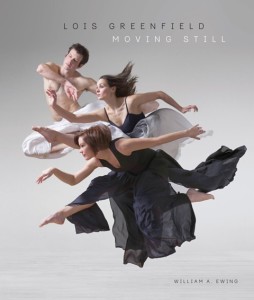
Chronicle_Lois Greenfield  coverLois Greenfield: Moving Still
Photographs by Lois Greenfield; text by William A. Ewing
Published by Chronicle Books
(In Europe, Thames & Hudson)
From a master photographer, a book of spectacular images that see the dancing body through the lens of Greenfield’s imagination. Reflecting surfaces, yards of silk, and other objects extend the performers in beguiling ways.
Quote: “Rather than capturing peak moments of a dance… Greenfield instead seeks unusual, enigmatic moments that perturb our reading of the image. We find ourselves wondering: Can a body really be doing what I think it’s doing? Where did he come from? Where is he going? Is she rising? Is she falling? Are those bodies about to collide, or are they flying apart?”

Girl Through Glass
A novel by Sari Wilson
Published by HarperCollins
A former dance student of both ballet and experimental dance, Wilson has set her novel in 1970s NYC. The two main women characters are a ballet dancer and a dance history professor.
Quote: “The mirror lies. We know this. Its secret smiles are the images that match our own dreams. But it persists, categorical and seductive. How often have I learned this? Still, the desire to trust the image persists.”

Isadora Duncan in the 21st Century: Capturing the Art and Spirit of the Dancer’s Legacy
By Andrea Mantell Seidel
Published by McFarland
Written by a dancer who has reconstructed and performed Isadora’s choreography, this book has chapters with titles like “Dancing Innocence and Awakening,” “Apollonian Form, Beauty and the Natural Body,” and “Women Warriors.” A serious study of the influential Duncan oeuvre, the book discusses training, aesthetics, religious aspects, and the actual experience of dancing these historic dances.

FOR CHILDREN
RupertCanDanceCoverRupert Can Dance
By Jules Feiffer
Published by Farrar, Straus and Giroux (Macmillan)
The unstoppable cartoonist who famously lampooned a fictitious serious-&-silly modern dancer, has now come out with a story about a girl and her cat who get the dance bug. See a video of Feiffer talking about his new venture here.


My Story, My Dance: Robert Battle’s Journey to Alvin Ailey
By Lesa Cline-Ransome
Foreword by Robert Battle
Published by Simon & Schuster
As a child, Robert Battle had to wear leg braces to stabilize bad alignment. But he fell in love with dance, attended Juilliard, performed and choreographed professionally, and is now the inspired artistic director of the Alvin Ailey American Dance Theater.

BOOKS BY DANCERS, NOT ABOUT DANCE
The last books are not about dance, but if you love these two dance artists—Kenneth King and Dana Caspersen—you may want to read them.

The Secret Invention and Red Fog
Both by Kenneth King
Both published by Club Lighthouse Publishing
Kenneth King, a choreographer/improvisor who enjoyed a special niche as “the dancing philosopher” of the experimental dance world, came out with two novels this year. He endows his characters with a richness of marginality—and usually a healthy dose of gender bending. The Secret Invention involves twins—a poet and an inventor—who get caught up in the swirl of New York nightlife. The plot involves an invention that makes clean energy freely accessible but the CIA claims it threatens our democracy. Science fiction with a sprinkling of sexual encounters. In Red Fog, one character is based on Frances Alenikoff, who danced wonderfully sensual duets with King when she was in her 80s. The topics of the characters’ conversations range from Wittgenstein to sex to crime to nutrition.

DanaCaspersenCoverChanging the Conversation: The 17 Principles of Conflict Resolution
By Dana Caspersen
Published by Penguin Random House, A Joost Elffers book
Dana Caspersen, whose dazzling technique and acting skills distinguished her in William Forsythe’s work for decades, has added mediator to her resumé. Her book presents short bits of advice emphasizing ways to calm things down, possibly learned in a rehearsal studio. Here are two examples: “Develop curiosity in difficult situations,” and “Acknowledge emotions. See them as signals.” Listening is paramount, and Caspersen’s principles build on all the ways that dancers listen.

RE-ISSUED
Some of my favorite books have been re-issued in paperback or new editions. All of them have given me much pleasure and food for thought.

Balanchine and the Lost Muse: Revolution and the Making of a Choreographer
By Elizabeth Kendall
Oxford University Press

Dancing Through It: My Journey in the Ballet
By Jenifer Ringer
Penguin Random House

Life in Motion: An Unlikely Ballerina
By Misty Copeland
A Touchstone Book, Simon & Schuster

Hiking the Horizontal: Field Notes From a Choreographer
By Liz Lerman
Wesleyan University Press

The Choreographic Mind: Autobodygraphical Writings
By Susan Rethorst
Now available from Contact Editions (which, by the way, is currently offering signed copies of my book here)

Night’s Dancer: The Life of Janet Collins
By Yaël Tamar Lewin
Wesleyan University Press

Dance to the Piper
By Agnes de Mille (1951), with a new introduction by Joan Acocella
Published by New York Review Books

OTHER SOURCES FOR DANCE BOOKS
Dance Horizons, Princeton Book Company
Human Kinetics


Like this Featured Uncategorized 3

PUNC Amok

Could everybody please calm down about naming your company or your choreography? Sure, it’s fun to play around with the punctuation marks on your keyboard. But invented punctuation doesn’t guarantee inventive choreography. It’s just punctuation run amok.

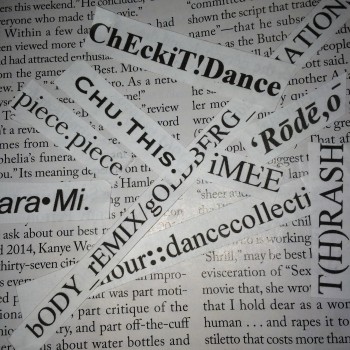
For some people, the regular flow of upper and lower-case font doesn’t project the CONFIDENCE they feel about their enterprise. The solution? All CAPS. We’ve seen it in Alonzo King’s LINES Ballet and MOMIX. Now we’re seeing it in MYOKYO, iMEE, and T(H)RASH, not to mention FULL.STILL.HUNGRY.

Which gets us into another area of Punc Amok: dots gone wild. In the old days, you knew you reached the end of a sentence when you saw a period. Now these dots are scattered willy nilly. Observe Chu. This. , piece.piece, and Kara•Mi.

Marie Chouinard's piece with the complicated title

Marie Chouinard’s piece with the complicated title

Back to the wayward CAPITAL letters. It seems some people are using them as a design element. See the San Jose–based company sjDANCEco, the all-woman company ChEckiT!Dance; Lauri Stallings’ group in Atlanta, gloATL; and possibly the most perfectly patterned use of CAPS,

bODY_rEMIX/gOLDBERG_vARIATIONS, a 2005 piece by Marie Chouinard (or should I say, mARIE cHOUINARD)


Then there’s the opposite: those who insist they are too modest to use capital letters at all. Thus we have NYC choreographer luciana achugar, whose name is spelled “correctly” by presenters like New York Live Arts and Danspace but not by publications like The New York Times or Time Out New York that have to stick to style codes.

Some are pushing the envelope of those two vertical dots that are intended to introduce a particular example. I have to list these vertically or else it will upset my colon.

:pushing progress, a company/a workshop

MOVE: the company, in Vancouver

Lang: Music + Lang: Dance., a piece by Jessica Lang

Then there’s the breakthrough discovery of the double colon by Chafin Seymour for his seymour::dancecollective.

One company that’s had to eat its words, or non-words, is Les Ballets Jazz de Montreal. They thought it would be cool to abbreviate their name and put it in brackets. But apparently nobody recognized [bjm] as a dance company so they had to change the name back again.

Justin Peck's Rodeo: Four Dance Episodes, photo @Paul Kolnik

Justin Peck’s Rodeo: Four Dance Episodes, photo @Paul Kolnik

The latest zinger is the title ‘Rōdē,ō: Four Dance Episodes, Justin Peck’s premiere for NYCB last season. It sends writers and editors scurrying to find obscure marks on a keyboard or on the internet. Of course one could refer to the ballet like so: “Rodeo, with long marks on all the vowels, a single quote mark before the R, a comma after the E, and a colon after the O.” By that time, no reader would want to see this ballet, which is actually quite fabulous.

Deborah Jowitt called Peck’s title “diacritically enriched.” So…to feed my ongoing Punc Amok obsession, what’s YOUR favorite diacritically enriched title?


2 people like this Featured Uncategorized 8

“Dance Was Dead” in the 1980s — — Whaaat?!?

Did I read that right? The New York Times’ chief dance critic, Alastair Macaulay, talking about the decade when Balanchine, Tudor and Ashton died, wrote “Dance was dead.” I re-read those three words that appeared in the new online preview called “Dance This Week,” hoping I had mis-read it.

Actually, dance was bursting with life in the ’80s. Performances were bristling with creativity, guts, challenge, inventiveness, and passion. That decade gave us three enduring classics of postmodernism: Trisha Brown’s Set and Reset (1983); Twyla Tharp’s In the Upper Room (1986); and Bill T. Jones’ D-Man in the Waters (1989). These are momentous works that yield revelations every time we see them, but they came from scrappy environments—the loft spaces, gymnasiums, and churches of downtown Manhattan.

Stephen Petronio and Trisha Brown in Set and Reset, photo © Lois  Greenfield

Stephen Petronio and Trisha Brown in “Set and Reset,” photo © Lois Greenfield

At New York CIty Ballet, Jerome Robbins made the wondrous Glass Pieces in 1983 plus a bunch of other ballets that are still in the rep. He took a collection of his Broadway numbers and created Jerome Robbins Broadway, which won a Tony for best musical.

The Joffrey Ballet was mounting works from Diaghilev’s Ballets Russes. Their revival of Nijinsky’s Rite of Spring by way of Millicent Hodson and Kenneth Archer was earthshattering; it triggered much debate.

It was the decade when William Forsythe blossomed in Germany, essentially redefining ballet and spawning scores of young choreographers.

"In the Upper Room" with Pennsylvania Ballet, photo by Candice De Tore

“In the Upper Room” with Pennsylvania Ballet, photo by Candice De Tore

In 1982 Cora Cahan and Eliot Feld established The Joyce Theater, which has presented a different dance company almost every week since then. Brooklyn Academy of Music started its Next Wave Festival, bringing in Pina Bausch regularly since 1984, filling the house with audiences from all walks of life.

The ’80s was when African American dance artists realized they could extend beyond the Ailey mold. People like Bill T. Jones, Ralph Lemon, Ishmael Houston-Jones, Garth Fagan, Jawole Willa Jo Zollar and Bebe Miller created searing and/or subtle works that sometimes delved into cultural identity.

Other choreographers who emerged in the ’80s were Stephen Petronio, Ohad Naharin, Mark Dendy, Elizabeth Streb, Pat Graney, and Dancenoise. Dancenoise! Their recent reunion show at the Whitney Museum was so brilliantly uproarious that it could make anyone pine for the ’80s. It was a great decade for feisty women choreographers.

Merce Cunningham began experimenting with video in works like Channels/Inserts and Points in Space while continuing to make remarkable works for the stage. (I loved Pictures and Fabrications.)

Cunningham and Trisha Brown toured Europe, stimulating a vibrant scene in several countries. In England Richard Alston and badboy Michael Clark ignited a whole scene; in France Philippe Deconflé and Maguy Marin and many more were blasting forth with their own style of dance-making.

Dance was everywhere. Site-specific performances brought dance to people in parks, on bridges and at Grand Central Station via dance artists like Stephan Koplowitz and Joanna Haigood.

Sure, a lot of great ballet dancers retired. But we continued to swoon over superstars like Gelsey Kirkland, Martine Van Hamel, and Julio Bocca at ABT; Darci Kistler and Kyra Nichols at NYCB. Sylvie Guillem, with her extreme technique, was ascending to a new level of celebrity in Europe. In the Soviet Union, one of the most supreme/serene/sexy ballerinas of all time, Altynai Asylmuratova, was with the Mariinsky and guesting with ABT.

Yes, Balanchine died in 1983, but Miami City Ballet was formed in 1985 with Edward Villella as director, and Helgi Tomasson took over San Francisco Ballet the same year. Francia Russell was setting Balanchine ballets on Pacific Northwest Ballet, as was Arthur Mitchell on Dance Theatre of Harlem.

Yes, Frederick Ashton died in the ’80s, but he hadn’t made anything of note for quite a while. His signature works date from much earlier: Cinderella in 1948, La Fille mal gardee in 1960, The Dream in 1964, Monotones in 1965, and Enigma Variations in 1968. For Tudor too, it had been a long time since he choreographed his most enduring works: Lilac Garden (1936), Pillar of Fire (1937), and The Leaves Are Fading (1975).

Bill T. Jones/Arnie Zane Dance Company in "D-Man in the Waters," photo by Paul B. Goode

Bill T. Jones/Arnie Zane Dance Company in “D-Man in the Waters,” photo by Paul B. Goode

The ’80s was the decade that catapulted street dance onto the concert stage. Toni Basil brought Don Campbell’s Lockers and the Electric Bugaloos to The Kitchen, usually reserved for experimental dance and video. And Michael Jackson’s Thriller—hello!—was released in 1983. Everyone wanted to dance like MJ.

In 1985, tap dancer Gregory Hines hunkered down alongside of Baryshnikov in the blockbuster movie White Nights. Hines was a mentor to child prodigy Savion Glover, who, in 1989 starred in Black and Blue, a kind of precursor to Bring in da Noise Bring in da Funk.

I know that journalists like to make bold statements. But to claim that dance was dead in such a dynamic decade, even as an aside, undermines our understanding of how dance came to be what it is today. Whether one feels enlivened by any particular strain of dance is a personal matter. But dance as an art form is unstoppable. In many parts of the world, it continues to unfold in all its kaleidoscopic beauty and diversity.

14 people like this Featured Uncategorized 28

How Misha and Twyla Made Ballet American

I used to say that Twyla Tharp’s 1976 Push Comes to Shove is the ballet that made Baryshnikov an American. Its slinky displacements, Vaudevillian showmanship, and casual sexiness, were all buoyed by Joseph Lamb’s ragtime music. It’s uncanny how completely Misha took to this quintessentially American idiom, slipping between classical pirouettes, the isolations of jazz, and the de-centering of postmodern. Nothing in his Vaganova training could have prepared him for this role, yet he intuitively understood every shift deep in his bones. (Check out a clip here.)

Baryshnikov in Push Comes to Shove, Ph Max Waldman

But I also think that Misha helped make ballet American—for our generation—in other ways too. As director of American Ballet Theatre from 1980 to ’89, he commissioned Tharp often and invited some of her dancers to be company members. He also commissioned David Gordon, Mark Morris and Karole Armitage. Tharp’s In the Upper Room, to transcendent music by Philip Glass, premiered with her own group in 1986 and entered ABT’s rep in 88. Her Bach Partita and Sinatra Suite also premiered at ABT during that decade. Together Misha and Twyla built an American repertoire for American Ballet Theatre. In case you need reminding of how glorious Upper Room is, here’s a clip.

Yes, Yes, Lucia Chase had brought in the first American ballets— Eugene Loring’s Billy the Kid, Agnes de Mille’s Rodeo, and Jerome Robbins’ Fancy Free. (We were happily reminded of this at ABT’s 75th anniversary gala.) But there’s been a lot of Tudor, MacMillan, Fokine, and Ashton. I’m not saying I object, I’m just noticing that Misha’s reign embraced American dance artists. It’s a different time now, and I’ve enjoyed the full rep of ABT this season.

Of course another famous Russian had made ballet American for a previous generation. George Balanchine stretched the lines of ballet, sped up the allegro, and thrust his dancers into space. But Balanchine used mostly European and Russian composers, whereas Twyla went with Jelly Roll Morton, Randy Newman, and the Beach Boys.

Juilliard students in Deuce Coupe, 2007

Juilliard students in Deuce Coupe, 2007, photo by Nan Melville

Talking about the Beach Boys, Twyla’s Deuce Coupe (1973) was something of a precursor to Push in that it combined ballet steps with everyday gestures and social dance. In the original version she joined her own (post)modern dancers with the Joffrey company. (It’s interesting to note that Wayne McGregor’s latest work, which comes to the Park Avenue Armory in September, also mixes his own modern dancers of Random Dance with Paris Opera Ballet dancers.)

When Twyla made Push Comes to Shove for Baryshnikov, it had all the pyrotechnics he learned in his pure Russian training and his individual charm as a performer, but with a touch of insolence too. Think Marlon Brando in The Wild Ones or James Dean in Rebel Without a Cause. Adding a dollop of witty playfulness makes her ballets less brooding and more Dionysian.

ABT dancers in Push Comes to Shove, photo by Nan Melville

ABT dancers in the finale of In the Upper Room, photo by Nan Melville

What’s American too is the melting-pot finales in Tharp’s ballets like Push, Deuce Coupe, and Upper Room. She throws everything and everybody together in a wash of onstage anarchy, all repeating phrases they’ve done before but newly recycled because everyone’s onstage, all peacefully co-existing. In Push it was Vaudevillians and classicists, Russians and Americans. In Deuce Coupe it was ballet dancers and modern dancers, rock and classical. In Upper Room, it’s the stompers, the bookend girls, the pointe shoes girls and everyone else. These endings sometimes make me cry because they speak of active acceptance of all kinds of people—still a challenge in our American democracy. These big, unruly, energetic free-for-alls are Twyla’s vision of harmony…an onstage, perpetual-motion rainbow.


1 person likes this Featured Uncategorized 3

Aging Dancers: An Alternate Vision

Dare I say it? From what I am noticing internationally, we are in the midst of a new wave of appreciation for older dancers. At the moment several superstars of dance are crashing the age barrier. But I think it goes beyond those extraordinary artists to dancers who are less well known. This post includes examples of both types, quotes from observers and practitioners, and Pat Catterson’s (somewhat humorous) list of roadblocks for those dancers trying to beat the odds.

First the Superstars

Alessandra Ferri, Wendy Whelan, and Carmen de Lavallade are each totally unique dancers, a world unto themselves, and that is part of the reason their artistry has endured.

Ferri in McGregor's Woolf Works © ROH, phoo by Tristram Kenton

Ferri in McGregor’s Woolf Works © ROH, photo by Tristram Kenton

As seen in Martha Clarke’s Cheri, the exquisitely dramatic Ferri, 52, can still transport us from rapturous joy to utter despair. (See Gia Kourlas’ cover story for Dance Magazine from last fall.)  And just last month, she performed at Covent Garden as the muse for Wayne McGregor in Woolf Works at The Royal Ballet. For me, as I posted in “Alessandra’s Ferri’s Knowing Body,”  the ballet completely relied on Ferri’s ability to create a passionate yet vulnerable protagonist.

At the Joyce in April, Wendy Whelan, 48, danced with all the fullness and thrust she always had in “Restless Creature.” And last weekend, in a Works & Process program at the Guggenheim, she showed a sassy theatricality in Arthur Pita’s Tango that I hadn’t seen before. (In case you aren’t familiar with her glorious dancing, what I wrote about her in my recent tribute to her at Danspace still holds true.)

Brian Schaefer, posting in OUT.com, wrote that Whelan’s age “allowed for greater possibilities in interpreting the relationships and interactions on stage. It also added something soothing and serene to each work—maybe we can call it wisdom.” He went on to say, “Especially in ballet, young love still reigns. But with Restless Creature, Whelan…steps beyond ballet’s suggested expiration date and demonstrates that lifelong curiosity and experience are as valuable artistic tools as pirouettes and penchée.”

Wendy Whelan with oshua Beamish in Restless Creature, photo by XXYYZZ

Wendy Whelan with Joshua Beamish in Restless Creature, photo © Yi-Chun Wu

The legendary Carmen de Lavallade,  at 83, knocked ’em dead at Jacob’s Pillow last year in her show As I Remember It. She also became an object of desire at Huffington Post. Brian Seibert of The New York Times called her dancing terrific. And Erin Bomboy of the Dance Enthusiast described her as “mesmerizing and silky.” NPR also jumped into the Let’s-discover-Carmen act with this segment on her.

Carmen de Lavallade, photo: ©2011 Julieta Cervantes

Carmen de Lavallade, photo: © 2011 Julieta Cervantes

Ageless in Europe

As it happens, venerable superstars of Europe are performing in Rome on June 24 and 25. In a presentation of Daniele Cipriani Entertainment http://www.dancemagazine.com/blogs/admin-admin/6468 the Swedish choreographer Mats Ek and his illustrious wife, Spanish-born Ana Laguna, will perform two of the most sparely poetic works I’ve ever seen: Memory and Potato. He is 70 and she is 60. The program, entitled “Quartet Gala,” also includes well known Tanztheater choreographer Susanne Linke, who turns 71 this month, and Bessie-award-winning Pina Bausch dancer, French-born Dominique Mercy, 65. For more info on the program, which has choreography by Ek, Linke, and Pascal Merighi, click here.

Ana Laguna and Mats Ek in Ek's Potato, photo © John Ross

Ana Laguna and Mats Ek in Ek’s Potato, photo © John Ross

Postmodern Forever

Simone Forti at 80 still performs. Though she’s not quite as stable as before, her earthiness and wit are still accessible to her. In an online Fjord Review about Forti’s recent shared performance in Los Angeles, Victoria Looseleaf described her as “Monumental in her simplicity.”

Another historic figure who helped redefine dance in the 1960s, Yvonne Rainer, also 80, brought her premiere Dust to the Museum of Modern Art this month. Rainer supposedly doesn’t dance any longer—though she slipped in a quick chassé and a hovering relevé during the June 13th performance. In an advance story in The New York Times, Siobhan Burke quoted Rainer saying, “My preferred mode of self-presentation is ‘existence.’ I love to exist on stage. I no longer ‘dance.’ ” Later in the article Rainer claimed a right for the aging dancer to exist without judgment: “The aging body is a thing unto itself and need not be judged as inadequate or inferior if it can no longer jump through hoops.”

Stephan Koplowitz and Heather Ehlers in Connor's The Weather in the Room, photo © Scott Groller

Stephan Koplowitz and Heather Ehlers in Connor’s The Weather in the Room, photo © Scott Groller

Choreographer Colin Connor cast two dancers over 50 for his work The Weather in a Room that premiered at CalArts last year. They were faculty members Stephan Koplowitz (dean of the School of Dance) and Heather Ehlers (of the School of Theater). He believes in age diversity onstage. Partly because, like Schaefer, he is interested in the relationships that older dancers can inhabit. “In our time,” he wrote in an email to me, “dance tends toward youth, to newness, and to the illustration of things youthful. Here I was drawn to the idea of a relationship that is not new but lived in, to a landscape of ongoing experience and the expressiveness of maturity, and to revealing a palpable physical intimacy between people of an age where this is less noticed or considered.”

Another choreographer interested in age diversity is Vicky Shick, who at 62 still dances in her own work. I happen to be on the receiving end of her largesse and have performed in two of her recent pieces. We’ve danced in each other’s work before so she knows my body and won’t overextend. In rehearsals, I loll around, slowly warming up my body, while she works with the other dancers until it’s my turn.

And just last week I participated in American Dance Guild’s tribute to Frances Alenikoff, who danced into her 80s. I am 67, and my dancing partners were Deborah Jowitt, 81, and Ze’eva Cohen, 75. On performance days, I would go through my daily exercises more thoroughly and add extra time for balancing on one leg. I widened the stance of some of the moves in an effort to be more stable. In performance, I sometimes had the thought, Whew, I got through that bit without keeling over!

Nothing New

Of course the interest in older performers is nothing new. Liz Lerman started using older people in her dances in the 1970s; the Dance Exchange in Takoma Park, MD, carries on her tradition in some of its programs. Choreographers like Stephan Koplowitz and Risa Jaroslow have chosen to work with older performers. Naomi Goldberg’s currently active Dances for Variable Population gives performances and workshops throughout the summer. These kinds of explorations ask the question, Who gets to dance?

Almost twenty years ago Gus Solomons, along with Carmen de Lavallade and the late Dudley Williams, started Paradigm Dance Company, which challenged choreographers like Dwight Rhoden and Kate Weare to make work for these storied but limited performers. Valda Setterfield, 80, whose stage charisma grows with each decade, has danced with Paradigm as well as with her husband David Gordon.

Between This World and the Next

When I wrote about older dancers for The New York Times 15 years ago, I quoted Eiko Otake saying, “Because their bodies are not young, older performers carry something that is almost between this world and the next, that itself is artistic and transcending.’”

Eiko in A Body in a Station, photo © William Johnston

Eiko in A Body in a Station, photo © William Johnston

Now in her early 60s, Eiko has been illustrating that idea with her haunting current project, A Body in a Station.

About a year ago, I was fortunate to see butoh artist Ko Murobushi in Yokohama, who embodied a certain brute strength as a man in his late 50s.  But this work too, with it’s sudden falls and its offering of lilies, hinted at death.

Alternative Vision

To return to Rainer, she sees the acceptance of age as an “alternative vision.” Here’s an excerpt from an essay she wrote last year for Performance Art Journal (PAJ 106):

“The evolution of the aging body in dance fulfills the earliest aspirations of my 1960s peers and colleagues who tore down the palace gates of high culture to admit a rabble of alternative visions and options. Silence, noise, walking, running, detritus—all undermined prevailing standards of monumentality, beauty, grace, professionalism, and the heroic.”

PatCat’s Nine Lives, or, How to Dance Full Out at 69

But maybe older dancers are a new kind of heroic. Enter Pat Catterson, a dancer/choreographer/teacher who dances full out as a member of Rainer’s group—at 69 years old. (The other members are not far behind: they are all over 40.) She never stopped taking daily class. I asked her to tell me the hardest thing about keeping her body in dancing shape, and she came up with nine hardest things. The rest of this post is direct from Pat Catterson’s lips—or rather email.

From left: Yvonne Rainer, Pat Catterson, Patricia Hoffbauer, and David Thomson in Dust, photo © Julieta Cervantes

From left: Yvonne Rainer, Pat Catterson, Patricia Hoffbauer, and Keith Sabado in Dust at MoMA. Rousseau’s painting of The Sleeping Gypsy is in background, photo © Julieta Cervantes

1. It is difficult to walk the fine line between challenging my body and not overdoing. I can so easily inflame something if I do too much repetition or work past muscle fatigue or not give myself enough recuperation time. When to push and when not is hard to gauge. And the balance is always changing. What I could do two years ago in terms of endurance, I cannot do now.

2. Doctors are dismissive. Oh it is arthritis they say and treat me like I am some kind of crazy person who thinks she can still dance. I try to convince them that I take full class six days a week and am performing and intend to continue but most of them do not take me seriously. It infuriates me. But then I wonder if I am a fool. I find physical therapists more encouraging and helpful than doctors.

3. My brain does not work as quickly as it used to. One of my strengths was always that I picked up quickly. I got the steps fast and often led across the floor. It may not be noticeable to others but I do not pick up as fast now and I have to work at it. Sometimes just as we are to begin a combination, my mind goes blank and I cannot even remember how it starts. The brain does age.

4. I am ignored when I take class. I am used to it now. I am very self-disciplined but I could use a correction now and then, an outside eye. (An exception: Rachel List always gives me corrections.) It is really strange to feel so invisible. And it makes me a little angry, frankly. I am paying for the class like everyone else!

5.  I need to rent some ballon! I still could do convincing jumps one year ago but then it ended. I am in shape and I jump every day but I do not go up! I am strong. I stretch. I practice jumping. But the ballon disappeared! I still love leaps and jumping steps anyway even though I look quite unimpressive doing them.

6. My joints are stiff, particularly in my hips. It is very hard to get up and down from the floor. I can only do it in certain pathways.  I try to cover it up as best I can by the choices I make. The body just does not fold easily in the joints anymore. Grand plié is now not so grand. Annoying. I am so envious of the ease of the others as I struggle to do things that used to be so easy.

7. Dance clothes. Clingy does not look good on saggy skin! I am bony and I have muscle tone but the skin is saggy. I cannot wear the biketards or the skin-baring tops or leotards the others wear in the summer. I want to wear something sleek and contemporary looking but most regular dancewear just looks ridiculous on me. My age group is not the focus of dancewear companies.

8. In class, I used to love just barreling into everything but that is not possible now. I usually start a big or fast combination a little under in energy to pattern it first in my body so that I don’t strain myself. I can build up to a good energy but I have to start soft. I look at the young ’uns and I remember well that agility and energy. But I do take the full class. Use it or lose it as they say. I try to push past what feels completely comfortable, but just how much is a continual negotiation. Friends who are in their 40s or 50s think I am crazy to continue to take full class, especially Cunningham technique. One says that Cunningham is for young bodies and that I shouldn’t be putting my body through it. But it is my “home” technique and I love the physical and mental challenge of it.

9.  In the end I love to dance and perform as much as I always did. The adrenaline of performing still carries me beyond what I think I can do. I have a lot of energy, but I do not want to end up crippled or in a wheelchair. I have to be able to know when to stop demanding too much of my body. And only I will know because the doctors do not know.


5 people like this Featured Uncategorized 20